


Industrial Pendant Shade
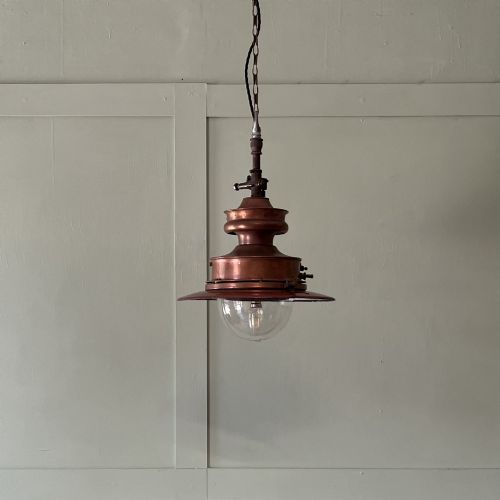
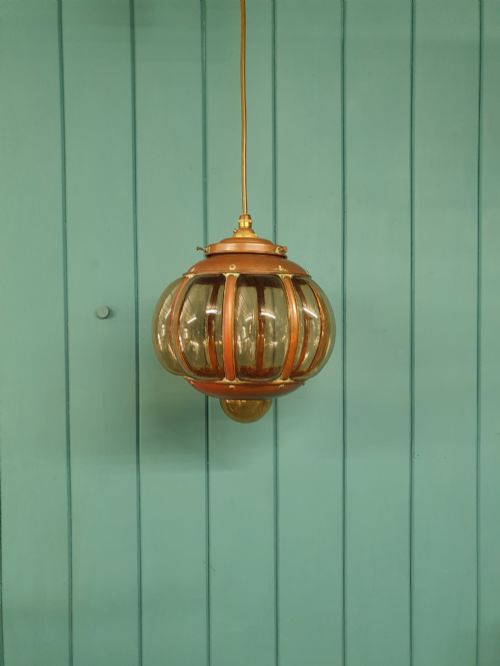
An industrial pendant shade brings utilitarian character to a room, offering robust construction and focused downward illumination.
Industrial Pendant Shade
When you search for an industrial pendant shade, you encounter functional ceiling lighting originating from factories, railway stations, chapels and commercial premises. These utilitarian fixtures span from the Victorian era through the mid-20th century, capturing an era of heavy industry and institutional design.
The most common examples on this page date from the 1920s and 1930s, featuring durable glass or enamel components designed for hard work. Whether configured as single drops or matched sets, these lights bring straightforward mechanical practicality into domestic or commercial interiors.
Materials and construction methods
Makers utilised heavy-duty materials such as cast iron, brass, copper and steel to build frames and galleries capable of withstanding industrial environments. Enamel coatings provided durable, wipe-clean surfaces for shades hung in smoky factories and busy workshops.
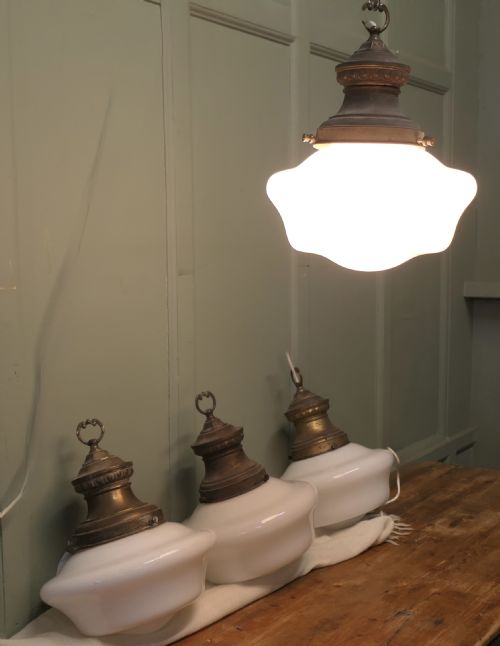
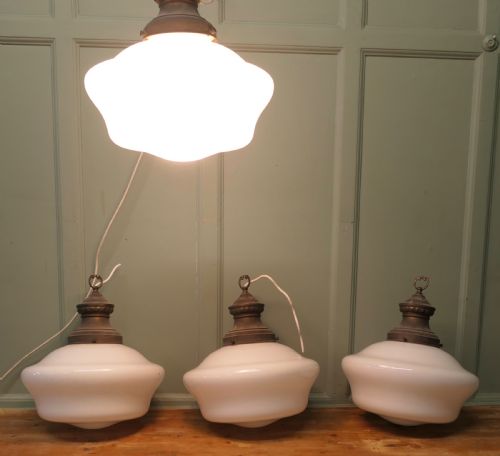
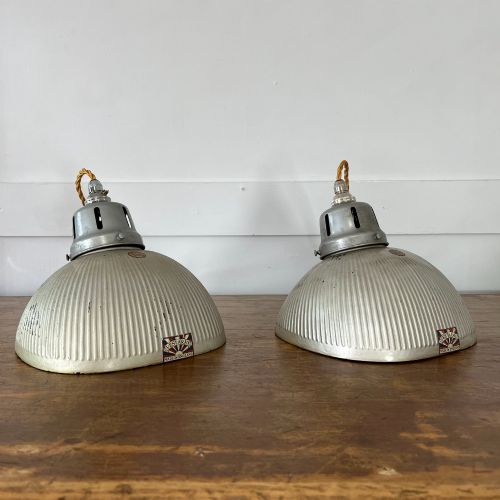
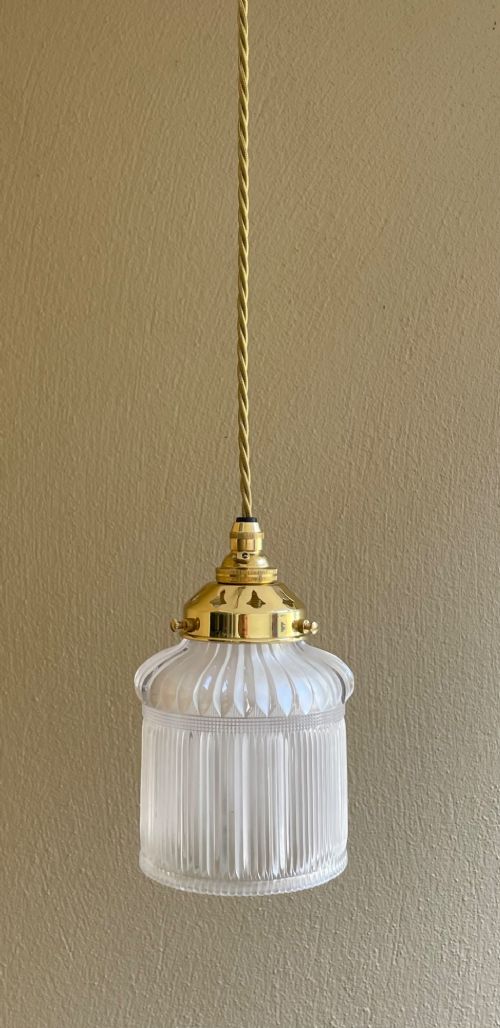
Specialised glass techniques defined the optical qualities of many shades, including prismatic ribbing, opaline finishes and mercury silvering. These treatments diffused and directed light effectively without relying on decorative ornamentation.
Some cast iron ceiling lights arrive straight from baths and chapels, having spent a century quietly watching over steam and sermons.
Judging quality in utilitarian lighting
The distinction between ordinary and superior pieces rests in the integrity of the original components and the weight of the metalwork. Substantial cast galleries, thick moulded glass and retained maker markings elevate an example above standard utility stock.
Wear consistent with genuine workplace use, such as honest enamel chips or patinated copper, contributes to character rather than detracting from worth. The best specimens retain their original fitments and unpolished surfaces, showing how they were constructed for daily toil.
VESTARAY·Gecoray·Holophane
The Industrial Pendant Shade Glossary
- Holophane
- A brand of scientific glass shade engineered with prismatic ribs to control and distribute light efficiently. These shades reduce glare while maximising illumination across a workspace.
- Gallery
- The metal collar or fitter at the top of a shade that connects the glass or metal body to the suspension rod or flex. It secures the pendant assembly.
- Opaline glass
- A milky, translucent white glass that softens light evenly without harsh hotspots. It was widely used in schools, hospitals and institutional interiors.
- Mercury glass
- A double-walled glass blown with a silvering solution inside, creating a mirrored, reflective surface. It provides a distinctive metallic sheen when unlit.
- Prismatic glass
- Glass moulded with geometric ridges on the surface designed to refract light rays precisely. Double prismatic versions feature complex patterns on both sides.
Industrial Pendant Shade: Frequently Asked Questions
Are original factory lights difficult to clean?
Most enamel and glass shades tolerate gentle washing with warm soapy water and a soft cloth to remove decades of accumulated dust. Avoid harsh abrasives that can strip the original surface patina or damage vintage metallic finishes.
Careful handling is essential when washing delicate opaline or mirrored glass shades to prevent accidental chipping of the rims.
Can I use modern bulbs in these shades?
Modern LED lamps fit easily into most vintage lampholders while consuming less energy and emitting minimal heat. Selecting a warm bulb temperature helps replicate the soft glow characteristic of early 20th-century lighting.
Check the internal dimensions of the shade and gallery to ensure the chosen bulb size does not protrude awkwardly below the rim.
What is the difference between prismatic and opaline glass?
Prismatic glass relies on moulded ribs and angles to refract and spread light beams across a room with scientific precision. Opaline glass uses a dense, milky composition to diffuse light into a smooth, even glow without directional beams.
Prismatic shades suit task lighting over workspaces, whereas opaline versions provide softer ambient illumination.