

Industrial Iron Table
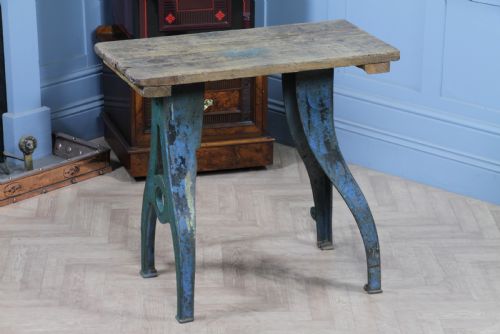
An industrial iron table brings robust utility and utilitarian character into a room through heavy cast bases and seasoned timber tops.
Industrial Iron Table
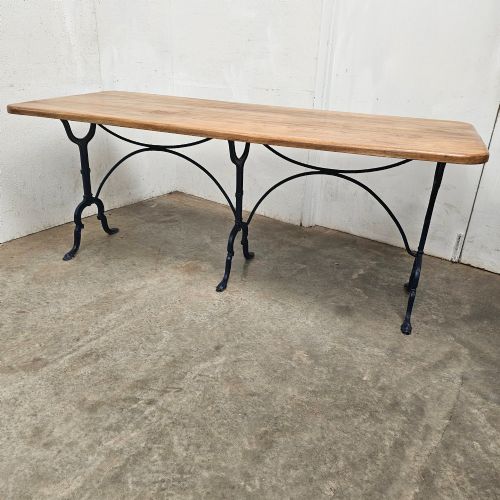
When you search for an industrial iron table, you encounter robust furniture originating from workshops, pubs, and commercial spaces across the nineteenth and early twentieth centuries. These pieces combine heavy metal supports with wooden or stone surfaces designed for practical endurance.
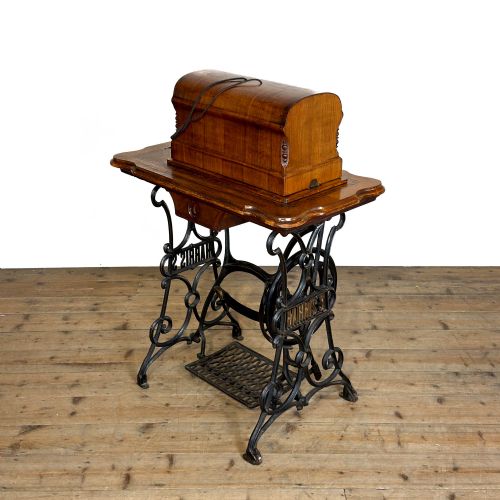
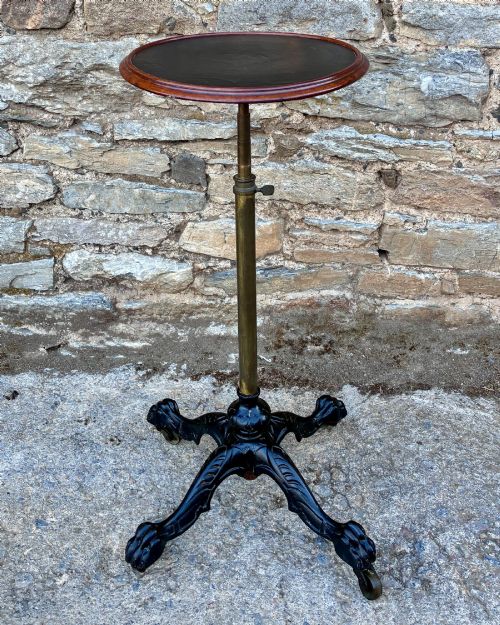
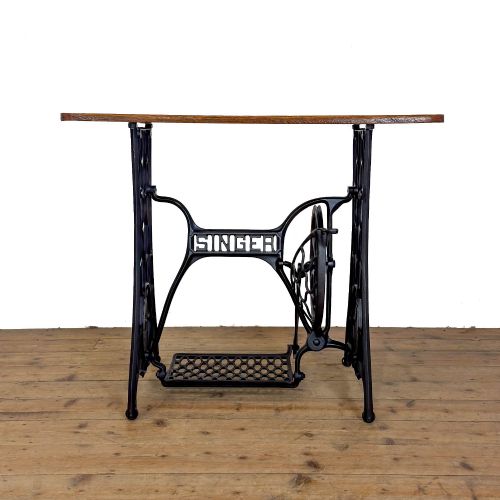
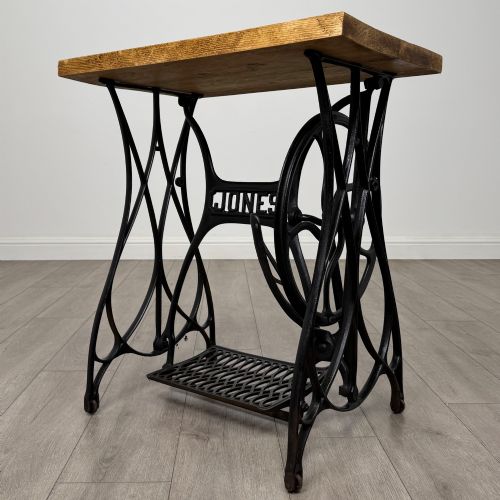
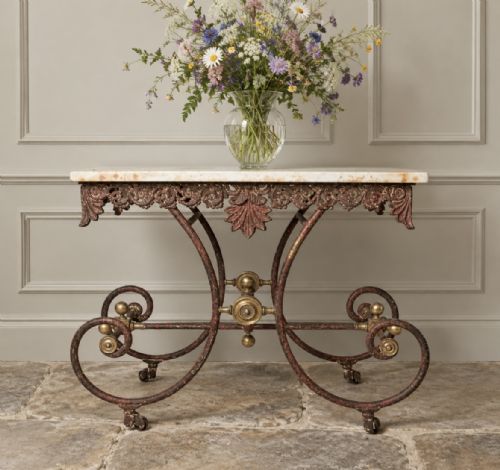
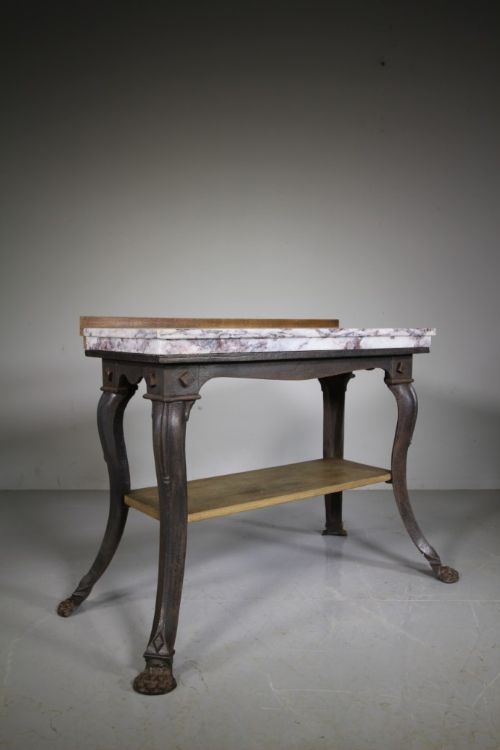
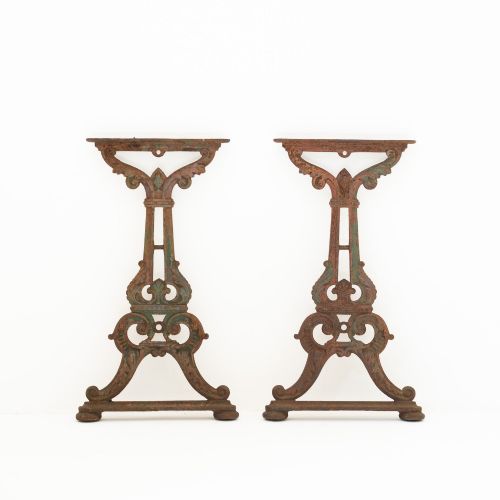
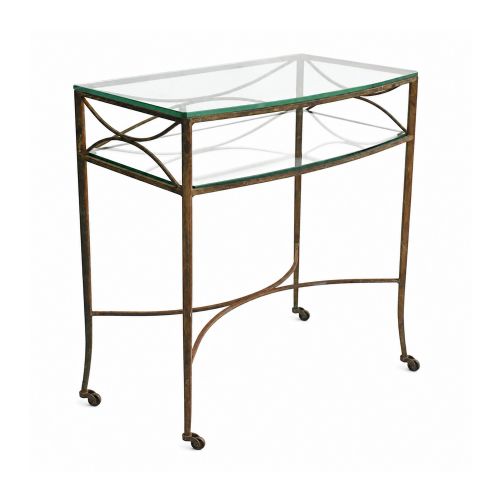
The selections on this page span several forms, including bistro tables, console tables, workbenches, and side tables. Many incorporate adapted machine bases, such as sewing machine frames or pub table castings, paired with pine, oak, or marble tops.
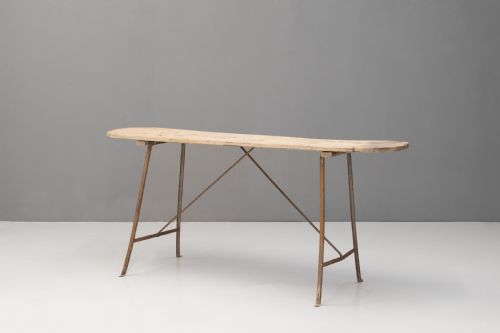
Origins range across English and French workshops, encompassing Victorian pub furniture alongside early twentieth-century drafting and display stands. These pieces suit modern interiors seeking grounded, functional surfaces with historical presence.
Construction and Materials
Makers utilised durable metals like cast iron, steel, brass, and copper for the structural bases and frames, often employing foundry casting techniques to shape intricate pedestals and industrial legs. These metal components provide substantial weight and structural rigidity.
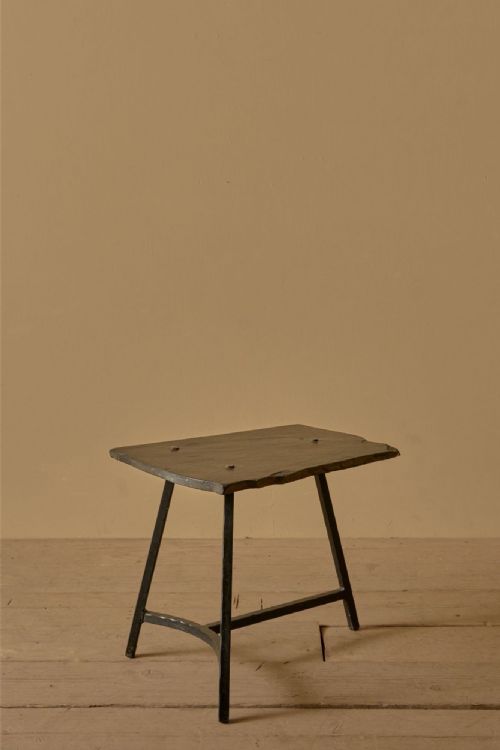
Wooden elements such as oak, pine, elm, and burr walnut form the table surfaces, frequently joined to the iron bases with mechanical fixings or integrated vices and clamping bars. Marble and slate additionally appear as solid surfacing materials for specific console and side tables.
Industrial Iron Table Retail Price Guide 2026
Typical asking prices for industrial iron table among the pieces listed under this phrase on Sellingantiques today, from the lower quarter to the upper quarter. They describe what is for sale here now, not the wider market.
Listings feature nineteenth-century and early twentieth-century pieces incorporating cast iron, steel, oak, pine, marble, and brass across console, bistro, and workbench formats.
Assessing Quality
Quality rests upon the integrity of the original pairing between the metal base and the top surface, distinguishing period combinations from later adaptations. Tables retaining their original timber tops or authentic period stone display a more cohesive character than mixed elements.
The execution of the cast iron or steel work defines the upper tier of these pieces, showing crisp foundry marks and well-preserved mechanical adjustments such as threading or pivoting mechanisms. Robust construction in the timber framing ensures lasting stability.
Jones Sewing Base·Singer Sewing Machine·Tanns Defiance London·Carters Of London
The Industrial Iron Table Glossary
- Cast iron
- A strong, hard iron-carbon alloy poured into moulds to create intricate and heavy structural bases. It forms the backbone of many nineteenth-century workshop and pub tables.
- Britannia metal
- A tin-based alloy often associated with pub table pedestal designs featuring seated figures. These bases provide sturdy support for round timber table tops.
- Up-cycled
- The process of adapting older industrial machine bases or factory remnants with new or reclaimed wooden tops. This practice creates functional tables from discarded industrial equipment.
- Butchers block
- A thick, heavy wooden block surface supported by a robust frame, utilised for heavy food preparation. In antique formats, these rest upon heavy iron or timber stands.
- Console table
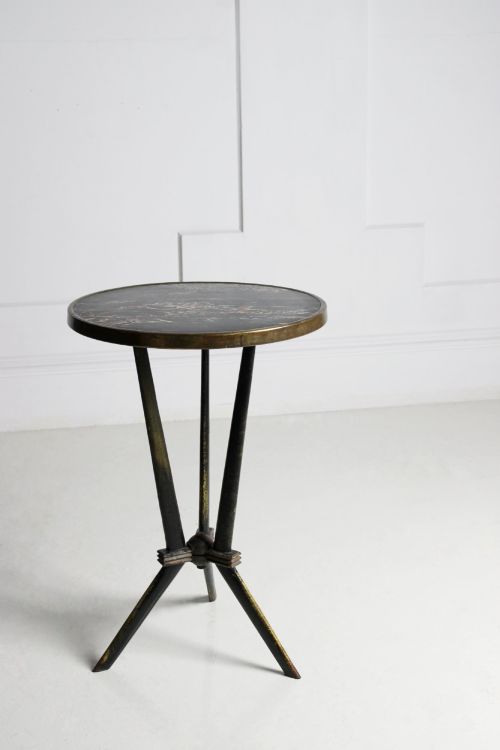
- A table designed to stand against a wall, frequently featuring a narrow profile with a marble, slate, or wooden top. They appear with iron and brass framework.
Industrial Iron Table: Frequently Asked Questions
Are these tables suitable for dining?
Many smaller forms serve as bistro or side tables, while long workbenches and pub tables offer adequate surface area for dining use. Selecting the correct height and top dimensions ensures comfortable seating.
The heavy iron bases occasionally restrict legroom underneath depending on the specific casting design.
How do I care for iron and wood tables?
Maintaining these pieces involves dusting the timber and treating wooden surfaces with appropriate natural waxes or oils to prevent drying. Iron components benefit from gentle cleaning to preserve their dark patination.
Avoiding excessive moisture protects both the porous wooden tops and the vulnerable metal finishes from corrosion.
What dates are typical for these pieces?
The listings span from the nineteenth century through the Edwardian era and into the 1930s and 1940s. Victorian and Edwardian examples predominate alongside interwar pieces.
Construction methods and material choices generally shift from heavy cast iron towards lighter steel frames as the twentieth century progresses.