






Industrial Display Rack
An industrial display rack brings heavy metal utility and hardworking shop provenance straight into a modern domestic interior.
Industrial Display Rack
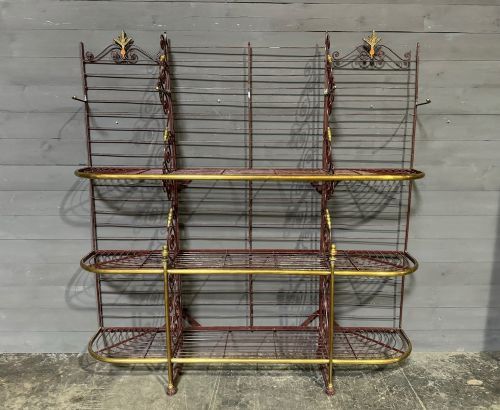
When you search for an industrial display rack, you encounter sturdy commercial furniture designed originally for bakeries, patisseries and Victorian or 20th-century shops. The pieces on this page span the nineteenth century, the Edwardian era, and the nineteen-thirties, reflecting a heavy reliance on robust utility.
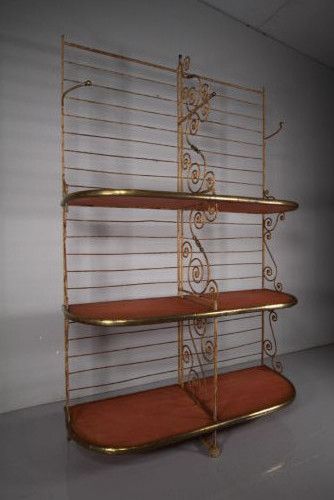
You are most likely to meet large French bakers racks, Parisian boulangerie bread racks and English shop display stands. These functional forms range from monumental nine-foot wrought iron framework down to countertop paper roll dispensers and small key holders.
The stylistic influences lean heavily towards French industrial, French provincial and Victorian commercial design. Bakers racks dominate the selection, bringing open shelving and substantial metalwork into domestic settings.
Materials and construction
Makers built these pieces using robust structural metals including wrought iron, cast iron, steel, brass and bronze, often paired with pine, oak, slate and glass. Wrought iron provides the structural skeleton for many Parisian bakery units, shaped with scroll-work and sturdy uprights.
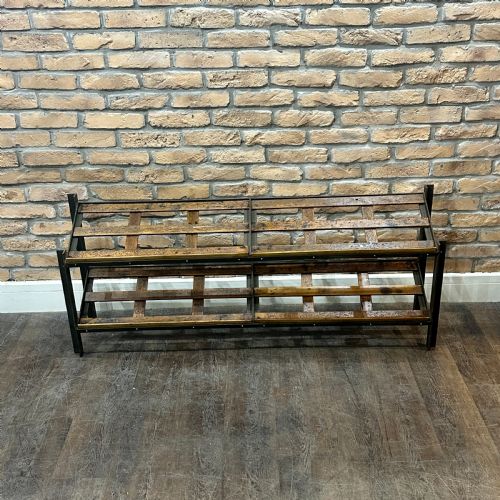
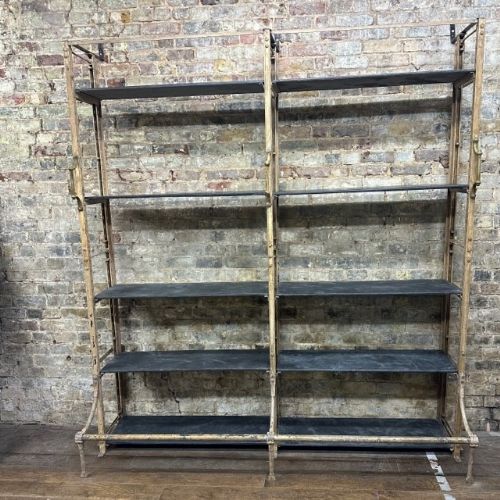
Workshops combined heavy metal frames with timber boards and slate shelving to withstand the daily demands of commercial trade. Stamped maker marks and patinated finishes indicate traditional workshop fabrication methods from the nineteenth and early twentieth centuries.
Industrial Display Rack Retail Price Guide 2026
Typical asking prices for industrial display rack among the pieces listed under this phrase on Sellingantiques today, from the lower quarter to the upper quarter. They describe what is for sale here now, not the wider market.
Object forms range from monumental nine-foot bakers racks down to countertop paper roll dispensers and dedicated key holders.
Judging quality in industrial storage
Quality rests upon the integrity of the original commercial framework, the weight of the metal and the authenticity of the patination. Heavy gauge wrought iron and substantial cast elements outlast lighter modern reproductions.
Makers such as Dubois of Lyon demonstrated superior craftsmanship through stamped signatures, balanced proportions and sophisticated scroll-work. The presence of original glass panels, slate shelves and genuine workshop stamps elevates an industrial piece above standard utility items.
Dubois of Lyon·Wilmot
The Industrial Display Rack Glossary
- Bakers Rack
- A tall metal and timber shelving unit originally utilised for cooling bread and pastries in commercial kitchens. These pieces now serve as open storage and display in domestic kitchens and living spaces.
- Wrought Iron
- A tough, malleable form of iron containing embedded slag fibres, beaten into shape by hand. This material resists snapping and allows for decorative scroll-work on nineteenth-century frames.
- Boulangerie Rack
- A French bakery shelving unit typically constructed from heavy iron framework designed to hold long loaves. They often feature multiple tiers and pronounced industrial character.
- Shop Display Stand
- A dedicated retail fixture made to showcase goods on counters or in shop windows. These include brass and iron stands alongside specialised glass and timber arrangements.
- Patisserie Rack
- A French pastry display stand built for commercial food preparation and presentation. They showcase the lighter, decorative side of nineteenth-century French metalwork.
Industrial Display Rack: Frequently Asked Questions
What is an industrial display rack?
An industrial display rack is a heavy-duty commercial storage unit built from materials like iron, steel, wood and slate. These pieces originated in Victorian shops, Parisian boulangeries and 1930s retail environments.
Today, buyers repurpose them for open kitchen storage, book display or decorative shelving in domestic rooms.
How do I date an antique bakers rack?
Dating relies on construction methods, material choices and stamped workshop signatures. Pieces from the mid-nineteenth century often feature hand-forged wrought iron and simpler structural joins.
Twentieth-century iterations introduce steel framing, slate shelving and commercial bronze elements associated with 1930s shop fittings.
Are industrial display racks heavy?
These pieces are constructed from solid metals, dense timber and sometimes slate, making them substantially heavy. They require sturdy flooring and careful placement due to their robust commercial heritage.
Large French bakers racks often exceed nine feet in height and need multiple people for safe transport and installation.
How do I clean a metal display stand?
Preserving the original surface requires gentle dusting and occasional light waxing for timber components. Avoid harsh chemical cleaners that strip the historic patination accumulated over decades of shop use.
Metal framework responds well to dry wiping and microfibre cloths to remove surface debris without disturbing the aged finish.