



Industrial Ceiling Shade
These industrial ceiling shade examples bring functional workspace illumination into domestic rooms through durable metal and glass construction.
Industrial Ceiling Shade
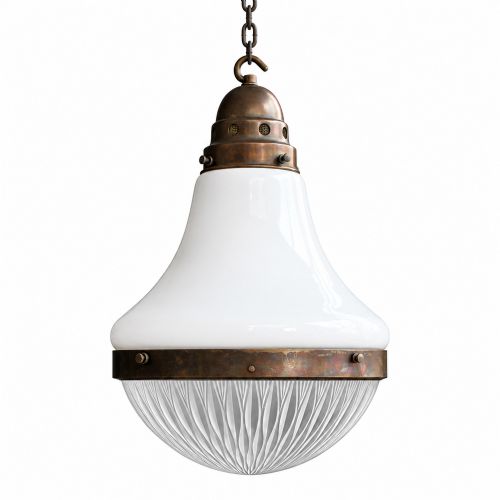
When you search for an industrial ceiling shade, you encounter functional hanging illumination designed for factories, railways, and public spaces during past centuries. These pieces typically take the form of pendant lights or ceiling lights suspended from above, directing light downward onto work surfaces.
The selections available here lean heavily toward early twentieth-century examples, particularly from the 1920s and 1930s, alongside Victorian and Edwardian antecedents. You will find items styled in industrial, Art Deco, and nautical aesthetics, often salvaged from institutional or commercial settings.
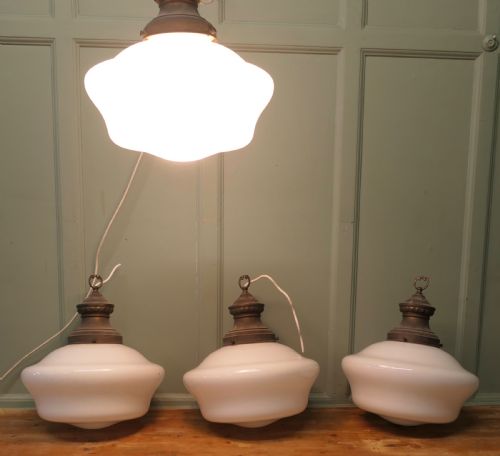
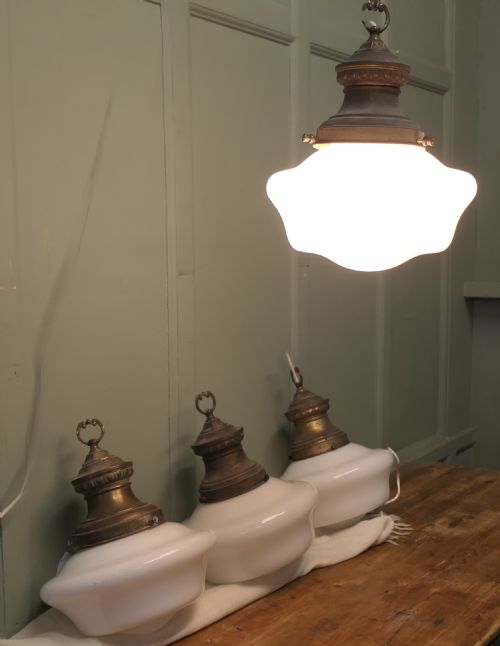
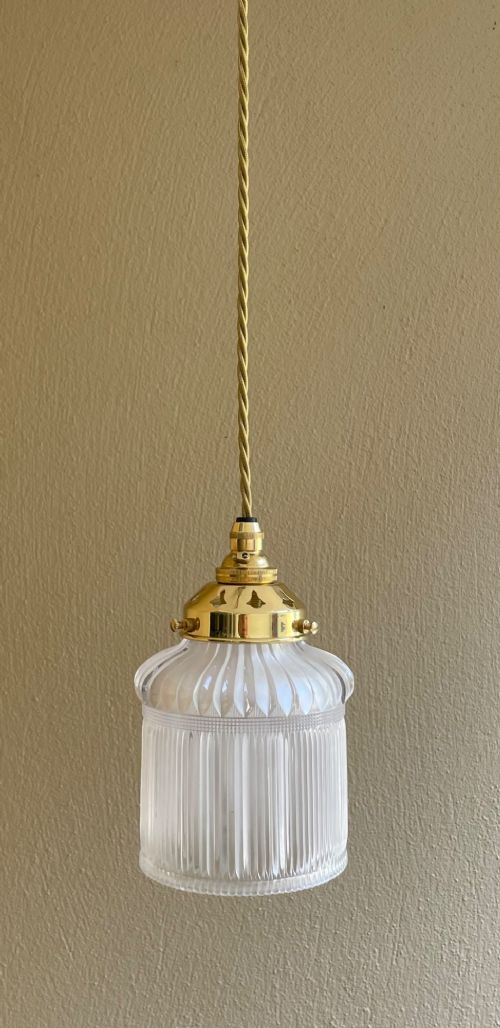
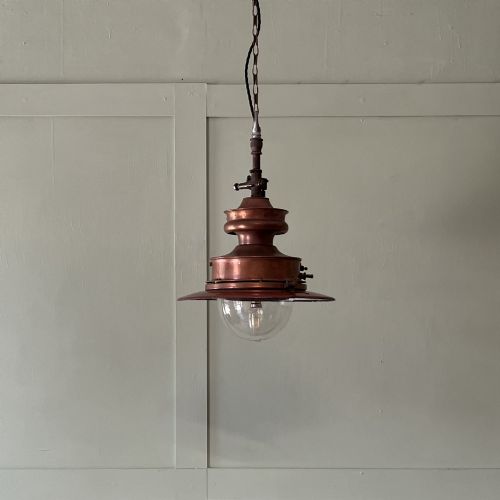
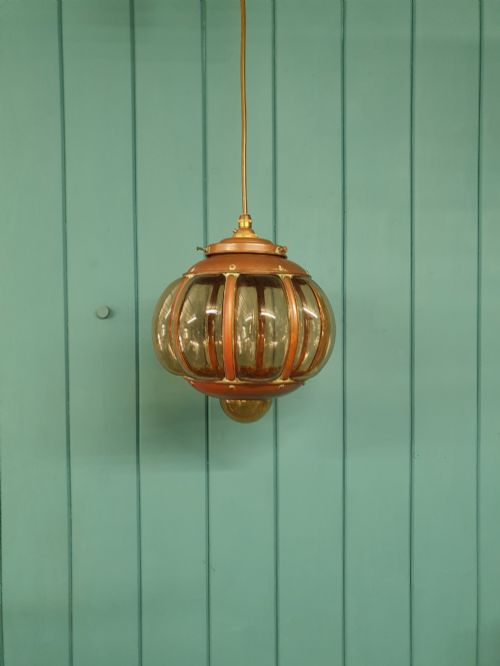
Common variations include bell pendants, chapel lights, and railway hanging lanterns constructed for heavy daily use. Many retain their original shades, ranging from prismatic glass to enamelled metal, offering direct utilitarian character for modern interiors.
Assessing quality
Quality in an industrial ceiling shade rests upon the retention of original components, such as stamped maker markings, matching galleries, and untouched shade glass. Pieces that preserve their authentic surface wear and manufacturer details carry greater historical integrity.
The sophistication of the glasswork distinguishes finer examples, particularly double prismatic or complex moulded patterns designed for specific optical performance. Heavy-gauge metals and substantial cast iron or brass fittings also indicate sturdier original manufacture.
Industrial Ceiling Shade Retail Price Guide 2026
Typical asking prices for industrial ceiling shade among the pieces listed under this phrase on Sellingantiques today, from the lower quarter to the upper quarter. They describe what is for sale here now, not the wider market.
Listings feature items spanning the Victorian era through the mid-twentieth century, dominated by 1920s examples.
Gecoray·Holophane·Vestaray
The Industrial Ceiling Shade Glossary
- Holophane
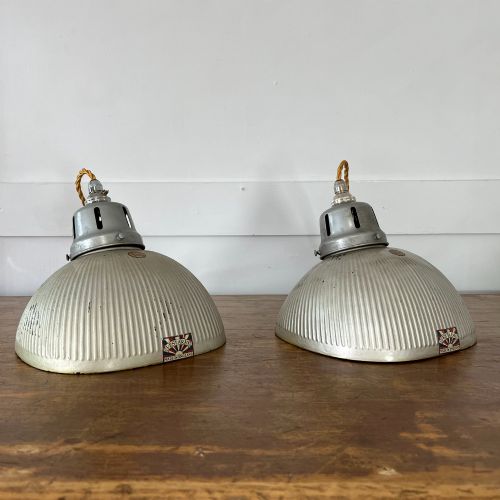
- A brand and style of scientifically moulded glass shade designed to control and diffuse light glare efficiently. These shades feature ridges or prisms on the glass surface.
- Opaline glass
- A milky, translucent white glass used to soften light output while maintaining high luminosity. It gained popularity in institutional and domestic lighting during the early twentieth century.
- Prismatic glass
- Glass moulded with geometric ribs that bend light rays to reduce glare and distribute illumination evenly. Double prismatic versions feature complex two-sided patterns.
- Gallery
- The metal collar or mount at the top of a shade that connects the glass or metal body to the suspension rod or flex. It often includes screws to secure the shade in place.
Industrial Ceiling Shade: Frequently Asked Questions
How do I hang an industrial ceiling shade?
Suspension typically requires a compatible ceiling hook and electrical cord connected to a standard mains supply. Professional installation ensures the weight of cast iron or heavy glass is supported securely.
Adjustment of the drop height depends on your ceiling clearance and whether the light hangs over a dining table or open floor space.
What rooms suit an industrial ceiling shade?
Kitchens, hallways, and dining areas provide ideal settings where direct task lighting is practical. The robust materials complement both rustic and contemporary interior schemes.
Pairing multiple pendants in a row creates balanced illumination over kitchen islands or work counters.
How do I clean an antique glass shade?
Warm soapy water and a soft cloth suffice for most glass surfaces, avoiding abrasive pads that scratch the material. Mirrored or mercury glass requires particular care to protect the sensitive interior finish.
Removing the shade from the gallery allows safer handling during maintenance.
Are these lights wired for modern use?
Many surviving examples undergo rewiring to meet contemporary electrical standards while preserving the vintage exterior housing. Checking the internal fittings confirms compatibility with standard modern bulbs.
Consulting a qualified electrician ensures the setup complies with current regulations.