





Industrial Hanging Fixture
An industrial hanging fixture brings robust utility and striking form into domestic spaces, prized for its honest construction and enduring historic character.
Industrial Hanging Fixture
An industrial hanging fixture represents functional lighting adapted from factories, maritime settings, and early commercial spaces for domestic interiors. When searching for an industrial hanging fixture, buyers encounter ceiling lights, pendants, and chandeliers originating from the nineteenth century through the nineteen-thirties.
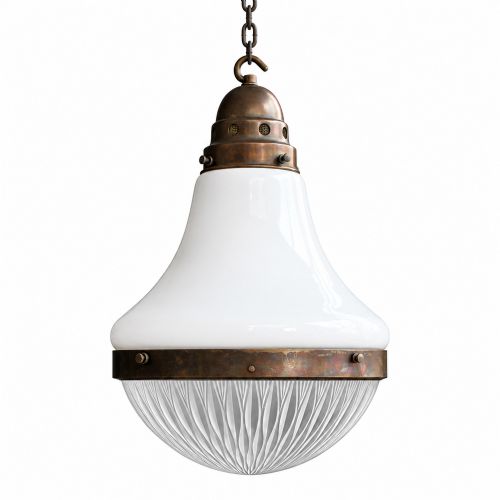
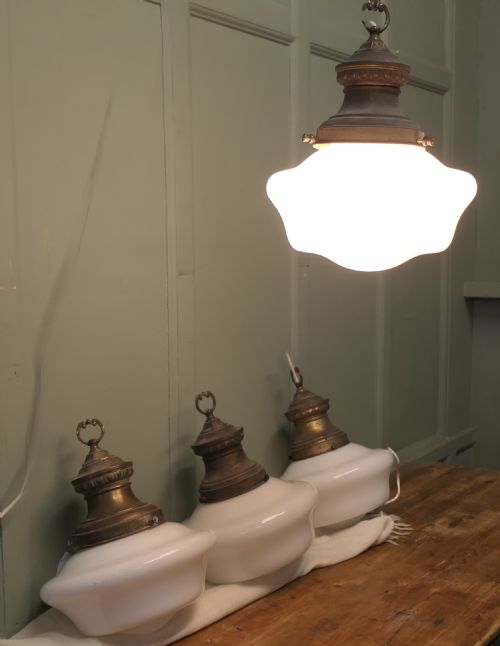
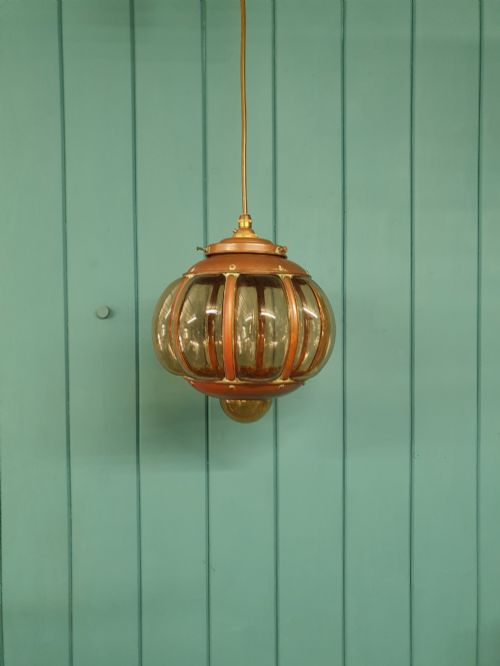
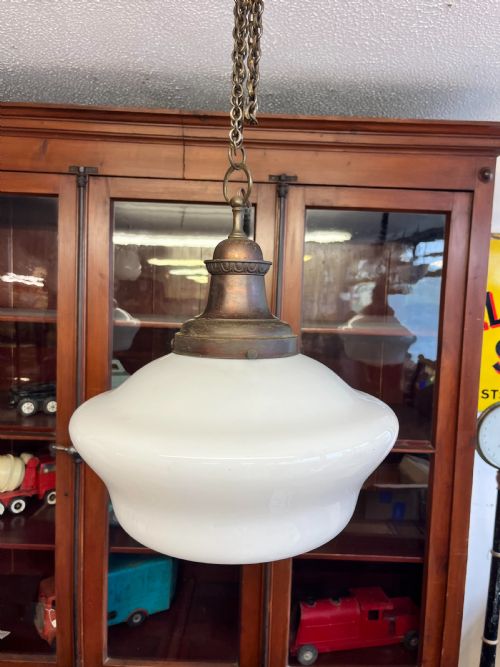
The selection ranges from utilitarian workshop fittings and green enamel factory pendants to nautical copper lanterns and sophisticated Art Deco steel designs. Edwardian examples and pieces featuring opaline glass or ribbed glass shades appear frequently across the collection.
Form follows strict function in these lights, designed originally to illuminate large workspaces, ships, and chapels efficiently. Their robust build makes them a practical choice for modern kitchens, hallways, and living spaces requiring authentic period illumination.
How They Were Made
Construction relies heavily on durable metals including brass, copper, steel, cast iron, and wrought iron to withstand demanding environments. Galleries and fittings utilise cast and spun metals, sometimes paired with chrome or vitreous enamel coatings for added protection and reflection.
Glass components feature prominently, utilising heavy opaline glass, smoked glass, mirrored glass, and specialised prismatic shades designed to diffuse light effectively. Makers employed robust fixings, securing glass shades within metal galleries using screws and galleries suited for heavy daily use.
Industrial Hanging Fixture Retail Price Guide 2026
Typical asking prices for industrial hanging fixture among the pieces listed under this phrase on Sellingantiques today, from the lower quarter to the upper quarter. They describe what is for sale here now, not the wider market.
Some heavy iron fixtures spent decades illuminating damp chapel rafters before finding a second life over modern kitchen islands.
What Varies In Quality
Quality reveals itself in the weight of the metal components, the thickness of the glass, and the sophistication of the shade design. Prismatic glass shades with precise geometric moulding and substantial metal galleries represent superior production standards compared to simpler utilitarian variants.
The integrity of surface finishes, whether patinated copper, vitreous enamel, or polished brass, distinguishes finer pieces. Original manufacturer galleries, matching ceiling roses, and intact maker markings elevate a fixture's desirability among collectors.
The Industrial Hanging Fixture Glossary
- Gallery
- The metal collar or fitter that holds the glass shade in place and connects to the suspension rod or chain. It often bears the maker's stamp or patent details.
- Opaline glass
- A milky, translucent white glass used extensively in early twentieth-century lighting to soften glare and diffuse light evenly. This material is frequently found in factory and chapel pendants.
- Vitreous enamel
- A durable, fused glass-and-metal coating applied to steel or iron shades to resist heat and corrosion. Green and dark enamel finishes are typical of industrial contexts.
- Pendant light
- A single light fixture suspended from the ceiling by a cord, chain, or metal rod. These fixtures serve as focused task or ambient room lighting.
- Prismatic shade
- A glass shade moulded with internal ribs or prisms to refract and disperse light efficiently while hiding the glowing filament. Holophane production is the most notable example.
Industrial Hanging Fixture: Frequently Asked Questions
How do I hang a heavy industrial light?
Heavy fixtures require secure anchorage directly into ceiling joists or the use of appropriate toggle bolts to support the weight of cast iron or thick glass. Professional electrical installation ensures the suspension wiring safely bears the load of the fixture.
Matching the drop length to the room proportions prevents the fixture from hanging too low in domestic spaces. Consider ceiling height carefully before fixing suspension chains or rods.
Can I use modern LED bulbs in these fixtures?
Most vintage fittings accept standard modern screw or bayonet LED bulbs, provided the wattage matches the historical rating of the socket. LED options generate less heat, protecting vintage wiring and glass shades from thermal stress.
Choosing warm white LED filaments helps replicate the soft glow produced by early carbon-filament bulbs. Clear or opaline glass shades alter the light output significantly depending on the bulb selected.
How do I clean opaline and enamel shades?
Wash glass and enamel components gently in warm soapy water using a soft cloth to avoid scratching the surface or removing aged patination. Avoid harsh chemical cleaners that might damage vintage metal lacquers or ceramic coatings.
Dry metal parts thoroughly after washing to prevent corrosion on iron or steel galleries. Brass and copper components respond well to mild non-abrasive cleaners if bright metal is preferred over a dark patina.
How do I date an industrial hanging fixture?
Examine the materials, screw types, wiring channels, and manufacturing style to determine the approximate period of production. Edwardian and early twentieth-century pieces often feature heavy brass galleries, cast iron fixings, and specific shade profiles like witches hats.
Art Deco examples introduce geometric steel framing and streamlined silhouettes typical of the nineteen-thirties. Patent numbers or maker marks stamped onto metal galleries provide definitive clues to the manufacturing era.