



Industrial Pendant Fitting
An industrial pendant fitting brings honest utility and robust character to a room, offering practical illumination forged from decades of workshop and factory use.
Industrial Pendant Fitting
When you search for an industrial pendant fitting, you are looking at utilitarian ceiling hung lighting drawn from factories, trade settings and early twentieth century workplaces. These fixtures provide direct downward illumination through robust shades designed for heavy daily use.
The most common examples on this page date from the early decades of the twentieth century, specifically spanning the nineteen-tens through to the nineteen-forties. You will encounter single pendant lights alongside sets of four matching ceiling fixtures and trade sign lights.
The styles range across plain industrial, Edwardian industrial, Art Deco, mid-century industrial and rustic designs. Their forms include factory pendant lights, mercury mirrored glass shades and wrought iron wagon wheel chandeliers.
How they were made
Makers constructed these fittings using durable industrial materials capable of withstanding harsh workplace conditions. Brass, steel and cast iron form the structural bodies and fixings, providing the necessary weight and mechanical strength.
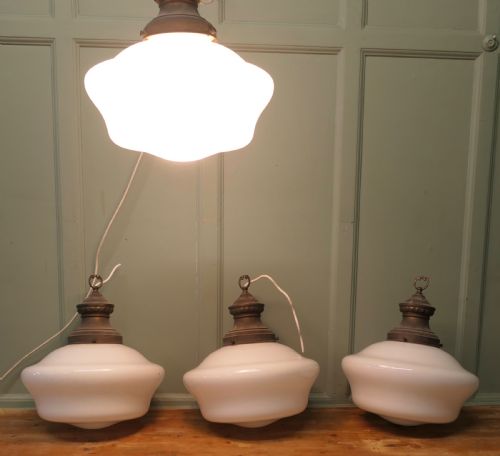
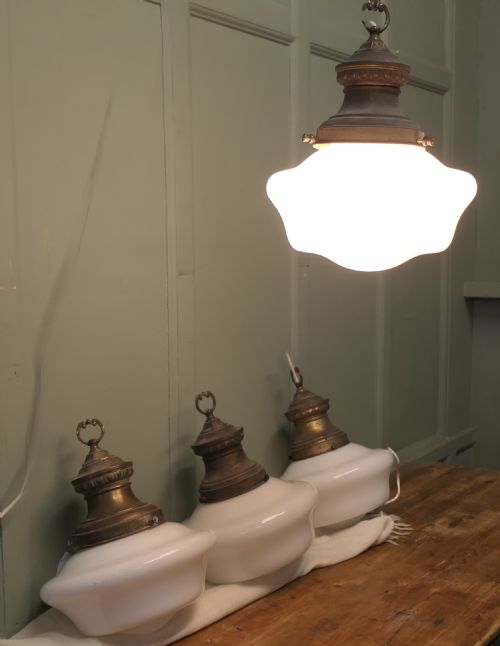
Shades utilise specialist glass and metal treatments to diffuse or direct light effectively. Opal glass, opaline glass, mercury glass and clear glass are paired with vitreous enamel coatings applied to metal shades for longevity.
Industrial Pendant Fitting Retail Price Guide 2026
Typical asking prices for industrial pendant fitting among the pieces listed under this phrase on Sellingantiques today, from the lower quarter to the upper quarter. They describe what is for sale here now, not the wider market.
Some trade sign lights from the nineteen-forties once blinked away above dusty Victorian storefronts before finding a second life indoors.
What varies in quality
The distinction between standard utility items and finer examples often lies in the sophistication of the shade material and the grade of metalwork. Moulded prismatic glass optics and heavy vitreous enamel finishes represent a higher tier of production than simple painted iron.
Subtleties in period manufacturing techniques, such as the depth of the enamel gloss or the clarity of the pressed glass, separate basic workshop survivors from more refined architectural fittings.
The Industrial Pendant Fitting Glossary
- Vitreous enamel
- A durable glass coating fused to metal at high temperatures, providing a glossy, protective finish on industrial shades. This material resists corrosion and retains its colour over decades.
- Opal glass
- A translucent white glass used to soften light output and reduce glare in commercial and industrial settings. It produces an even, diffused glow when illuminated.
- Mercury glass
- A double walled blown glass type featuring a silvered liquid interior that creates a mirrored reflective effect. It was popular for decorative and specialised lighting during the early twentieth century.
- Prismatic glass
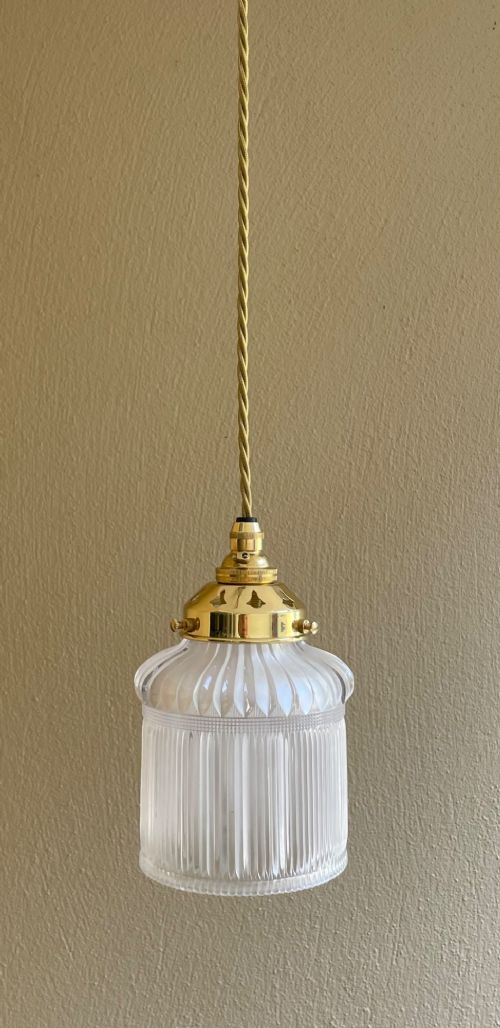
- Glass moulded with geometric ridges or patterns designed to refract and distribute light efficiently. Holophane is a well known proprietary form of this material.
- Wrought iron
- Tough, malleable iron worked by hand into structural and decorative shapes. It provides sturdy framing for multi-light chandeliers and heavy ceiling fixtures.
Industrial Pendant Fitting: Frequently Asked Questions
What periods do these pendant fittings cover?
The available pieces span the early twentieth century, with examples recorded from nineteen hundred, nineteen-ten, nineteen-twenty, nineteen-thirty and nineteen-forty. Each decade brings distinct manufacturing traits.
Earlier pieces often lean towards heavy iron and simple glass, while later examples incorporate sleek enamel and mid-century industrial styling.
How were industrial pendant lights originally used?
These fixtures were hung high above factory floors, workshops and trade signs to provide targeted illumination for workers. Their robust construction ensured they survived demanding environments.
Today, they are repurposed in domestic and commercial interiors to lend authentic utilitarian character to living spaces and dining areas.
What materials should I look for?
Common materials include structural metals such as brass, steel, cast iron and wrought iron paired with various forms of glass. You will frequently find opal glass, opaline glass, mercury mirrored glass and vitreous enamel.
Each material contributes to both the visual weight and the quality of the light emitted by the pendant.
Are matching sets available?
Listings occasionally include matched groups, such as sets of four industrial ceiling lights or pairs of pendant lights. These are particularly useful for creating a cohesive lighting scheme over a kitchen island or long table.
Single pendants and chandeliers also appear for individual placement.