
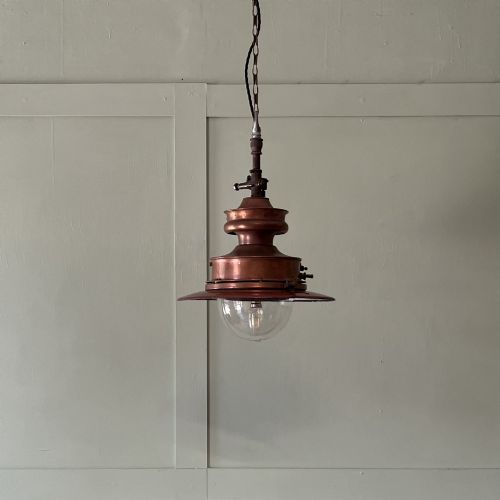
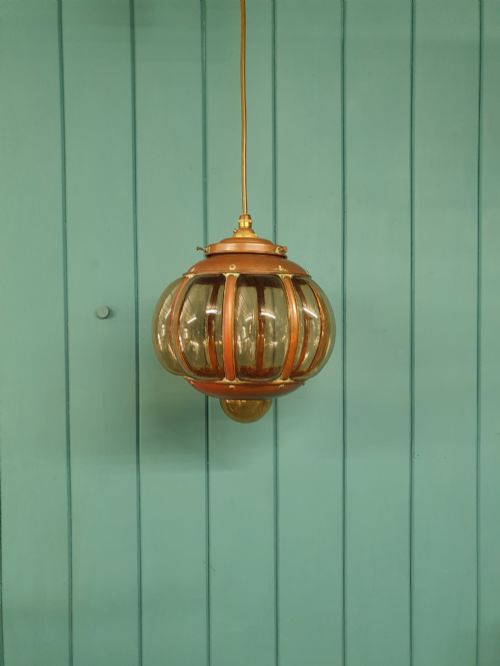


Industrial Ceiling Lamp
These industrial ceiling lamps bring genuine utility into modern spaces, offering robust construction and purposeful illumination born from factories, railways and maritime workshops.
Industrial Ceiling Lamp
An industrial ceiling lamp serves as an overhead lighting fixture derived from commercial, transport or manufacturing environments of the nineteenth and twentieth centuries. These pieces encompass pendant lights, ceiling lights and chandeliers spanning periods from the Victorian era through to the nineteen-forties. Buyers seek them to anchor a room with functional heritage design.
The selection ranges from railway lanterns and factory pendants to nautical fittings and chapel lights. Materials vary from heavy cast iron and steel to polished brass, copper, wrought iron and various forms of glass. Styles stretch across Victorian industrial, Edwardian, Art Deco and mid-century modern idioms.
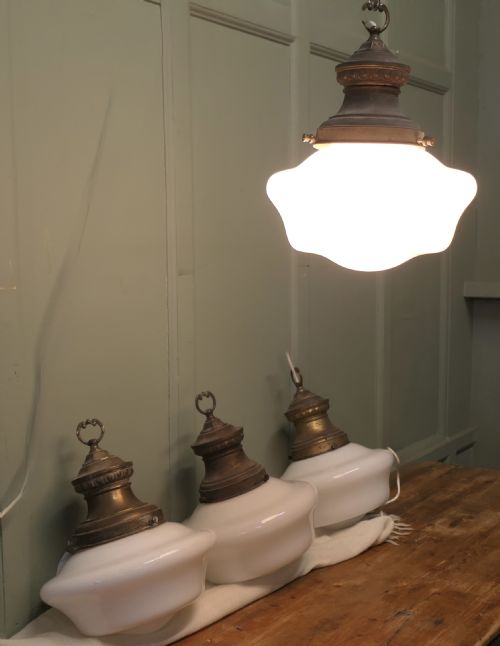
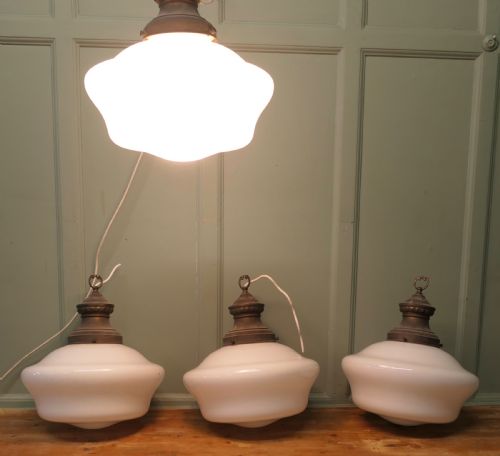
Pendant lights with glass or enamel shades represent the most frequent forms encountered on this page. Many originate from the nineteen-twenties and nineteen-thirties, reflecting the expansion of industrial infrastructure during those decades. Pairs and sets frequently appear alongside individual statement fixtures.
Construction and Materials
Makers utilised durable metals such as copper, brass, steel, cast iron and wrought iron to withstand demanding working conditions. Metal galleries, fitments and chains support heavy glass or enamelled shades, ensuring structural longevity. Wrought iron forms sturdy framework elements like wagon wheel chandeliers.
Glass components include opaline glass, smoked glass, mirror glass, plain glass and prismatic or double prismatic variants designed to diffuse or direct intense light. Enamel coatings in green and other hues protected metal shades from corrosion in factories and railway stations. Many early examples incorporate gas fittings later converted for electrical wiring.
Object types recorded include pendant lights, ceiling lights and chandeliers in styles ranging from nautical to Art Deco and industrial.
Assessing Quality
The calibre of an industrial ceiling lamp rests on the integrity of its original materials and the preservation of its components. Heavy cast metal, thick opaline or prismatic glass and substantial galleries distinguish robust commercial pieces from lighter domestic imitations. Original enamel finishes and authentic maker characteristics elevate the standing of a fixture.
Subtleties in proportion and the complexity of the shade design separate standard utility lighting from superior examples. Double prismatic shades, unusual sizes, and matching pairs or sets demonstrate higher manufacturing ambition. The retention of original hardware, such as copper rivets or brass fixings, indicates superior original specification.
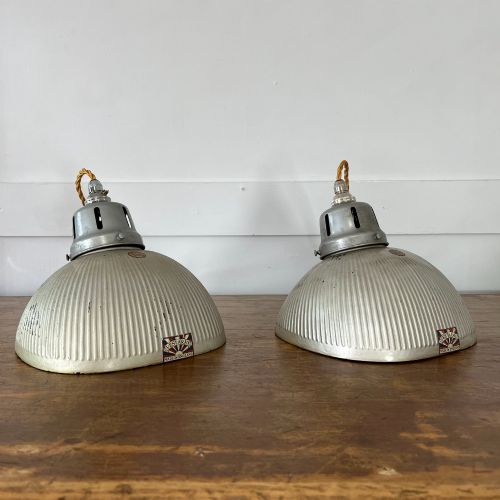
VESTARAY·Holophane
The Industrial Ceiling Lamp Glossary
- Holophane
- A brand of scientific glass shade featuring prismatic ribs designed to efficiently diffuse and direct light without glare. This optical glass is a hallmark of high-grade twentieth-century commercial lighting.
- Opaline glass
- A milky, translucent white glass that softens light diffusion and creates an even glow. It was widely utilised in chapel, school and factory pendants.
- Gallery
- The metal collar or fitter that grips the upper portion of a glass or enamel shade and connects it to the suspension rod or chain. It provides both structural support and decorative framing.
- Pendant light
- A hanging lighting fixture suspended from the ceiling by a cord, chain, or metal rod. These dominate industrial lighting configurations.
- Prismatic glass
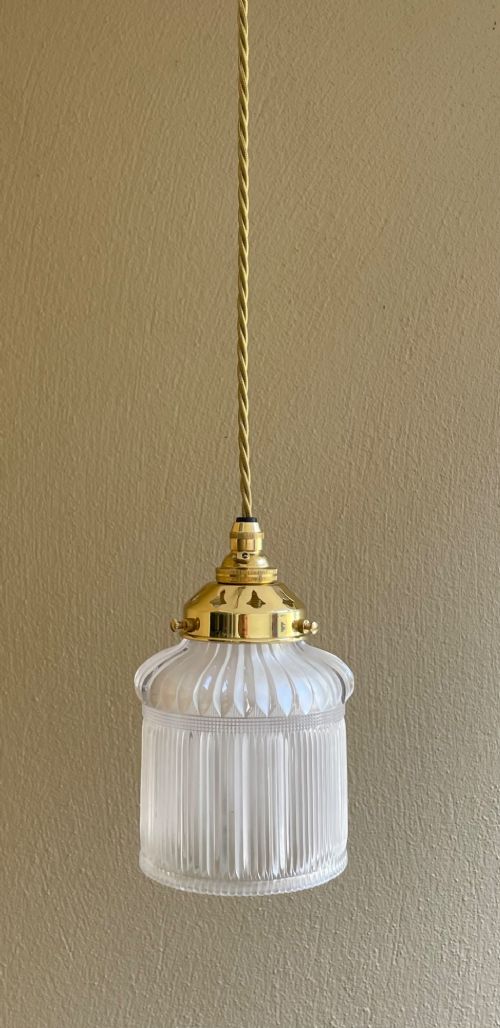
- Glass moulded with geometric ridges or prisms on the surface to refract and maximise light output. Such lenses were essential in large industrial workspaces.
Industrial Ceiling Lamp: Frequently Asked Questions
How do I hang a heavy industrial lamp?
Heavy metal and glass fixtures require secure anchoring into ceiling joists or concrete using appropriate mounting brackets and hooks. The weight of cast iron or large glass shades means standard plasterboard fixings will prove insufficient.
Consulting a qualified electrician ensures the wiring and suspension chain can safely bear the load while meeting current safety standards.
Can these lamps be used with modern bulbs?
Most converted vintage fixtures accept standard modern screw or bayonet LED bulbs, provided the wattage aligns with the fitting's capacity. Clear or opaline LED filaments replicate the visual warmth of older lighting styles.
Checking the internal lampholder size ensures compatibility before purchasing replacement bulbs for prismatic or enclosed shades.
How do I clean opaline and prismatic glass?
Warm soapy water and a soft cloth suffice for cleaning most glass and enamel shades without damaging aged surfaces. Avoid abrasive pads that can scratch delicate mirrored finishes or antique glass.
Prismatic ridges benefit from a soft brush to remove dust settled within the geometric grooves.
Were these lights originally gas or electric?
Many nineteenth-century and early twentieth-century examples began life as gas lamps used in railway stations or industrial yards before later conversion to electricity. Surviving components like brass stopcocks or heavier mounting pipes often hint at this dual history.
Twenties and thirties production runs more commonly utilised electrical wiring from the outset as factory electrification expanded.