


Indian Silver Trinket Box
An indian silver trinket box holds small keepsakes with a craftsmanship rooted in colonial traditions and detailed regional metalwork.
Indian Silver Trinket Box
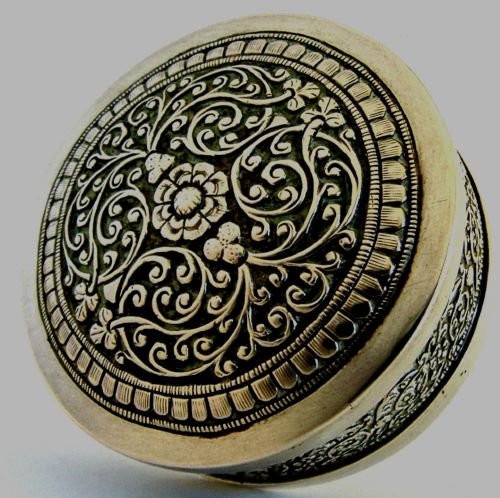
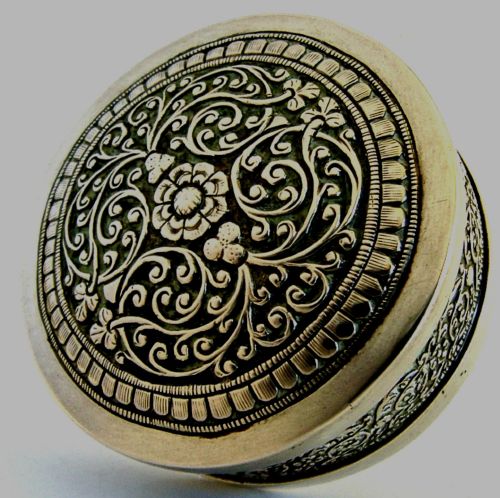
An indian silver trinket box encompasses a range of small lidded containers designed to hold jewellery, cards, or small valuables. These items emerge from the nineteenth and early twentieth centuries, spanning periods from the eighteen-nineties up to nineteen-forty.
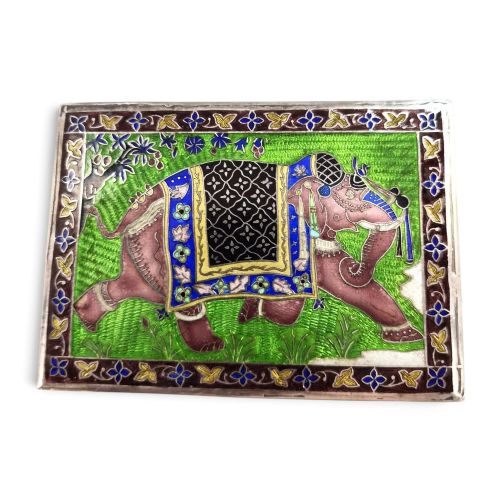
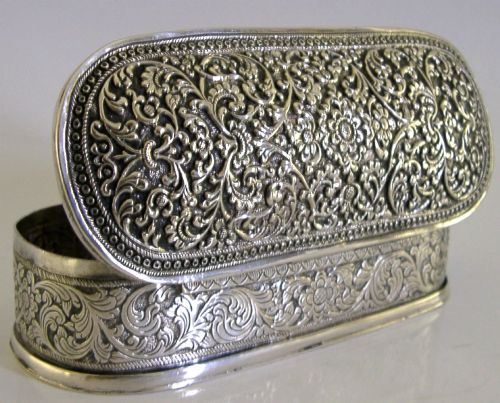
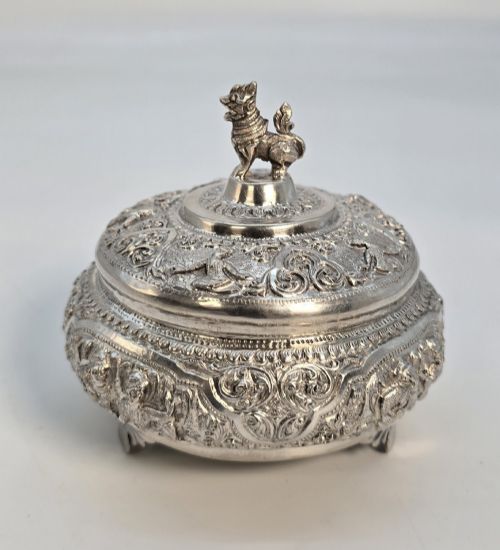
The objects frequently appear in forms such as round containers, heart shapes, rectangular caskets, and lidded jars or tea caddies. Styles lean towards Anglo-Indian, Anglo-Indian Colonial, and Raj period designs, reflecting the aesthetic exchanges of those eras.
Most examples found in this category consist of solid silver or sterling silver, though silver plate and mixed materials such as wood and enamel also appear. Certain pieces originate specifically from regions like Ceylon or Kashmir.
How they were made
Makers utilised silver, solid silver, and sterling silver as the primary metallic base for these containers, occasionally applying silver plate over a different substrate. Enamel work and lacquer surface treatments add colour and contrast to the metallic structures.
Techniques relied on manual shaping and ornamentation, producing detailed decorative surfaces that define nineteenth century and early twentieth century production. Artisans formed heart-shaped boxes, round vessels, and rectangular tea caddies through traditional metalworking methods.
Certain nineteenth-century Kashmir boxes were originally fashioned to store turbans or crowns rather than mere trinkets.
What varies in quality
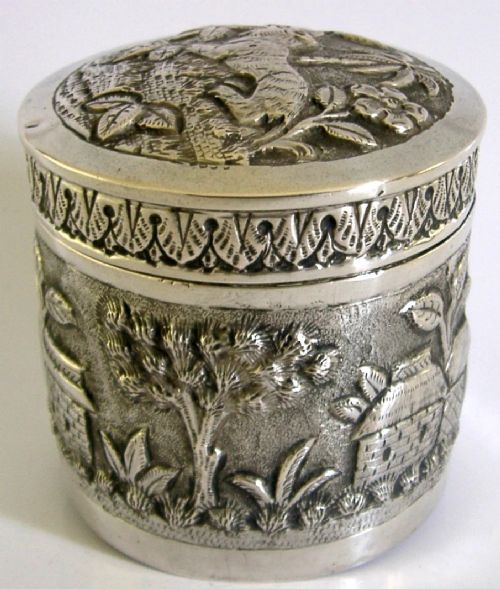
The intricacy of surface detail distinguishes one piece from another, with certain items displaying deep repoussé work depicting village scenes whilst others remain simpler in presentation. The choice of materials also alters the character of a piece, separating solid silver structures from plated items or those incorporating enamel and lacquer.
Regional distinctiveness influences the classification and appeal of these boxes, ranging from standard Anglo-Indian colonial items to specific Kashmir turban boxes or Ceylon productions. The weight of the silver and the precision of the lid fitting further separate standard utility containers from finer decorative works.
The Indian Silver Trinket Box Glossary
- Solid Silver
- A term indicating that the object is made entirely of silver rather than being plated over a base metal. This ensures durability and intrinsic material value.
- Sterling Silver
- A specific silver alloy containing a high proportion of pure silver combined with other metals for strength. It is commonly utilised in decorative boxes and cigarette cases.
- Repoussé
- A metalworking technique where the artisan hammers the metal from the reverse side to form a raised design in relief. This method creates the detailed village scenes and ornate patterns seen on many boxes.
- Tea Caddy
- A small lidded container originally designed to store loose tea leaves. In this category, the form often overlaps with heavier silver boxes.
- Pandan Box
- A traditional container used to hold betel leaf preparations or other aromatic items. These pieces frequently employ handmade silver plating over a supportive core.
Indian Silver Trinket Box: Frequently Asked Questions
What were these boxes used for?
These containers served various domestic purposes depending on their specific form and size. Many held personal ornaments, small keepsakes, cards, or tobacco products.
Larger lidded jars and tea caddies functioned as storage vessels for provisions or luxury goods within colonial households.
How do I clean an indian silver trinket box?
Silver surfaces require gentle maintenance to preserve the underlying metal and any applied detail work. Regular dusting with a soft cloth prevents tarnish accumulation without harming recessed areas.
Harsh chemical dips should be avoided, particularly on pieces featuring enamel, lacquer, or delicate repoussé decoration.
How do I date these pieces?
Dating relies primarily on stylistic markers, materials, and documented periods such as the Raj era or specific decades around nineteen hundred. Structural forms and regional manufacturing styles provide additional chronological context.
Assay marks or inscriptions, where present, offer direct evidence of the year and origin of manufacture.
Are all these boxes solid silver?
Not all containers in this category consist entirely of solid silver or sterling silver. Some examples utilise silver plate over alternative base metals, whilst others incorporate wood, lacquer, or enamel.
Examining the material descriptions helps distinguish solid silver objects from plated or mixed-media variants.
What is Anglo-Indian style?
Anglo-Indian design blends traditional local craftsmanship from the Indian subcontinent with European forms and tastes popular during the colonial period. This aesthetic appears across various decorative boxes and caddies.
The resulting objects combine indigenous ornamentation techniques with shapes familiar to British or European homes of the nineteenth century.