
Indian Octagonal Side Table
An indian octagonal side table brings intricate geometric craft into a room, offering a versatile surface shaped by colonial and traditional workshops.

Indian Octagonal Side Table
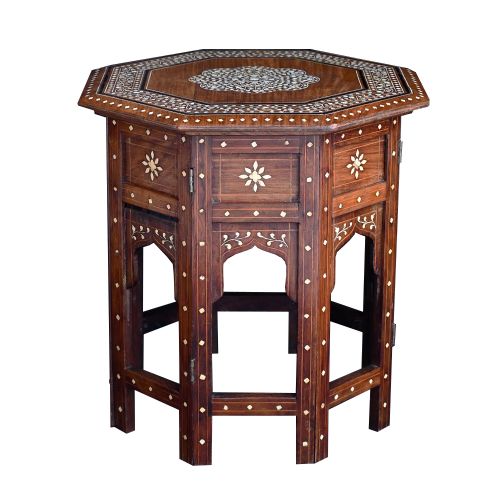
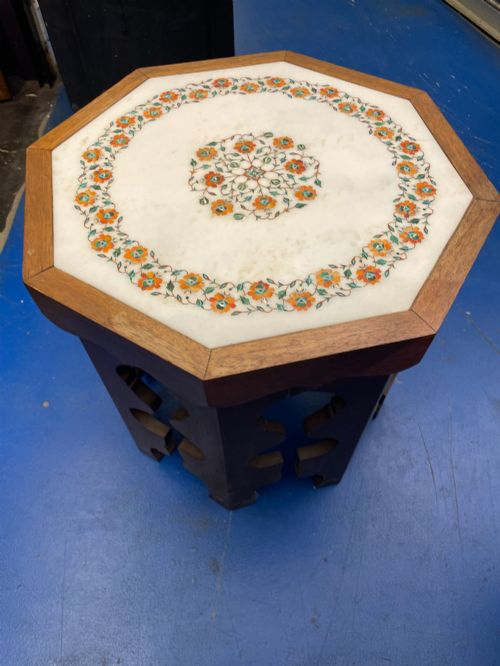
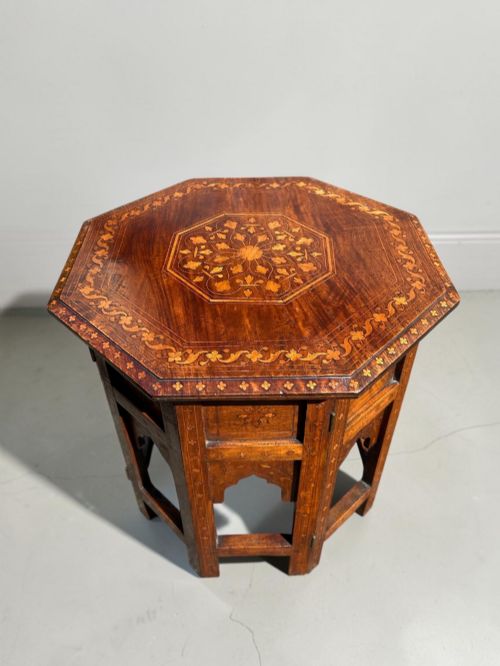
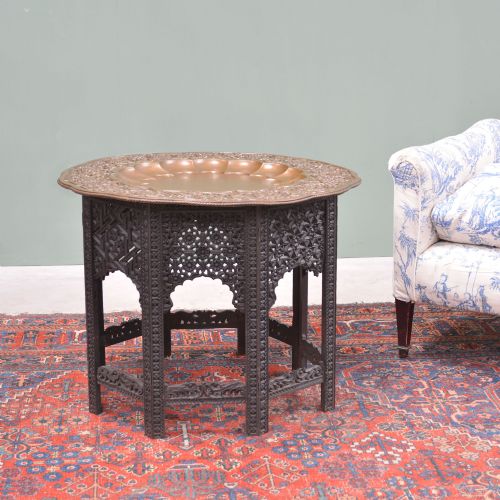
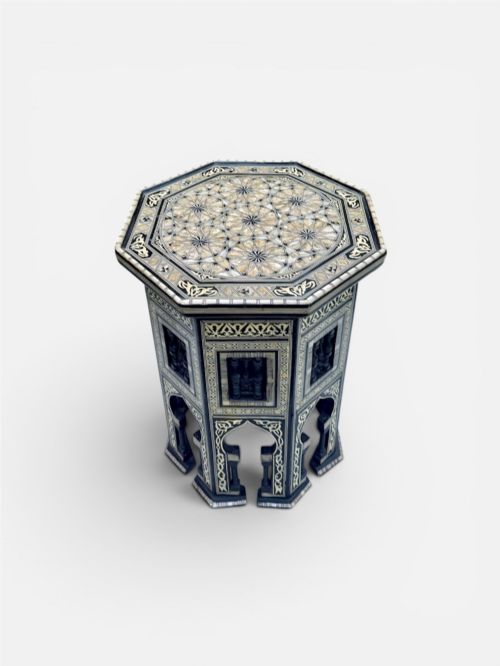
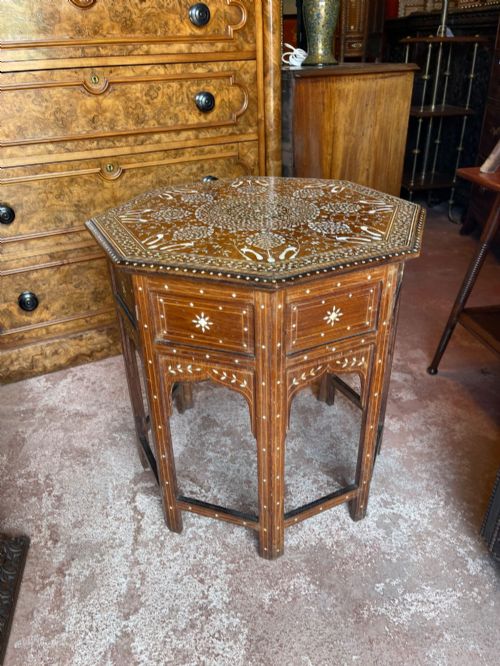
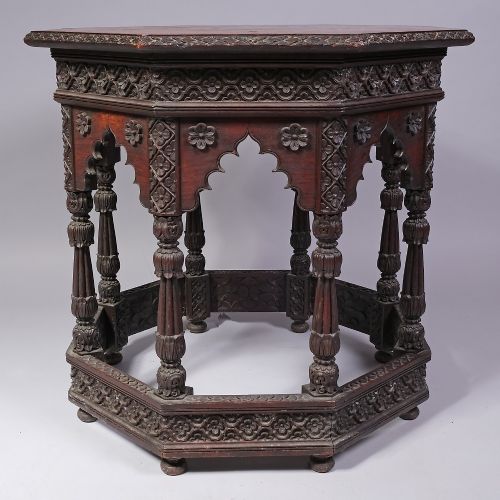
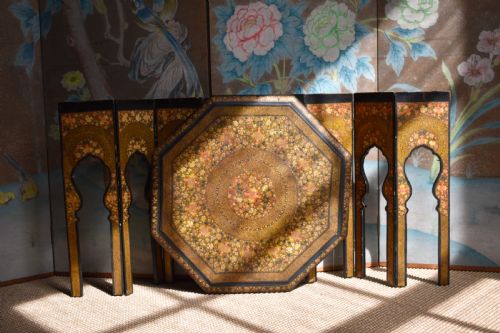
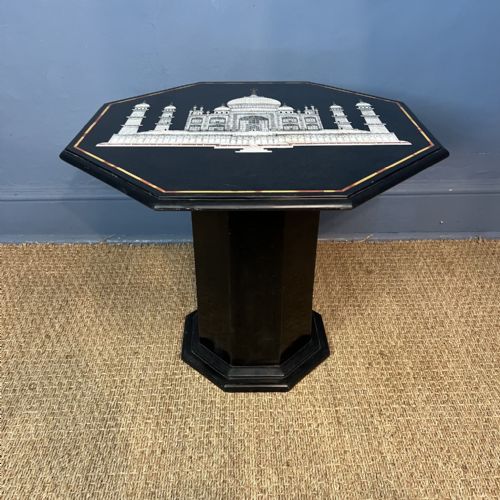
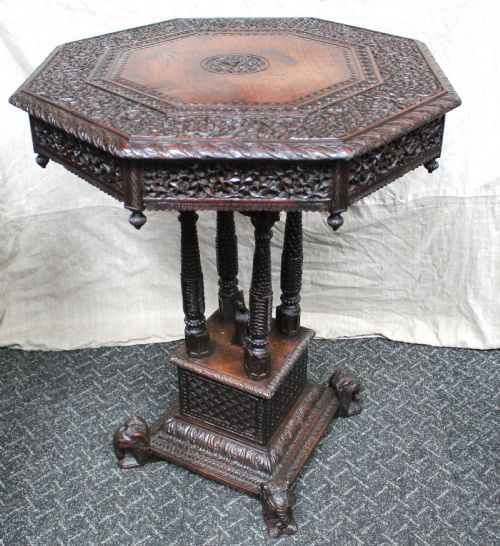
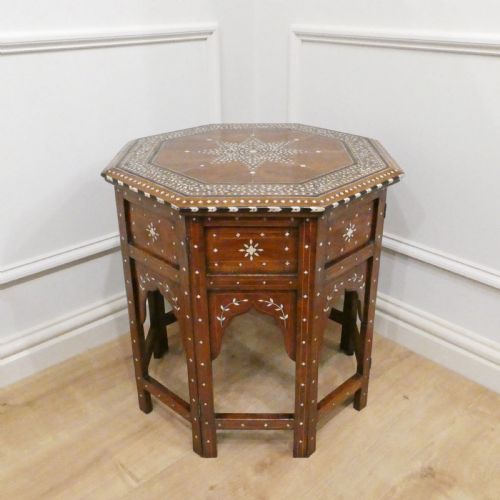
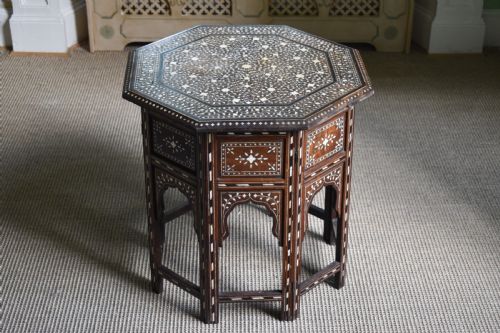
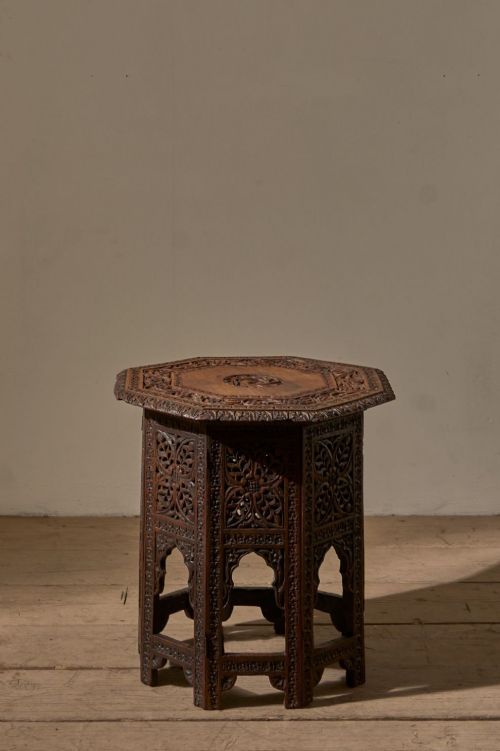
An indian octagonal side table unites eight-sided geometric tops with dense carving, inlay, or painting. These surfaces function as occasional, coffee, or lamp tables within domestic spaces.
Most examples originate from the nineteenth century through the early decades of the twentieth century. Production spans distinct regional centres including Hoshiarpur, Kashmir, and the Bombay Presidency.
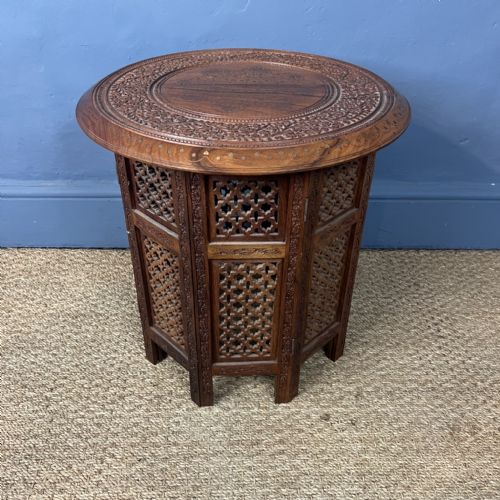
The dominant aesthetic emerges through Anglo-Indian Colonial, Moorish Revival, and Burmese traditions. Folding bases and removable trays appear frequently across the available selection.
Materials and construction methods
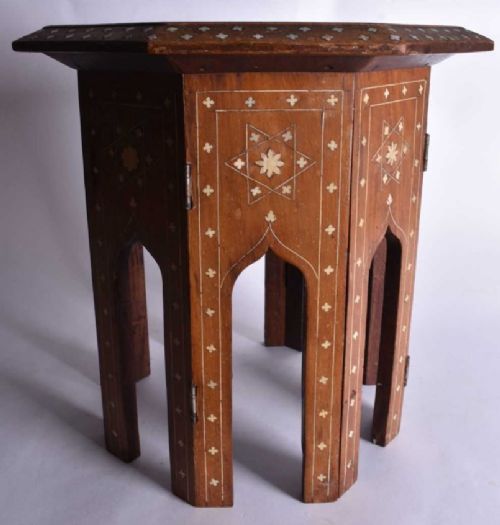
Carpenters utilised dense regional hardwoods such as teak, padauk, rosewood, and sandalwood as the primary structural foundation. Folding frames relied on precise interlocking hinges carved directly from the timber.
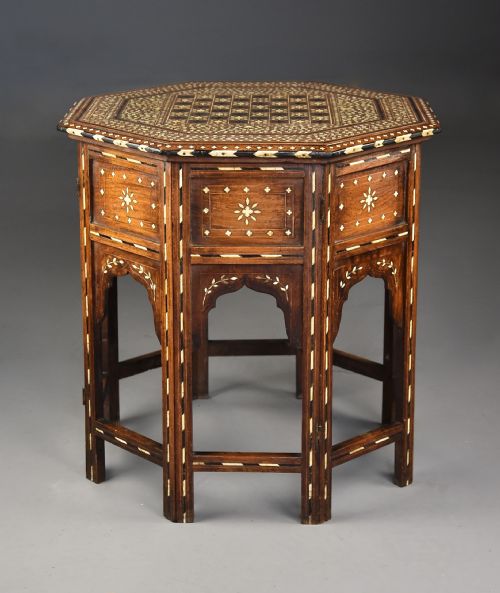
Surface decoration integrated contrasting materials including bone, brass, copper, and mother-of-pearl. Artisans set these elements into meticulously hand-carved recesses across the octagonal planes.
Several unusual animal-form tables appear among the offerings, including carved wooden camels and elephants supporting octagonal trays.
Distinctions in craftsmanship
Quality rests upon the depth and precision of the surface carving alongside the complexity of the inlay work. Finer items display tightly fitted bone or metal elements without gaps in the surrounding timber.
Structural integrity of the folding mechanism and the grain selection of the underlying hardwood differentiate standard items from exceptional workshop productions.
Hoshiarpur workshop·Bombay Presidency workshop
The Indian Octagonal Side Table Glossary
- Anglo-Indian
- A descriptive term for items produced in India during British rule, combining British furniture forms with local decorative techniques.
- Hoshiarpur
- A North Indian town renowned for intricate woodwork, specifically geometric inlay using bone and shesham or teak.
- Padauk
- A heavy, durable tropical hardwood displaying rich reddish-brown tones utilised extensively in colonial furniture production.
- Occasional table
- A small, movable table designed for versatile placement and light domestic use rather than formal dining.
Indian Octagonal Side Table: Frequently Asked Questions
What is an indian octagonal side table used for?
These pieces serve primarily as occasional, lamp, or coffee tables in living spaces. Their compact footprint allows them to sit beside seating areas or function as display surfaces.
Many examples feature folding bases designed for straightforward storage or movement between rooms.
How do I identify a Hoshiarpur table?
Hoshiarpur pieces are characterised by dense, overall surface inlay using materials like bone and brass set into hardwood. The woodwork typically covers every visible plane in floral or geometric motifs.
Originating from the Punjab region, these tables often incorporate folding octagonal tops supported by pierced panel bases.
Are these tables sturdy enough for daily use?
The dense hardwoods used in their construction provide robust structural foundations for normal daily tasks. Folding mechanisms require careful handling to preserve the interlocking wooden joints.
Placing coasters on the surface protects delicate inlay and painted finishes from moisture and heat damage.
How do I date an antique indian table?
Dating relies on examining the timber species, construction methods, and style of inlay or carving. Nineteenth-century examples frequently utilise padauk or teak with hand-cut joinery.
Later pieces from the early twentieth century often display machine-assisted elements or specific regional painting techniques.