






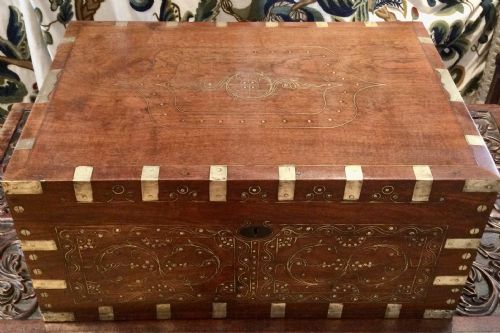
Indian Hardwood Chest
An indian hardwood chest brings solid timber and brass details into a room, offering practical storage with distinct regional character.
Indian Hardwood Chest
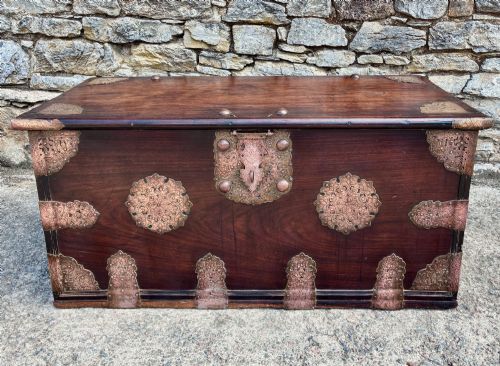
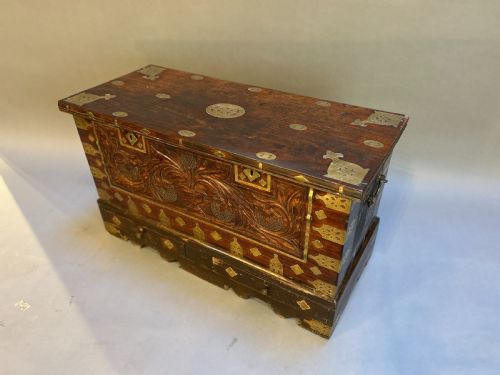
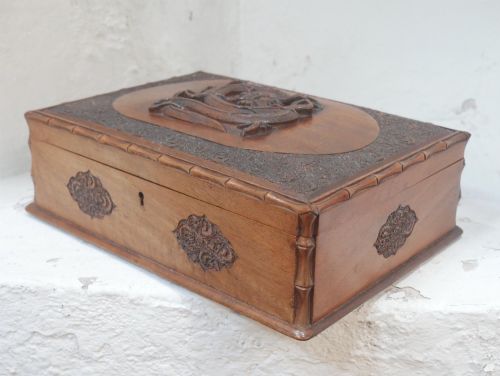
An indian hardwood chest spans robust storage benches, brass-bound deed boxes, and carved sarcophagus-shaped jewellery caskets designed for varied domestic uses. The pieces here draw from nineteenth century traditions, Victorian colonial influences, and twentieth century workshops.
Buyers regularly encounter forms styled as Zanzibar chests, Anglo-Indian storage trunks, and compartmented collector boxes. These items utilise dense timbers suited to both heavy duty storage and intricate surface decoration.
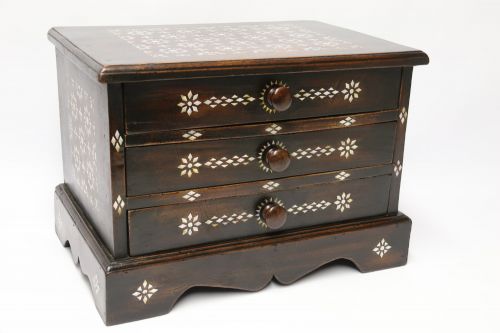
The selection ranges from large blanket trunks to diminutive decorative caskets and multi-drawer drawer units. Each variation reflects specific regional cabinetry methods developed across nineteenth and twentieth century production centres.
How they were made
Carpenters constructed these items using dense timbers such as teak, padouk, sandalwood, walnut, and ebonised hardwood. These materials provided structural strength and resisted the rigours of long-distance transport.
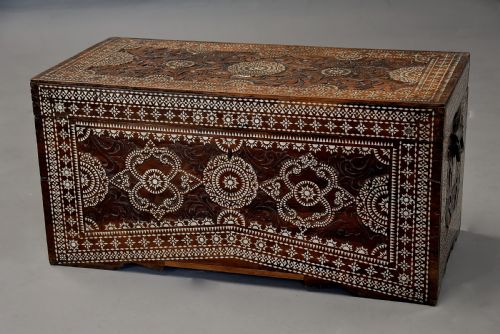
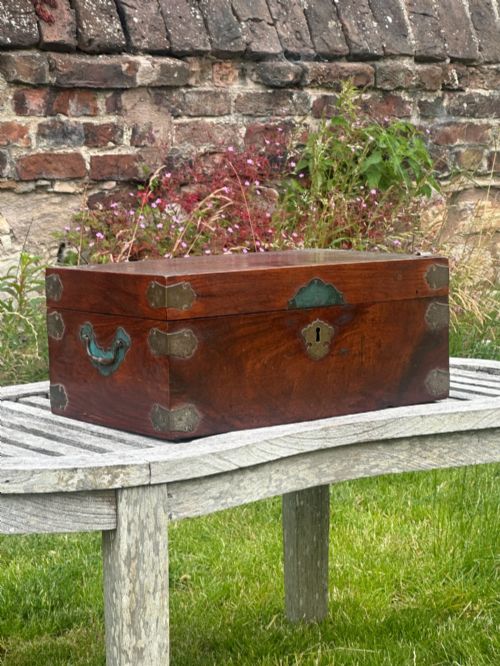
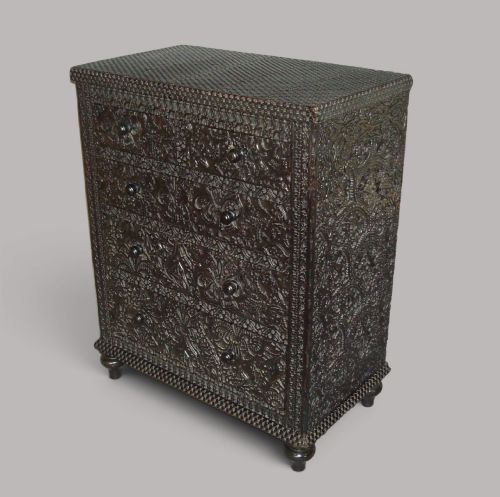
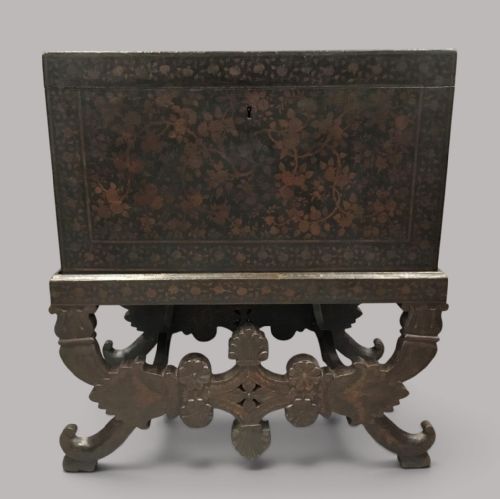
Workshops reinforced the timber bodies with brass straps, iron studs, and metal corner brackets to protect the joints. Surface enrichment relied on bone, mother of pearl inlay, carved relief work, and occasional lacquering.
Indian Hardwood Chest Retail Price Guide 2026
Typical asking prices for indian hardwood chest among the pieces listed under this phrase on Sellingantiques today, from the lower quarter to the upper quarter. They describe what is for sale here now, not the wider market.
The inventory spans the nineteenth century through to the 1950s, covering Victorian colonial and Middle Eastern styles.
What varies in quality
The standard of carving and inlay execution dictates the refinement of a piece, distinguishing deep, crisp chisel work from shallow surface scoring. The integrity of the timber joints and the retention of original brass bindings also influence overall distinction.
The survival of original internal fittings, such as small drawers in collector chests or compartmentalised trays in deed boxes, adds to the structural completeness. Finer examples maintain their original hinges, locks, and surface patination without excessive modern replacement.
The Indian Hardwood Chest Glossary
- Zanzibar chest
- A heavy storage chest traditionally featuring brass studding, strapwork, and a central partitioned till. These containers were traded extensively across Indian Ocean maritime routes.
- Padouk
- A heavy, durable tropical hardwood noted for its reddish-brown colour and stable grain structure. Cabinetmakers utilised this material for high-grade colonial furniture and campaign boxes.
- Anglo-Indian
- A stylistic term describing furniture made in India by local craftsmen for British domestic or colonial markets, often combining European forms with local carving traditions.
- Cellarette
- A fitted container designed to hold wine bottles or decanters securely during storage or transit. These items frequently incorporate internal dividers and robust locking mechanisms.
- Sarcophagus-shaped
- A form featuring a domed or sloping lid atop a tapering rectangular body, resembling classical monumental tombs. This profile appeared on decorative caskets and jewellery boxes.
Indian Hardwood Chest: Frequently Asked Questions
What is a Zanzibar chest?
A Zanzibar chest is a heavily constructed trunk distinguished by brass strapwork, decorative studding, and robust iron or brass fixings. They were built for maritime trade and domestic storage, featuring distinct geometric brass motifs.
These pieces typically include an internal compartment known as a till for smaller valuables. Their sturdy build allowed them to withstand long sea journeys between India, the Middle East, and East Africa.
How do I date an indian hardwood chest?
Dating relies on examining the construction methods, secondary timbers, types of metal fixings, and overall stylistic influences. Nineteenth century examples often display hand-forged ironwork and heavy brass bindings.
Twentieth century pieces frequently incorporate simpler internal joinery or machine-cut elements alongside traditional hand carving. Comparing the hardware style with documented nineteenth and twentieth century patterns helps narrow the period.
Where were these chests made?
Production occurred across various workshops in India, Burma, and broader regional trading hubs influenced by colonial presence. Cabinetmakers in centres such as Calcutta and regional trading ports produced items tailored for local and export markets.
Stylistic elements often reflect a fusion of local craftsmanship with European furniture forms ordered by administrators and merchants. This cross-cultural exchange generated the distinctive Anglo-Indian and colonial aesthetics seen today.
How should I care for hardwood furniture?
Maintenance involves keeping the timber away from direct heat sources and extreme humidity fluctuations to prevent splitting. Periodic dusting with a soft, dry cloth preserves the surface polish without buildup.
Applying a neutral wax sparingly helps nourish dense timbers like teak and padouk. Care must be taken around mother of pearl inlay and delicate carved areas to avoid loosening small decorative elements.