

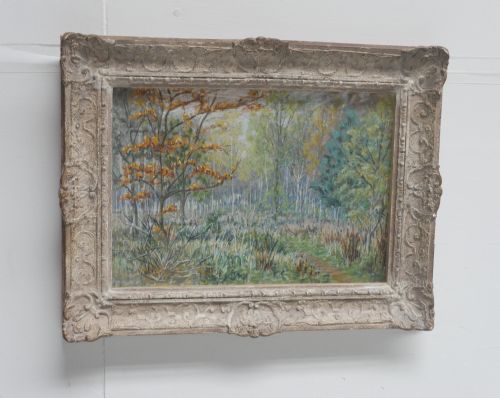


Impressionist Tree Landscape
Impressionist tree landscape works capture shifting light and foliage through loose brushwork, offering buyers a window into atmospheric natural scenes.
Impressionist Tree Landscape
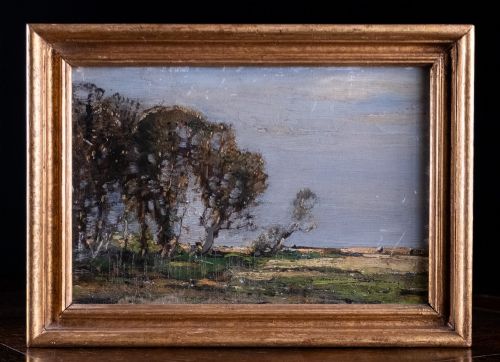
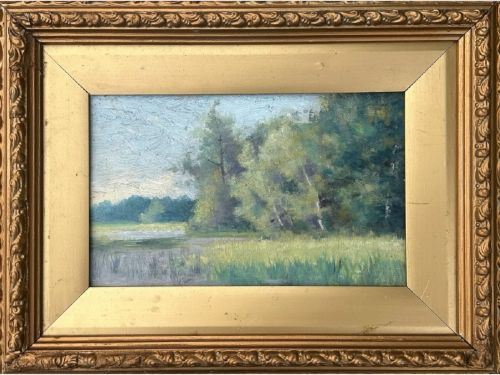
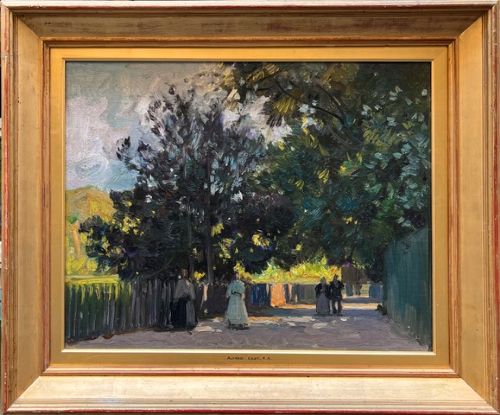
An impressionist tree landscape captures wooded paths, riverbanks, and orchards through expressive brushwork and atmospheric colour. These works focus on the play of light through foliage rather than botanical precision. Buyers find rural views spanning from the nineteenth century through the mid-twentieth century.
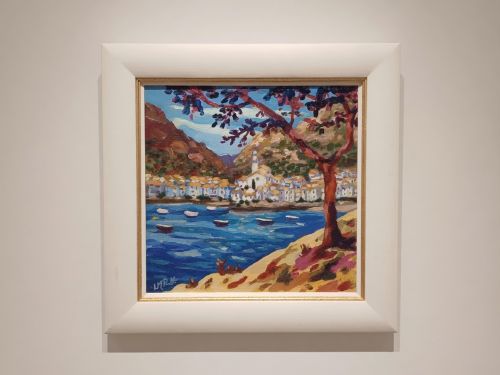
The pieces on this page appear in various formats, predominantly oil paintings on canvas, board, and wood panel, alongside watercolours and pastels. Subject matter ranges from British river paths and Yorkshire farmyards to French Mediterranean scenes and olive groves. Artists often position trees as focal points to structure the natural space.
Dated works originate from the nineteenth century up to the 1960s, encompassing British Impressionism, Post-Impressionism, the Barbizon School, and Expressionism. Smaller panels and watercolours sit alongside larger canvas works. Each piece reflects the specific palette and handling of its period.
What Varies in Quality
The strength of a composition lies in how effectively the painter balances light, shadow, and structure within the foliage. Weaker works rely on formulaic repetition, whereas stronger examples demonstrate confident spatial depth and atmospheric resonance.
The handling of the medium distinguishes standard decorative panels from compelling artistic statements. Skilful layering of pigment creates a luminous sense of air and movement through the trees.
Listings feature works created across multiple decades, utilising oil paint, watercolour, and pastel on canvas, panel, and paper.
George Graham·Kershaw Schofield·Lucy Pratt·Sir Alfred East·Maud Raphael Jones·William JB Jenkins·Owen Bowen·Henri Joseph Harpignies·Herbert Royle·Rowland Henry Hill·Berthe des Clayes·Ernest Higgins Rigg·Frederick W Jackson·Alois Arnegger·George Harrison·John J Hamer·Hermoine Hammond·Antoine Bouvard
The Impressionist Tree Landscape Glossary
- Barbizon School
- A mid-nineteenth-century French art movement focused on real-life landscape painting. Artists painted outdoors to capture natural light and direct observation of trees and fields.
- Post-Impressionism
- A diverse artistic development following impressionism that explored emotional response and structural form. Painters used expressive colours and visible brushstrokes to interpret landscapes.
- Panel
- A rigid support for painting made of wood or board. Artists frequently utilised panels for smaller outdoor sketches.
- Provenance
- The documented history of ownership surrounding a work of art. This history assists in establishing authenticity and previous collections.
Impressionist Tree Landscape: Frequently Asked Questions
What periods do these landscapes cover?
The works span from the nineteenth century through to the 1960s, reflecting changing regional approaches to light and atmosphere.
Key decades represented include the early 1900s, the interwar years, and the mid-century period.
Which materials appear most frequently?
Oil paint on canvas, board, and wood panel forms the majority of the surviving works. Watercolours and pastels on paper also feature across various regional schools.
Supports vary from delicate paper sheets to robust wooden panels used for outdoor painting.
Where were these landscapes painted?
Makers recorded scenes across British countryside locations such as Yorkshire valleys and riverbanks, alongside French settings including the Côte d'Azur and Paris.
Artists often worked directly from nature in rural lanes, woodlands, and gardens.
How do impressionist landscapes differ from traditional views?
Impressionist works prioritise transient effects of light, weather, and loose brushwork over detailed topographical accuracy. The focus rests on capturing the mood of a specific moment.
Colours are applied with greater freedom to suggest atmosphere rather than rigid botanical forms.