

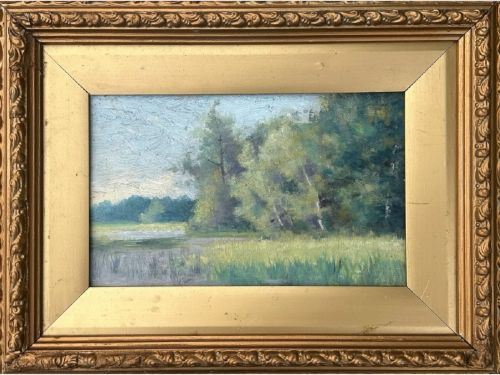
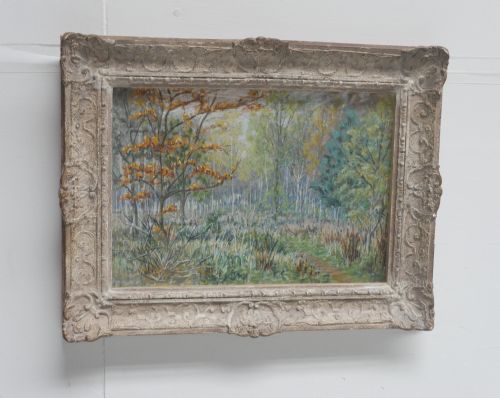


Impressionist Tree Landscape Art
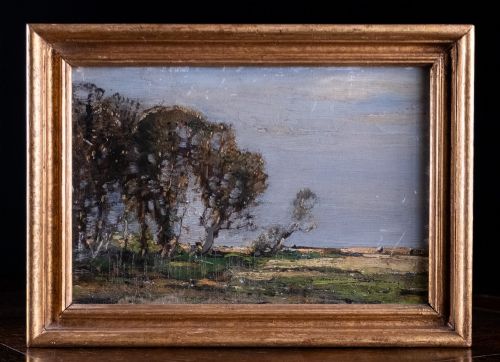
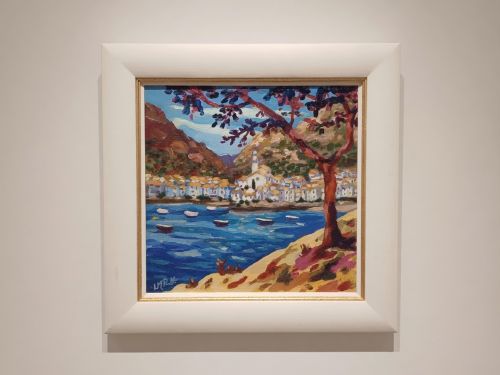
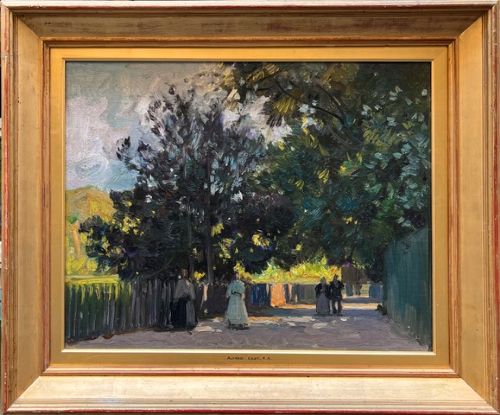
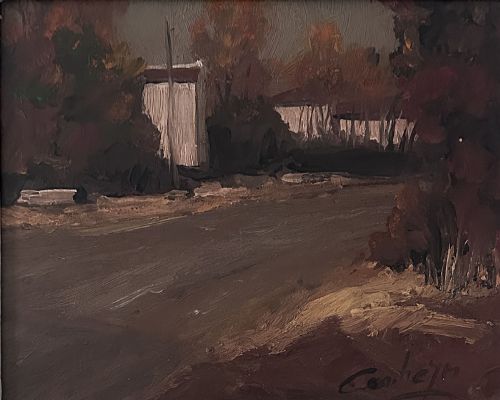
Impressionist tree landscape art captures light and atmosphere through loose brushwork, offering buyers a serene window into natural rural and woodland settings.
Impressionist Tree Landscape Art
Impressionist tree landscape art focuses on natural scenery, woodland paths, and riverbanks captured through expressive brushwork and atmospheric light. These works emerge from several decades spanning the nineteenth century through the mid-twentieth century.
Buyers most frequently encounter oil paintings on canvas and board alongside watercolours on paper. The subjects range from British rural scenes to French provincial views and Mediterranean settings.
Works on this page represent diverse regional movements including British Impressionism, Post-Impressionism, and the Barbizon School. Painters interpret orchards, riversides, and wooded lanes through distinct local palettes and tonal shifts.
Materials and Technique
Artists apply oil paint and watercolour onto supports of canvas, wood panel, board, and paper. Pigments are layered to build texture and capture shifting natural light.
Brushwork remains visible and direct, recording outdoor conditions quickly rather than blending strokes into a smooth finish. This technique prioritises overall atmosphere over minute botanical detail.
Several woodland scenes preserve accidental stray brush hairs from artists painting outdoors in windy weather.
Assessing Quality
Quality rests in the confidence of the brushwork and the artist's command of light and tonal harmony. Stronger pieces use colour juxtaposition to build depth rather than relying on heavy outlines.
The relationship between the trees and surrounding atmosphere dictates the success of the composition. Superior examples maintain energetic paint application while achieving a balanced sense of space.
George Graham·Kershaw Schofield·Lucy Pratt·Sir Alfred East·Maud Raphael Jones·William JB Jenkins·Owen Bowen·Henri Joseph Harpignies·Herbert Royle·Rowland Henry Hill·Berthe des Clayes·Ernest Higgins Rigg·Frederick W. Jackson·Alois Arnegger·George Harrison·John J. Hamer·Hermoine Hammond·Antoine Bouvard
The Impressionist Tree Landscape Art Glossary
- Canvas
- A heavy woven fabric stretched across a wooden frame to serve as a support for oil painting. It provides a slightly flexible surface that holds thick paint applications.
- Watercolour
- A paint consisting of pigment suspended in a water-soluble vehicle, applied to paper. It relies on the white of the paper to shine through transparent washes.
- Barbizon School
- A mid-nineteenth-century French art movement dedicated to naturalistic landscape painting. Artists worked directly from nature, focusing on rural scenery and woodland interiors.
- Post-Impressionism
- A diverse art movement extending Impressionism while rejecting its limitations. Practitioners favour symbolic colours and heavier geometric structures.
- Panel
- A flat piece of wood used as a rigid support for paintings. Panels offer a solid surface that resists the flexing associated with stretched fabrics.
Impressionist Tree Landscape Art: Frequently Asked Questions
What defines impressionist tree landscape art?
These works capture natural woodland and river scenes using loose, visible brushstrokes and an emphasis on changing light. Artists focus on the atmosphere of a specific moment rather than precise botanical recording.
The style draws on nineteenth and twentieth-century traditions where painters worked outdoors to capture immediate visual impressions.
How were these paintings displayed originally?
Most works were framed in wooden mouldings, often gilded, designed to complement the domestic interiors of the period. Frames protect the edges of canvases and panels while providing a visual boundary.
Many pieces retain their period frames, which help date the artwork alongside signatures and inscriptions on the reverse.
How do I care for antique oil paintings?
Keep paintings away from direct sunlight and dramatic fluctuations in temperature and humidity. Dust surfaces gently with a soft, dry brush without applying pressure.
Avoid using water or chemical cleaners on painted surfaces or canvas backs.
How can I distinguish watercolours from oil paintings?
Watercolours are painted on paper and are typically protected behind glass to prevent moisture damage. The paint layers remain thin and translucent, allowing the texture of the paper to show.
Oil paintings use heavier pigments on canvas or board, creating a textured surface that sits proud of the support.