







Impressionist Townscape Art
Impressionist townscape art captures the bustle and architecture of streets and squares through loose brushwork and vibrant light.
Impressionist Townscape Art
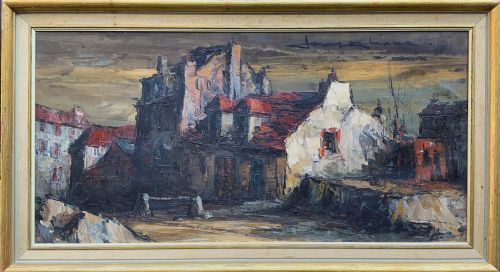
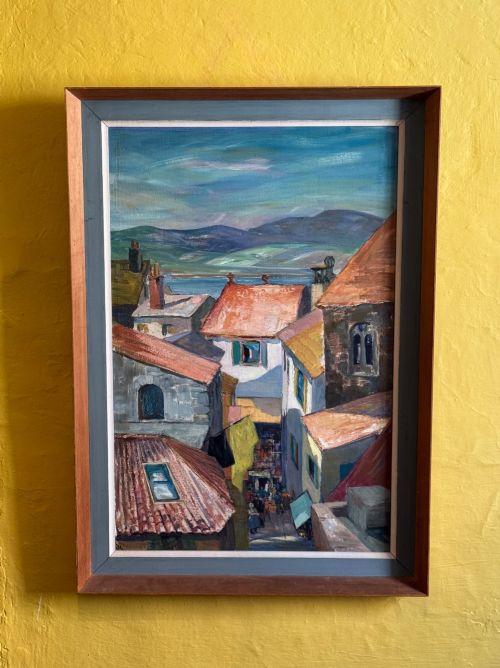
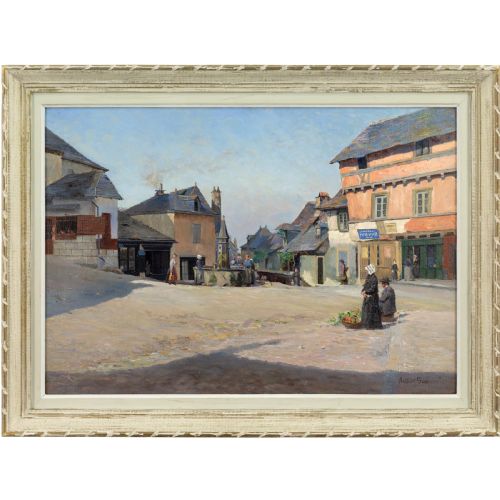
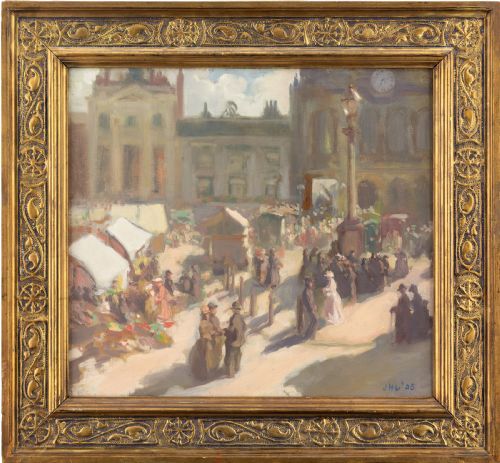
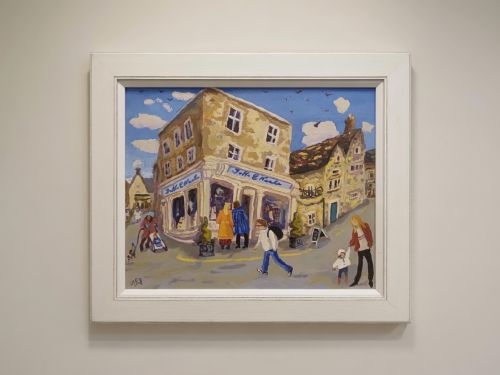
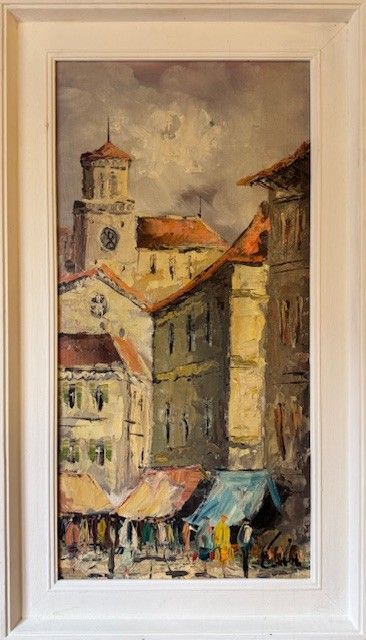
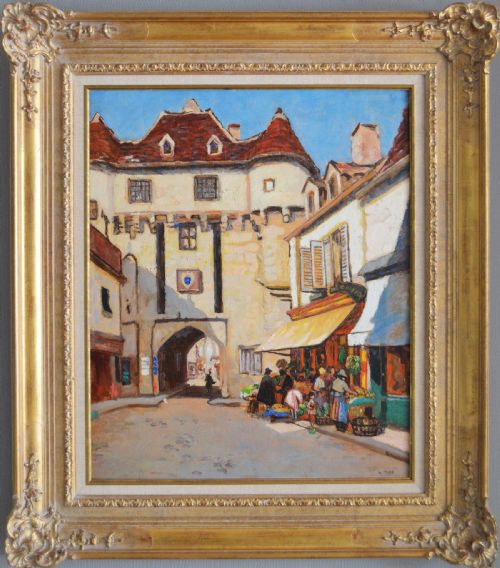
Impressionist townscape art brings bustling market squares, quiet provincial streets and coastal towns directly onto canvas and board. These works record urban and village views from the nineteenth and twentieth centuries, capturing specific locations across Britain and France.
You will most commonly encounter oil paintings on canvas or board dating from the Edwardian period through to the mid-century. Artists focus on everyday municipal life, rendering facades, market stalls and public squares with visible, energetic brushstrokes.
The selection ranges from Victorian street scenes and British impressionism to mid-century modern interpretations of townscapes. Each piece offers a window into past civic spaces, framed predominantly in wood or gilt settings.
Materials and methods
Artists working in this genre relied primarily on oil paint applied to prepared canvas, wooden panels or thick boards. The medium allowed them to build up rich textures and blend pigments directly to capture shifting natural light on stone and mortar.
Support frames of solid wood, sometimes highlighted with gilt, provided robust housing for these paintings. The physical application of paint prioritises gestural marks over photographic precision, reflecting the core tenets of impressionist technique.
Impressionist Townscape Art Retail Price Guide 2026
Typical asking prices for impressionist townscape art among the pieces listed under this phrase on Sellingantiques today, from the lower quarter to the upper quarter. They describe what is for sale here now, not the wider market.
Materials documented across the inventory include oil paint, canvas, wood panels, boards, and gilt framing.
Distinguishing quality in townscapes
Quality rests upon the artist's ability to manipulate light and perspective within a crowded urban composition. Stronger works demonstrate a confident handling of pigment where loose brushwork successfully conveys the atmosphere and depth of a square or street.
The integration of the support material also dictates standard, with well-preserved oil on canvas or stable board surfaces retaining greater visual punch. Furthermore, the sensitivity of the framing and the artist's command of tone elevate certain pieces above standard decorative output.
Arthur Gué·John Hodgson Lobley·Paul-Élie Gernez·A. McDonald·Joseph W. Milliken·John Sanderson Wells·Donald Wood·Augustus William Enness·Letitia Marion Hamilton·Lucy Pratt
The Impressionist Townscape Art Glossary
- Oil on board
- A painting executed on a rigid wooden or composition board rather than stretched fabric. This support provides a firm, stable surface favoured by plein air painters working outdoors.
- Post-Impressionism
- An art movement developing roughly from the late nineteenth century that extended impressionist ideals while rejecting its limitations. Practitioners emphasised symbolic content, formal order or heavier weight in brushwork.
- Gilt frame
- A protective wooden moulding coated with gold leaf or metallic paint. These frames enhance the visual boundary of nineteenth and twentieth-century paintings.
- Townscape
- A painting, drawing or other artwork depicting a city or town view. The subject matter centres on streets, architecture, markets and public squares rather than open countryside.
- Panel painting
- A painting created on a flat panel made of wood. This traditional support predates canvas and offers a smooth, rigid ground for detailed or expressive oil work.
Impressionist Townscape Art: Frequently Asked Questions
What is impressionist townscape art?
These works are paintings that depict urban streets, markets and architectural views using the loose brushwork and light-focused approach of impressionism. They record specific locations primarily from the nineteenth and twentieth centuries.
Created mostly in oil on canvas or board, they serve as historical records of European and British town life. Collectors value them for their ability to evoke the atmosphere of past civic spaces.
How do I date an oil painting?
Dating relies on examining the stretcher frames, canvas preparation, pigments, and stylistic markers such as clothing or vehicle types depicted in the scene. Signatures and exhibition labels on the reverse also provide reliable chronological clues.
Comparing the handling of paint and the framing style to documented works by the same artist helps narrow down the decade of creation.
How should I display these paintings?
Townscape oil paintings suit rooms with stable humidity and indirect natural light to protect the pigment and canvas. Pairing them with traditional wooden or gilt frames helps anchor the artwork visually on a wall.
Keep them away from direct heat sources and strong sunlight to prevent the oil paint and wood supports from warping or fading over time.
What subjects are common in these scenes?
Common subjects include bustling market squares, provincial French street views, town halls, and coastal British harbours. Artists frequently chose active municipal areas where changing daylight interacted with stone buildings and crowds.
These compositions focus on everyday public life rather than grand historical events, offering an intimate glimpse into historical townscapes.