




Impressionist Sheep Painting
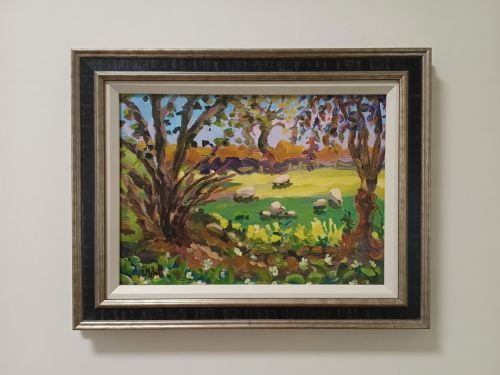
Impressionist sheep painting works best when the brush captures light across wool and pasture rather than pinning down every single lock.
Impressionist Sheep Painting
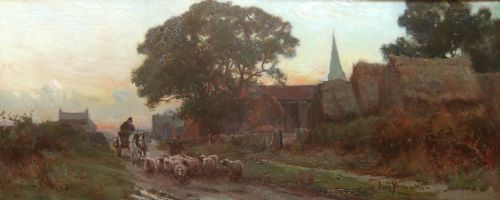
An impressionist sheep painting captures pastoral scenes through loose brushwork and a focus on atmospheric light rather than strict academic detail. The pieces gathered under this phrase span from the nineteenth century through to contemporary works, showing flocks on Yorkshire moors, downs, and Dutch pastures.
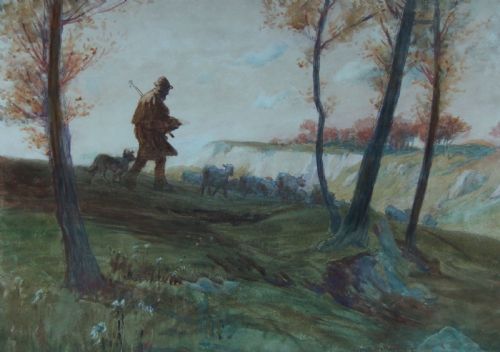
Most examples you encounter rely on oil paint on canvas, though watercolours on paper also appear frequently. The artists typically work within British Impressionism, Dutch Impressionism, the Hague School, or pastoral traditions.
The subjects range from simple grazing studies to named locations like Wharfedale and the South Downs, often featuring shepherds or farmsteads alongside the flock.
Materials and methods
Artists painted primarily in oil on canvas or applied watercolour to paper, building up textures with visible, confident brushstrokes. The physical support often consists of stretched canvas housed in wood frames.
The technique relies on broken colour and tonal contrasts to suggest fleece and daylight without rendering individual strands of wool precisely.
Sheep stand remarkably still in paint, unlike their stubborn real-life counterparts who stubbornly bolt at the crucial moment.
Judging the work
Quality rests on how well the painter handles light and atmosphere across the landscape, separating flat records from works with genuine depth and movement. The handling of the flock relative to the sky and pasture determines the visual success of the piece.
Provenance and the artist's standing within regional schools such as the Hague School or British Impressionism also separate standard decorative pastoral views from accomplished fine art.
Lucy Pratt·Owen Bowen·Willem Anton Alexander Knip·Frederick W Jackson·Lorenzo Headley·Herbert Royle·Ernest Higgins Rigg·George Faulkner Wetherbee·William Greaves·Rowland Henry Hill·Jessie Hall·Anthonij Anton Mauve·Andreas Moe
The Impressionist Sheep Painting Glossary
- Impressionism
- A style of painting that focuses on light and its changing qualities, often using visible brushstrokes rather than smooth blends.
- Pastoral
- A genre of art that romanticises rural life and landscape, frequently featuring shepherds, flocks, and rustic farmsteads.
- Hague School
- A nineteenth-century group of Dutch artists influenced by the realism of the French Barbizon school, known for atmospheric grey and earthy tones.
- Watercolour
- A paint consisting of pigment suspended in a water-based solution, typically applied to paper to create luminous, transparent washes.
Impressionist Sheep Painting: Frequently Asked Questions
What defines a pastoral painting?
A pastoral painting depicts rural scenes, particularly involving shepherds, flocks, and agricultural landscapes.
These works focus on the quiet rhythm of country life and natural light.
How do I care for oil paintings?
Keep oil paintings out of direct sunlight and away from rapid temperature changes that can crack the canvas or paint.
Dust the surface gently with a soft, dry brush without using water or cleaning fluids.
What is the Hague School?
The Hague School refers to Dutch artists active in the late nineteenth century who painted realistic rural scenes in subdued tones.
Their work heavily influenced subsequent impressionistic approaches to light and landscape.
Are watercolours fragile?
Watercolour paintings on paper are sensitive to light and moisture, requiring framing behind glass with acid-free mounts.
Displaying them away from direct sun exposure preserves the pigments over time.