






Impressionist Riverbank Artwork
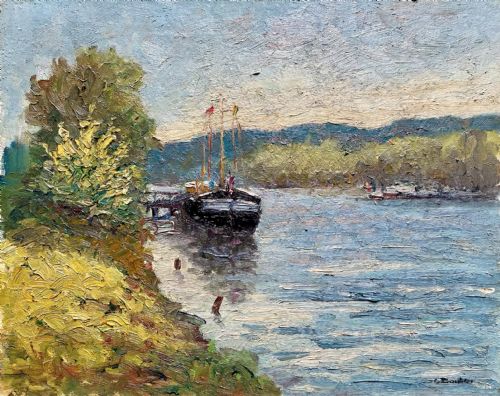
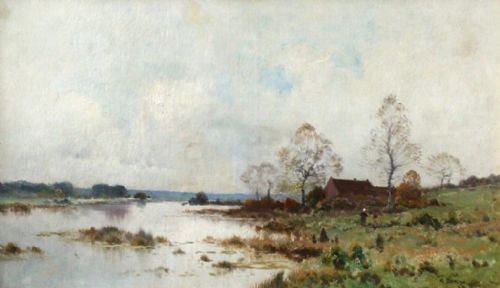
Impressionist riverbank artwork captures the play of light over water through loose brushwork across various periods.
Impressionist Riverbank Artwork
Most examples originate from British and French traditions, including British Impressionism, French Impressionism, and the Barbizon School. Buyers frequently encounter landscapes depicting rivers, lakes, fishermen, and pastoral riverbanks from these periods.
Materials and construction
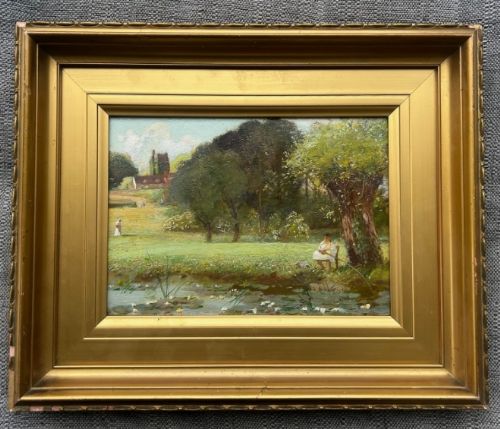
Artists painted primarily with oil paint on canvas, wood panel, or paper, capturing textures with visible brushstrokes. Giltwood frames frequently enclose these canvases to complement the painted surface.
Watercolours and pastels on paper also appear, utilising fluid washes or dry pigment marks to render watery reflections and atmospheric riverbanks.
The inventory records pieces dated across the nineteenth and twentieth centuries.
Assessing quality
Quality rests in the handling of light and tone, where expressive brushwork conveys atmosphere rather than rigid detail. Superior pieces demonstrate confident mark-making that integrates water, banks, and sky into a cohesive composition.
The sensitivity of the palette and the preservation of the painted surface dictate the visual impact of each piece. Original framing in period giltwood further enhances the presentation of works from the nineteenth and twentieth centuries.
Honore Cavaroc·Archibald Kay·Sir David Murray·Phyllis Morgans·Pierre Emmanuel Eugene Damoye·T.B. Garvie·Augustus William Ennes·Sonia Mervyn·Thomas E Francis·George Neil·David Adolph Constant Artz
The Impressionist Riverbank Artwork Glossary
- Barbizon School
- A mid-nineteenth-century French movement focused on direct observation of nature and tonal landscapes. These painters laid groundwork for later impressionist techniques.
- Post-Impressionism
- An art movement extending impressionist approaches while emphasising more symbolic content or expressive forms. Works in this style show varied individual techniques.
- Giltwood
- Wood carved and covered with a thin layer of gold leaf or gold-coloured metal. It provides ornate framing for many period oil paintings.
- Pastel
- A dry medium consisting of powdered pigment and a binder formed into sticks. It produces soft colour transitions on paper.
- Wood Panel
- A rigid wooden support used by artists instead of canvas. It offers a smooth, stable surface for fine oil painting.
Impressionist Riverbank Artwork: Frequently Asked Questions
What periods do these paintings cover?
The selection spans from the late nineteenth century through to the mid-twentieth century, including works from the 1900s, 1920s, and 1950s.
These dates reflect both British and French regional schools working in impressionist and pastoral styles.
Are these works signed by the artists?
Several pieces feature artist signatures or inscriptions, attributing the works to named painters from British and continental traditions.
Documented signatures help connect individual works to established regional painters of the era.
What mediums were commonly used?
Oil paint on canvas or wood panel forms the majority of the works, supplemented by pastels and watercolours on paper.
Giltwood frames frequently accompany the oil paintings from this era.
How do I display oil paintings safely?
Keep paintings away from direct sunlight and sudden humidity changes to protect the canvas and oil pigments.
Ensure the hanging wall can support the weight of the framed artwork securely.