
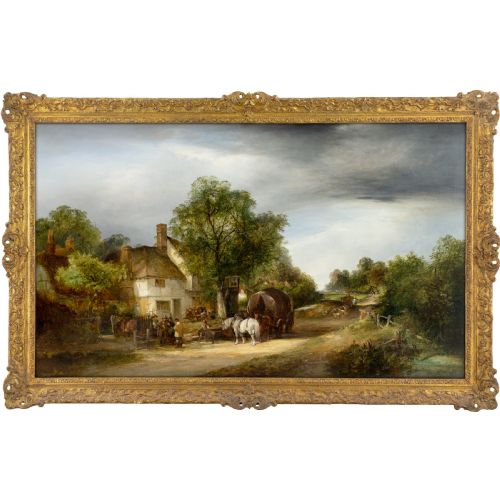
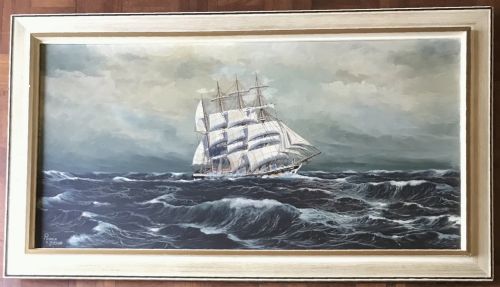
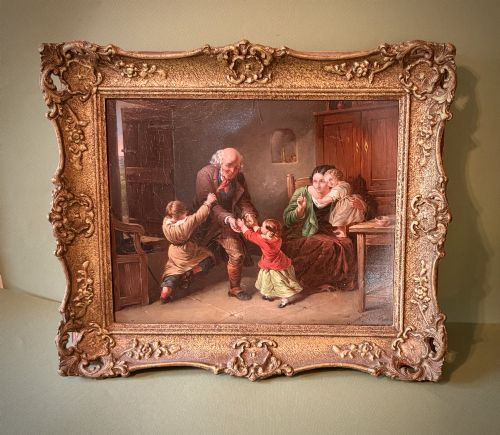
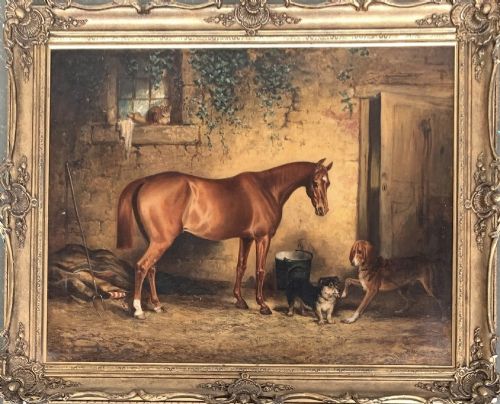
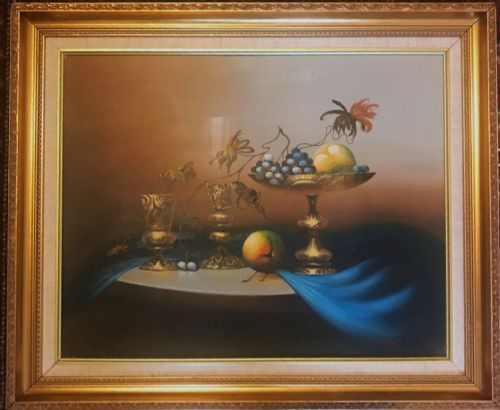
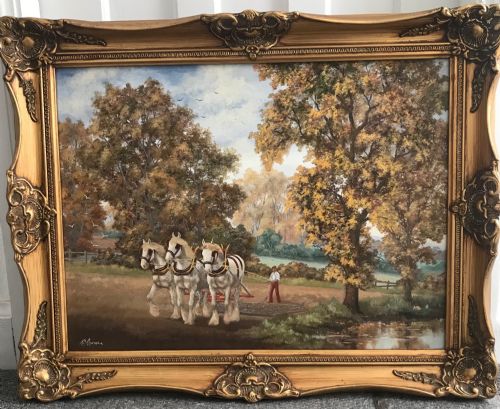


Traditional Framed Oil Art
Traditional framed oil art brings together centuries of painted canvases and wood panels housed in ornate or simple surrounds.
Traditional Framed Oil Art
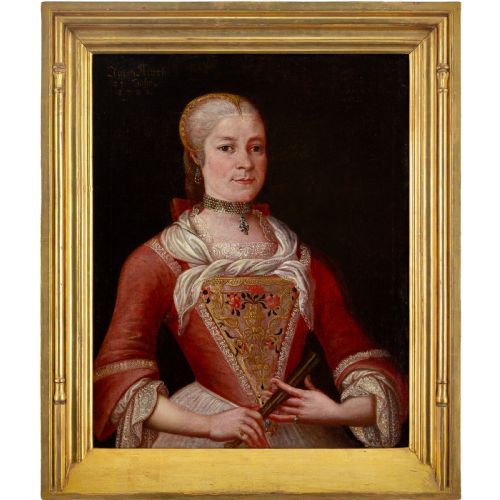
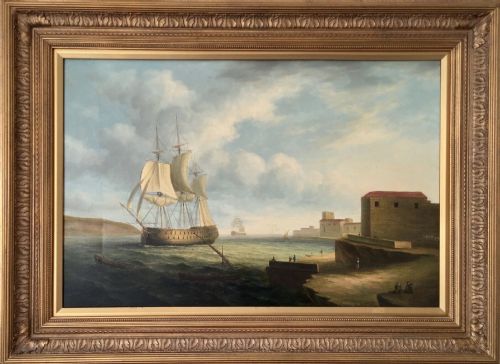
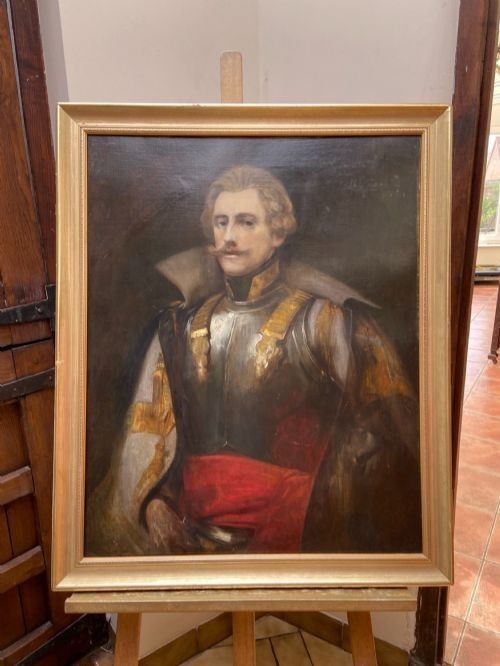
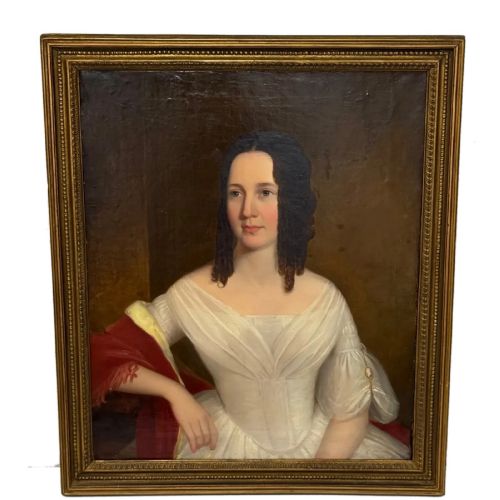
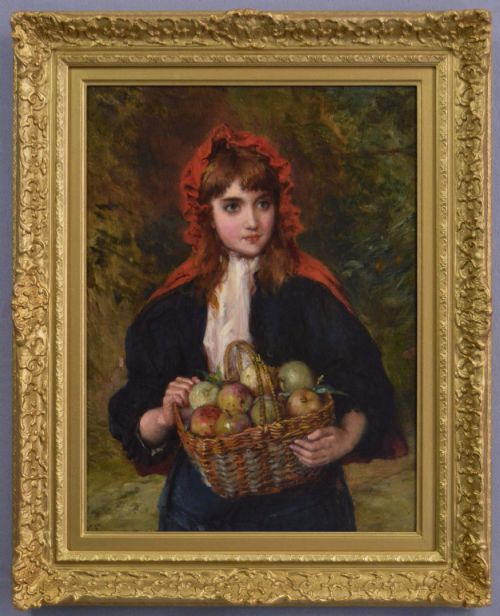
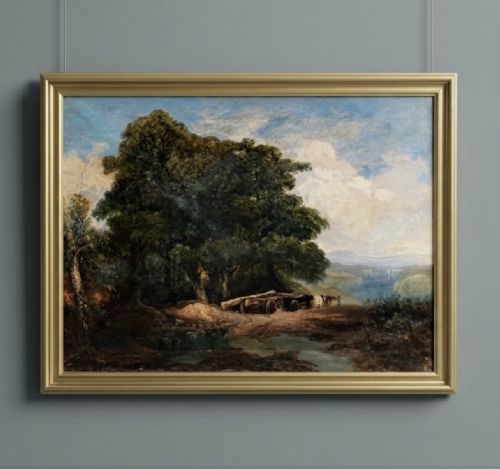
Traditional framed oil art encompasses historical paintings executed in oil pigments upon canvas, wood panels, or board, secured within protective borders. When searching for traditional framed oil art, collectors encounter portraits, landscapes, seascapes, and still-life compositions created across the eighteenth, nineteenth, and twentieth centuries. British and European schools predominate, ranging from intimate depictions of rural figures to monumental portrayals of nobility and livestock.
The pieces on this page span diverse stylistic movements, including Classical Realism, Victorian landscape painting, and Dutch Golden Age interpretations. Many works carry attribution to specific regional artists or schools, while others remain anonymous expressions of their respective decades. The physical supports vary from stretched canvas to robust wooden panels, each holding pigment layered to achieve depth and texture.
Materials and construction
These works rely upon oil paint applied to prepared surfaces such as woven canvas or solid wood panels. Artists built up their images using successive layers of pigment bound in drying oils, allowing for subtle tonal gradations and rich colour saturation. The resulting paint layers often exhibit craquelure, a natural network of fine cracks that develops as the medium ages.
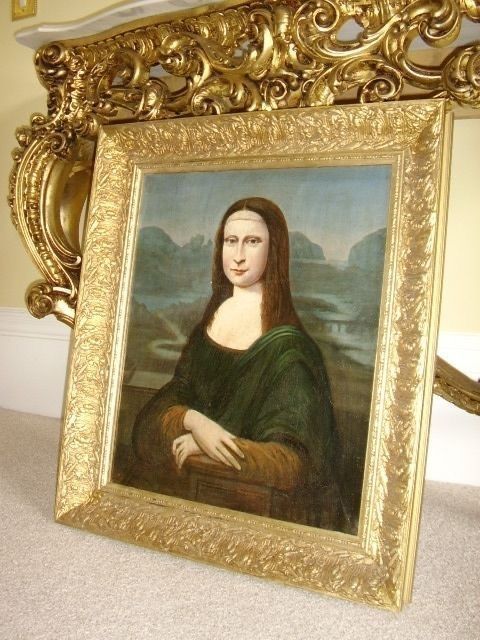
Surrounding the paintings are frames constructed from wood, frequently embellished with gilt gesso or finished with gold leaf. These surrounds serve both a structural and aesthetic purpose, isolating the canvas from the wall while complementing the visual weight of the pigment within.
Listings feature works spanning the 17th century through to the 1960s, executed in oil on canvas, wood panel, and board.
Assessing quality and execution
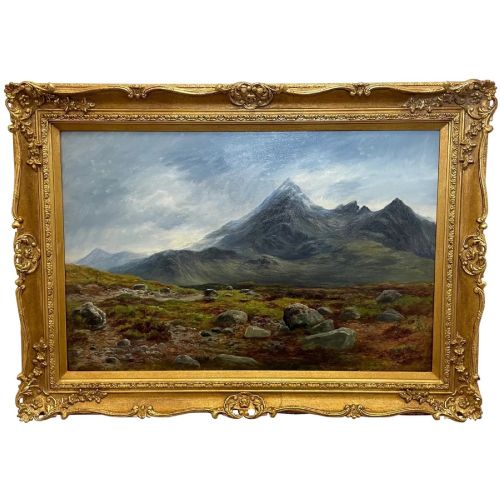
Quality in these works rests upon the precision of the brushwork and the anatomical or spatial accuracy achieved by the painter. Stronger examples display confident handling of light, shadow, and perspective, whether rendering the intricate folds of a noblewoman's costume or the atmospheric expanse of a Highland landscape. Lesser examples may exhibit rigid composition, flat colour application, or hesitant drawing.
The integrity of the physical support and the framing also influence the overall standard. Canvases retain proper tension without excessive sagging, and wood panels remain stable across their grain. Original frames matching the period of the painting carry greater coherence than later replacements, particularly when retaining their original gilding and gesso ornamentation.
William Oliver·Richard Sebastian Bond·William Beattie-Brown·Jozsef Molnar·William H Myers·George Graham·W Klombeck·William Howard Hardy·George Willison·I Berezny·John Horace Hooper·William McAlpine·Reginald Arthur Borstel·William Joseph Shayer Senior·Francisco Jose de Goya y Lucientes·Sir Joshua Reynolds·Alfred Fontville de Breanski Jr·Edward Mills·George Houston
The Traditional Framed Oil Art Glossary
- Oil on Canvas
- A painting technique utilising pigments suspended in a drying oil, applied to a stretched woven fabric support. This combination allows for flexible application and enduring colour depth.
- Gilt Gesso
- A plaster-like material applied to wooden frame mouldings, smoothed, and coated with gold leaf or metallic paint. This mixture accepts intricate stamping and relief carving before gilding.
- Wood Panel
- A rigid support constructed from timber, utilised frequently for earlier or smaller scale paintings before canvas became dominant. Panels offer a smooth, stable surface for fine brushwork.
- Craquelure
- The fine network of minute cracks appearing across the surface of aged oil paint layers. This natural process occurs as the oil medium polymerises and hardens over decades.
- Still Life
- An artwork depicting inanimate subject matter, typically commonplace objects such as fruit, flowers, or domestic vessels. These compositions focus heavily on texture, light arrangement, and form.
Traditional Framed Oil Art: Frequently Asked Questions
How do I clean an old oil painting?
Surface dust can be removed gently with a very soft, dry brush, taking care not to pressure the canvas or disturbed flaking paint.
Professional conservation is required for deeper cleaning, as household solvents or water can permanently damage the oil layers and underlying ground.
Are these paintings supplied with their original frames?
Many listings feature period-appropriate frames, such as gilt gesso surrounds matching the era of the canvas, though some have been re-framed later in their history.
The description notes whether a frame is original to the artwork or a subsequent replacement.
How can I tell a canvas from a wood panel?
Canvas yields slightly to gentle pressure and exhibits a woven fabric texture visible beneath or through the paint layers.
Wood panels provide a completely rigid, unyielding surface and occasionally display wood grain or vertical joins on the reverse.
What causes craquelure on oil paintings?
Craquelure develops naturally as oil paint loses its elasticity over long periods, causing the upper layers to contract at a different rate than the foundation.
This network of fine lines serves as a reliable indicator of age and genuine material composition rather than a structural fault.