



Impressionist Parisian Artwork
Impressionist Parisian artwork captures the kinetic atmosphere of the French capital through light-filled street scenes, river views, and architectural landmarks.
Impressionist Parisian Artwork
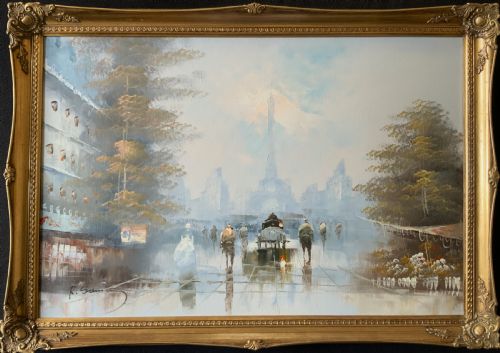
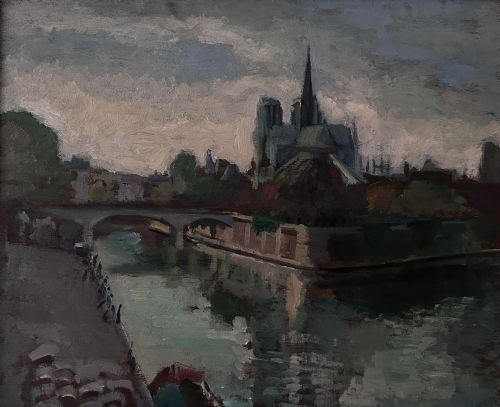
When searching for impressionist Parisian artwork, collectors encounter oil paintings and watercolours depicting iconic locations such as Notre Dame, the Eiffel Tower, the River Seine, and Montmartre. These works span from the nineteenth century through the mid twentieth century, encompassing various interpretations of the urban landscape.
The pieces on this page are predominantly oil on canvas or board, framed in wood or gilt wood, reflecting the enduring appeal of the French capital across successive decades. Painters record the changing light and weather of Paris, from bustling winter streets to sunny summer days along the quais.
Assessing Quality and Execution
The strength of a composition rests on the artist's command of light, colour, and spatial depth within the crowded streets or broad vistas of Paris. Stronger examples convey motion and atmosphere with confident brushstrokes rather than rigid architectural precision.
The integration of the frame with the painting influences the overall presentation, particularly where original gilt wood or period wooden frames survive. The handling of the medium, whether thick impasto in oils or delicate washes in watercolour, defines the visual impact.
Impressionist Parisian Artwork Retail Price Guide 2026
Typical asking prices for impressionist parisian artwork among the pieces listed under this phrase on Sellingantiques today, from the lower quarter to the upper quarter. They describe what is for sale here now, not the wider market.
Listings feature works spanning from the nineteenth century through the 1960s, executed in oil, watercolour, and pastel.
Albert Ludovici Jnr·Caroline Burnett·Ron Folland·Merio Ameglio·Eduard Leon Cortes·Albert Guillaume·Hermoine Hammond·Pierre Peltier
The Impressionist Parisian Artwork Glossary
- Impressionism
- A nineteenth-century art movement characterised by relatively small, thin, yet visible brush strokes and an open composition. It emphasises accurate depiction of light in its changing qualities.
- Post-Impressionism
- A predominantly French art movement that developed from about 1886 to 1905, extending impressionism while rejecting its limitations. Artists piled on paint with thick brushstrokes and used symbolic colours.
- Belle Epoque
- A period of French history starting around 1871 and ending at the outbreak of world war one in 1914, marked by optimism and peace. Art from this era often celebrates leisure and urban vitality.
- Gilt wood
- Wood that has been treated with gold leaf or gold paint for decorative effect. Frames of this material frequently accompany traditional paintings.
- Pastel drawing
- A work of art made in the medium of pastel, consisting of powdered pigment and a binder. It produces rich, chalky surfaces on paper.
Impressionist Parisian Artwork: Frequently Asked Questions
What periods do these paintings cover?
The works span from the nineteenth century through the mid twentieth century, capturing different eras of Parisian life.
Changes in style reflect the progression from early impressionist and belle epoque approaches to mid-century interpretations.
Which Parisian landmarks appear most often?
Common subjects include the Eiffel Tower, Notre Dame, the River Seine, and Montmartre street scenes.
Artists frequently return to these familiar locations to study changing weather and light.
How should I display these frames?
Most pieces come in wood or gilt wood frames that complement the painting style and period.
Placement should avoid direct sunlight to protect pigments and paper supports from fading.
What materials were used?
Paintings utilise oil on canvas or board, alongside watercolours and pastels on paper.
Frames consist primarily of wood, often with gilded or painted finishes.