




Impressionist Oil Panel Art
Impressionist oil panel art captures fleeting light and everyday scenes with swift brushwork directly on wood surfaces.
Impressionist Oil Panel Art
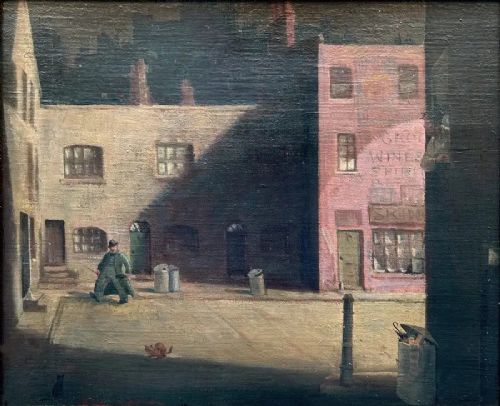
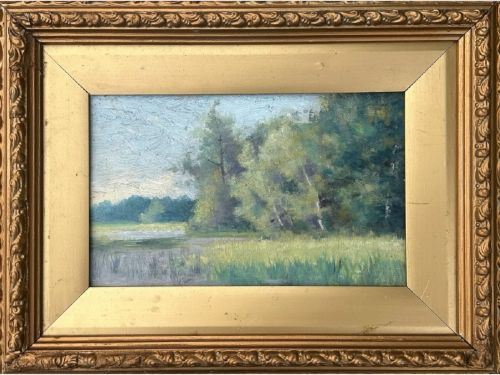
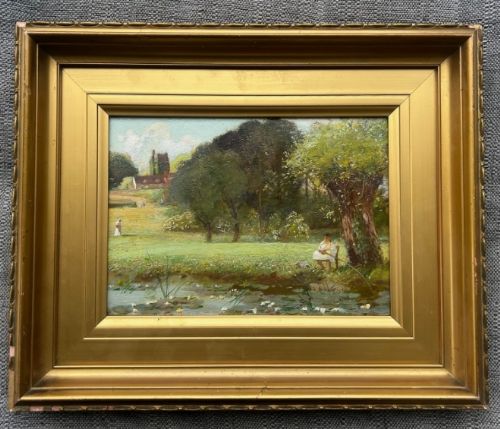
Impressionist oil panel art comprises portable paintings executed on wooden supports, recording landscapes, figures and still lifes from the late nineteenth century through the mid twentieth century. These works capture transient atmospheric effects and rapid notations of light, reflecting the plein air practices favoured by European painters.
The pieces on this page emerge predominantly from British, French and Scandinavian contexts, spanning Victorian origins into early twentieth century modern movements. Buyers encounter rural landscapes, coastal views and intimate figure studies rendered on compact wooden panels rather than expansive canvases.
Materials and technique
Artists painted directly onto rigid wood or mahogany panels, frequently preparing the surface with gesso to create a stable ground for pigment adhesion. This solid support allowed energetic brushwork and heavy impasto without the flex inherent in stretched textiles.
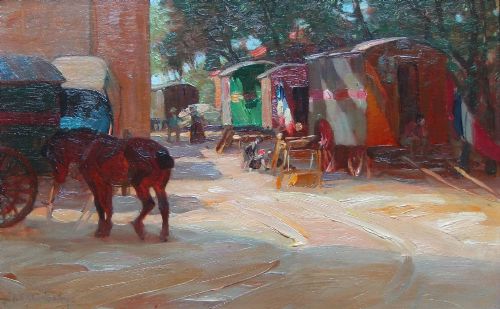
Oil paint was applied in swift, broken strokes to catch changing light outdoors, sometimes over pencil or charcoal underdrawing. The grain of the wood occasionally remains visible beneath thinner passages of colour, contributing to the immediate texture of the work.
One surviving portrait records the self-image of a museum curator in Albi who spent his days surrounded by the ghosts of Toulouse-Lautrec.
Judging the work
Quality rests upon the confidence of the mark-making and the fidelity of the tonal relationships, distinguishing hurried sketches from resolved compositions. The vitality of the brushstrokes and the sensitivity to light define the distinction between accomplished painters and routine practitioners.
The harmony of the palette and the preservation of the painted surface dictate the visual success of each panel. Intact framing and minimal intervention by later restorers maintain the integrity of the original statement.
Francisco Sancha·Maud Raphael Jones·Paul Ehrenberg·Florence Adelina Hess·Paul-Élie Gernez·Hubert Wellington·Edouard Julien·Sir David Murray·Jeffrey Pratt·Kershaw Schofield·Edmond Defonte·William Greaves·Owen Bowen·Joseph Vickers de Ville·Henri Joseph Harpignies
The Impressionist Oil Panel Art Glossary
- Oil paint
- A slow-drying medium composed of pigments suspended in a drying oil, typically linseed. It allows artists to blend colours smoothly or build textured surfaces.
- Wood panel
- A rigid support for painting made from timber, offering a firm foundation that resists the punctures and sagging associated with canvas.
- Gesso
- A primer mixture consisting of a binder mixed with chalk, gypsum or pigment, applied to prepare wood panels for painting. It provides a smooth, bright ground.
- Plein air
- The practice of painting outdoors to capture direct observations of natural light and weather. Painters working in this mode prioritized speed and spontaneity.
Impressionist Oil Panel Art: Frequently Asked Questions
How do I care for an oil panel?
Keep wooden panels away from direct heat sources and dramatic fluctuations in humidity to prevent warping or splitting of the support.
Display the artwork out of direct sunlight and dust the surface gently with a soft, dry brush without applying moisture or cleaning agents.
Were these painted outdoors?
Many of these works were executed plein air, allowing artists to record immediate responses to changing light and weather conditions directly onto portable wooden supports.
Others were developed or finished inside the studio using field sketches and rapid oil studies completed on location.
How do I identify the date?
Examine the signature, inscriptions on the reverse of the wood, and the framing style for clues regarding the period of creation.
Compare the handling of pigment and subject matter against known examples from the artists and stylistic movements recorded in the evidence.
Why use wood instead of canvas?
Wooden panels provided a rigid, portable surface that resisted punctures and required minimal preparation before the artist began painting.
Painters favoured them for outdoor excursions because small boards slipped easily into travelling boxes alongside tubes of pigment.