



Impressionist Interior Art
Impressionist interior art captures private domestic spaces through loose brushwork and plays of light, offering a glimpse into early and mid-twentieth-century domestic life.
Impressionist Interior Art
Impressionist interior art comprises paintings and watercolours depicting domestic rooms, studios, and quiet domestic moments created across the twentieth century. When exploring impressionist interior art, collectors encounter works ranging from Edwardian watercolours to mid-century oil paintings.
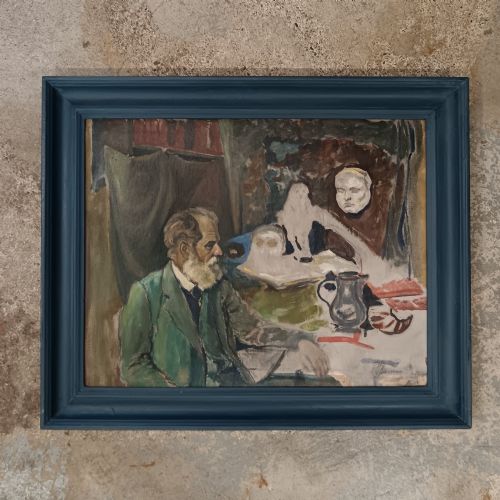
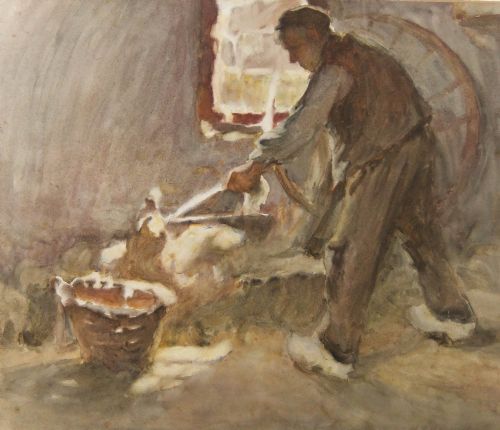
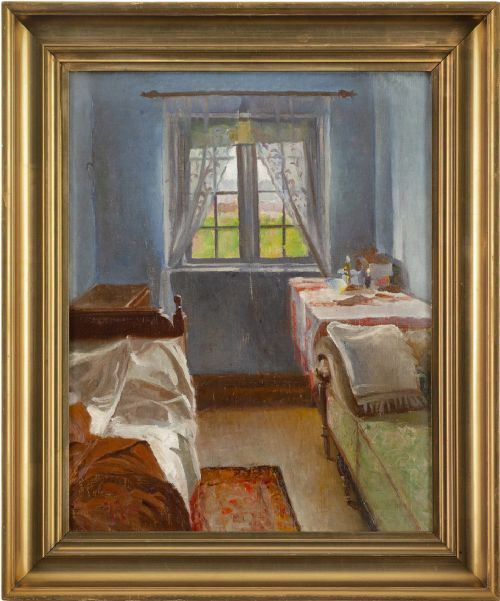
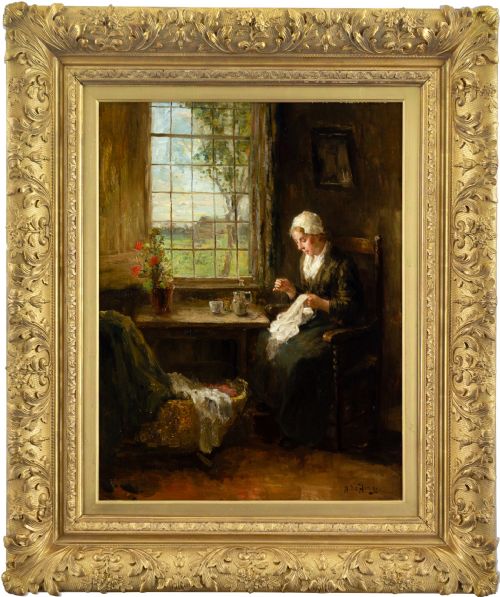
The subjects focus on everyday domestic scenes, including cottage dining rooms, artists' studios, and sunlit bedrooms. These pieces record intimate spaces through the lens of various regional movements like British Impressionism, Scandinavian Realism, and South African Impressionism.
Most examples date from the early decades of the twentieth century up to the nineteen-fifties, featuring both signed works by known artists and pieces attributed to British and European schools.
Materials and techniques
Artists painted primarily with oil on canvas or oil on paper, alongside watercolours executed on paper supports. These traditional media allowed creators to manipulate pigment and capture transient lighting effects within enclosed spaces.
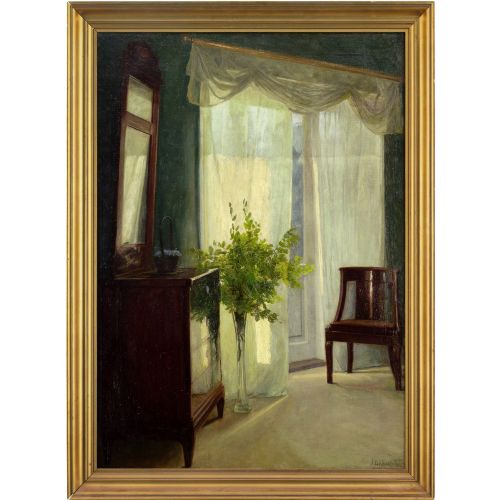
Framing often incorporates gold leaf finishes that complement the painterly surfaces. Technique relies on brushwork typical of post-impressionism, luminism, and pointillism to render light filtering through doors and windows.
Impressionist Interior Art Retail Price Guide 2026
Typical asking prices for impressionist interior art among the pieces listed under this phrase on Sellingantiques today, from the lower quarter to the upper quarter. They describe what is for sale here now, not the wider market.
Regional influences span British, Scandinavian, Hague School, and South African impressionist traditions.
Assessing quality and execution
Quality rests in the artist's handling of light and atmosphere within a confined room. Works that successfully render sunlight through a garden door or the quiet mood of a tea hour demonstrate superior tonal control.
The strength of the composition and the handling of the medium separate standard decorative pieces from accomplished works. Signed pieces by established painters generally show a higher degree of technical mastery in brushwork and colour harmony.
Henry Silkstone Hopwood·John Lübschitz·Harry Kluge·Bernard De Hoog·Roland Batchelor·Ruth Prowse·Maud Frances Eyston Sumner·John Exley
The Impressionist Interior Art Glossary
- Post-Impressionism
- An artistic movement extending impressionism while rejecting its limitations, focusing on symbolic content and heavier brushwork. It forms a foundation for many twentieth-century interior scenes.
- Luminism
- An American and European painting style focusing on effects of light in landscapes and interiors. Artists utilise soft atmospheric tones to illuminate domestic subjects.
- Pointillism
- A technique of painting where small, distinct dots of colour are applied in patterns to form an image. This method appears in floral still lifes and interior compositions from the nineteen-thirties.
- Intimist
- A style of painting focusing on intimate domestic interior scenes, often associated with artists influenced by Bonnard. These works emphasise quiet, private moments within the home.
- Watercolour
- A painting method in which the paints are made of pigments suspended in a water-based solution. It yields translucent washes of colour on paper supports.
Impressionist Interior Art: Frequently Asked Questions
What periods do these interior paintings cover?
The available selection spans from the Edwardian era through the nineteen-fifties, with a strong concentration of pieces from the nineteen-tens to the nineteen-forties. These decades encompass various regional movements including British and South African impressionism.
Collectors will find that works from the earlier twentieth century often lean towards traditional watercolour mediums, while later decades frequently utilise oil on canvas to explore colour and light within domestic settings.
How were these artworks typically created?
Creators utilised oil on canvas, oil on paper, and watercolour on paper to capture domestic scenes. Techniques varied from loose impressionistic brushwork to pointillist application and luminist light studies.
Many pieces also feature original gold leaf frames which enhance the visual depth of the interior compositions.
What subjects appear in these interior scenes?
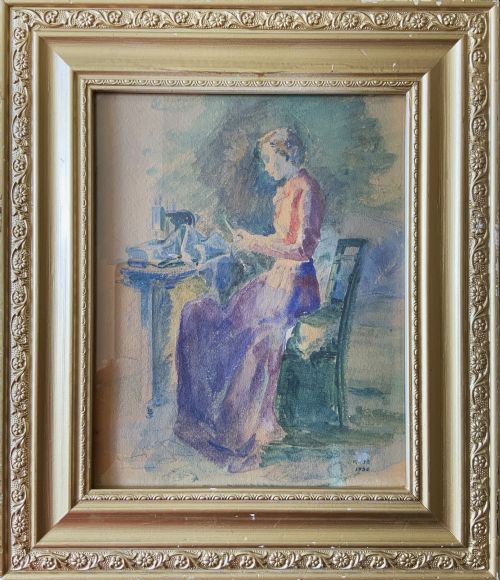
Common subjects include artist studios, sunlit bedrooms, cottage dining rooms, and quiet domestic moments like tea hours and sewing tasks. Floral still lifes placed on windowsills also feature prominently.
These domestic narratives provide a record of private spaces and daily routines across different twentieth-century households.
How do I identify different regional styles?
Regional styles manifest through distinct handling of light and colour palettes, spanning British Impressionism, Scandinavian Realism, and Hague School traditions. South African impressionist works also appear with vibrant depictions of local interiors and stores.
Examining the brushwork and the signature styles of specific regional schools helps determine the artistic context of each painting.