





Impressionist Field Painting
Impressionist field painting captures outdoor agricultural scenes through loose brushwork and natural light, offering collectors a direct window into rural history.
Impressionist Field Painting
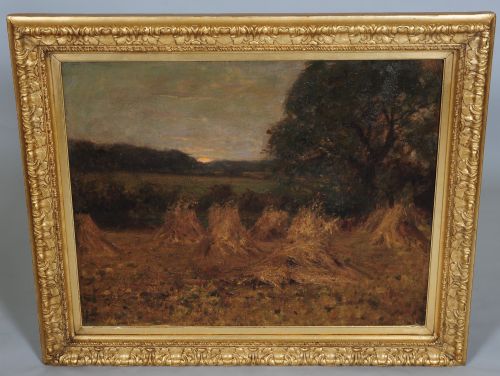
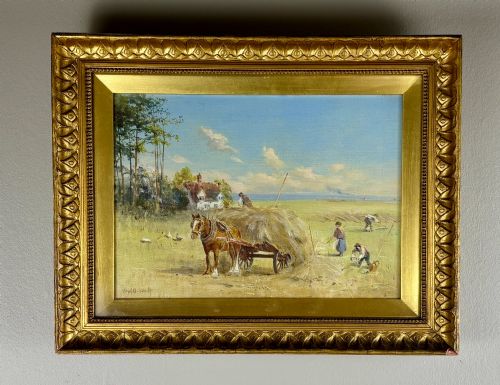
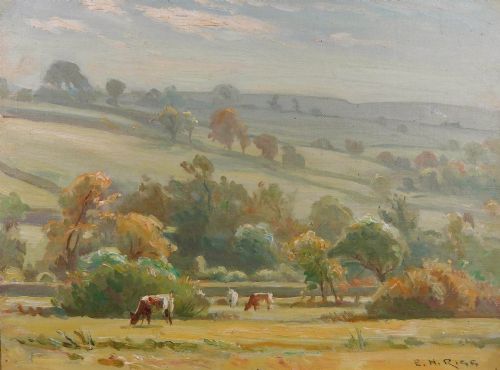
An impressionist field painting brings viewers into rural valleys, harvest scenes, and open pastures through atmospheric brushwork. These artworks focus on the play of light across agricultural land, capturing fleeting moments in nature.
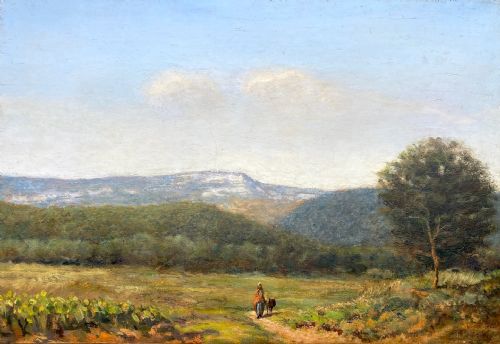
The pieces on this page span from the nineteenth century through the mid-twentieth century, encompassing British Impressionism, Scottish Impressionism, and Modern British movements. Landscapes dominate the selection, depicting locations from Yorkshire and Scotland to the south of France and Holland.
Buyers frequently encounter works executed on canvas, wood panels, and paper supports. The subjects lean heavily toward pastoral life, featuring hay fields, farmsteads, and cattle grazing by riverbanks.
Materials and technique
Artists relied primarily on oil paint applied to canvas or wood panels, alongside watercolours and pastel drawings on paper. Oil mediums allowed for rich impasto and textured layering, which built up the sense of physical terrain and foliage.
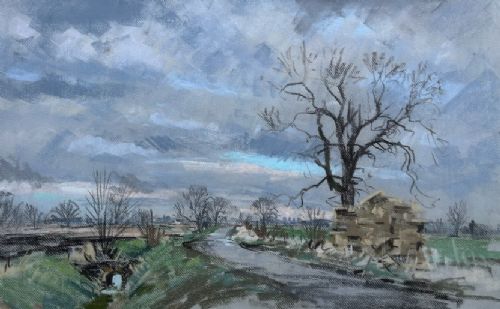
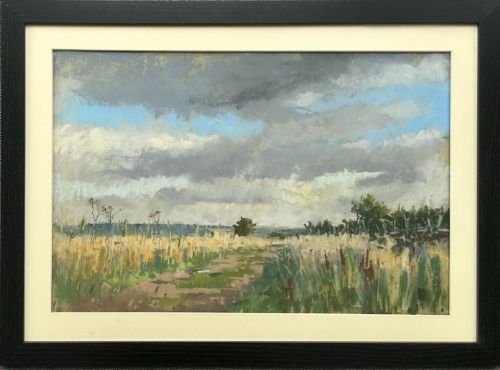
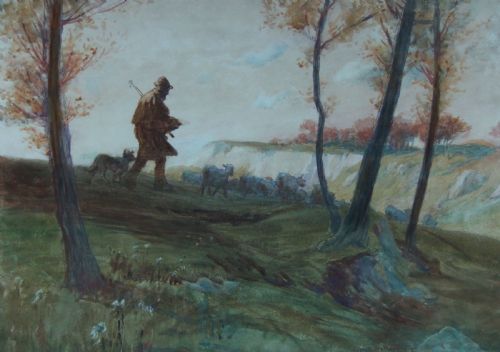
Watercolour and pastel works utilised fluid washes or dry strokes on paper to catch rapid atmospheric shifts in open countryside. Supports of wood and canvas were often framed directly to preserve the edges of these plein air compositions.
Impressionist Field Painting Retail Price Guide 2026
Typical asking prices for impressionist field painting among the pieces listed under this phrase on Sellingantiques today, from the lower quarter to the upper quarter. They describe what is for sale here now, not the wider market.
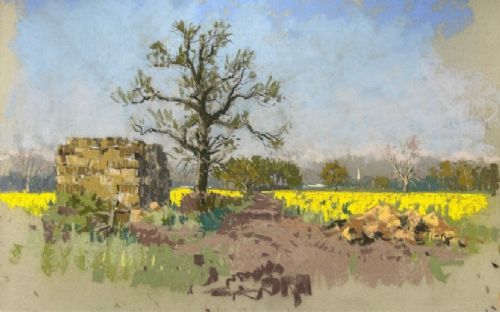
Several pastels carry traces of studio dust, reminding us they emerged straight from the artist's portfolio.
Evaluating quality
Quality rests in the confidence of the brushwork and the artist's handling of natural light across the landscape. Stronger pieces demonstrate a decisive command of tone that suggests distance and atmosphere without relying on rigid lines.
The relationship between the subject and the surface determines the visual success of the work. Superior examples show a deliberate rhythm in pigment application that unifies the sky, fields, and figures into a cohesive whole.
Angus Rands·Ernest Higgins Rigg·William Greaves·James William Booth·Herbert Royle
The Impressionist Field Painting Glossary
- Plein air
- Painting outdoors to capture direct observations of natural light and weather. This method forms the backbone of the impressionist approach.
- Impasto
- Thick application of paint that stands out from the surface. It adds tactile depth to elements like haystacks and foliage.
- Pastel drawing
- Artwork created using powdered pigment sticks bound together. It provides vibrant colour saturation on paper supports.
- Provenance
- The documented history of ownership surrounding an artwork. It helps establish the authenticity and background of a piece.
- Watercolour
- Pigment suspended in a water-based solution applied to paper. It relies on the white of the paper to create luminosity.
Impressionist Field Painting: Frequently Asked Questions
What defines an impressionist field painting?
These works focus on open-air rural views, particularly agricultural landscapes rendered with loose, expressive brushstrokes. They prioritise light and atmosphere over strict topographical detail.
Such paintings often depict haymaking, pastures, and country paths from the nineteenth and twentieth centuries.
How do I care for an oil painting on canvas?
Keep the artwork away from direct sunlight and damp environments to protect the canvas and paint layers. Dust the surface gently with a soft, dry brush without applying pressure.
Avoid using liquid cleaners or hanging pieces near sudden temperature shifts.
Are pastels and watercolours fragile?
Works on paper require framing behind glass to shield them from moisture, dust, and airborne pollutants. Ultraviolet filtering glass also prevents the pigments from fading over time.
Displaying them away from direct sun exposure ensures the colours remain stable.
Where were these rural scenes usually painted?
Artists travelled to agricultural regions in Yorkshire, Scotland, and southern Europe to capture local farming life. Many works stem from dedicated studio portfolios or direct outdoor sketching sessions.
Locations ranged from British valleys to Dutch canals and French countryside.