




Impressionist Countryside Landscape Painting
When you search for impressionist countryside landscape painting, you enter a world of rural scenes captured through spontaneous brushwork and natural light.
Impressionist Countryside Landscape Painting
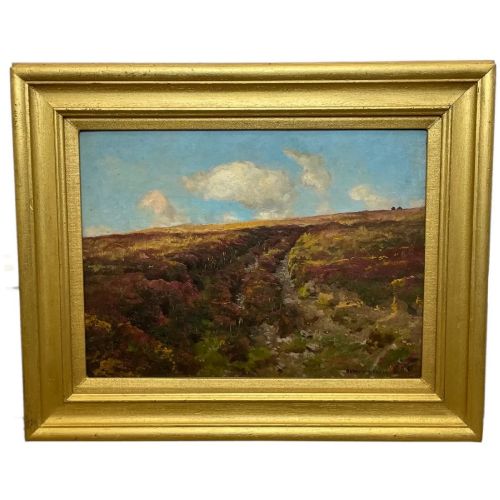
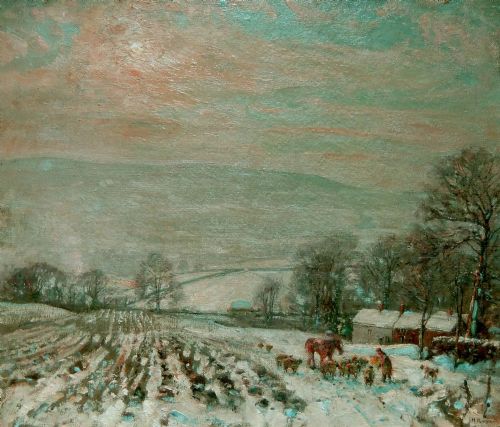
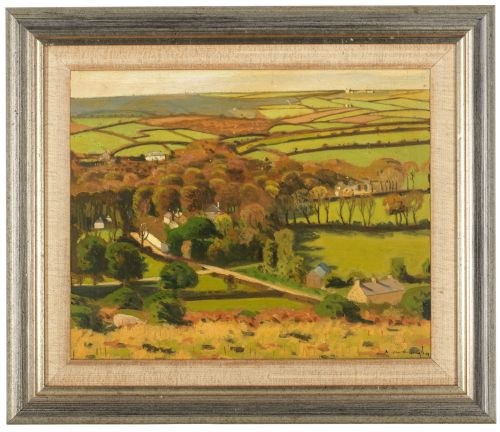
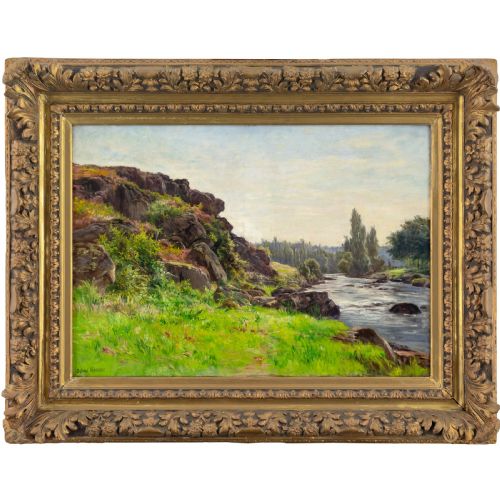
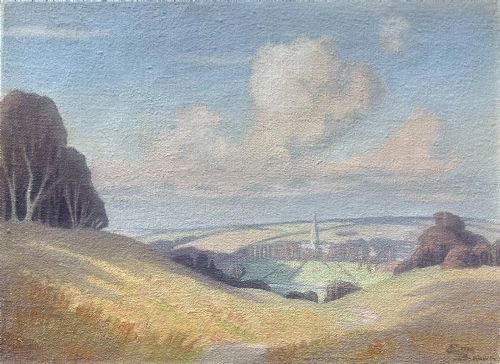
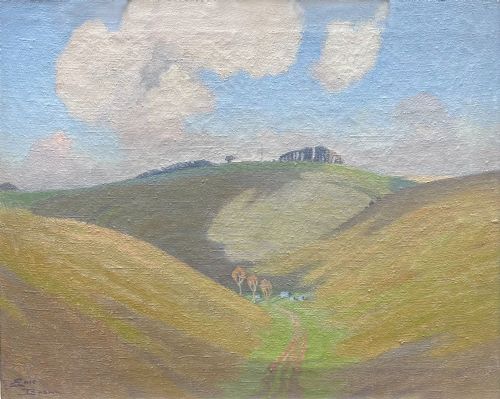
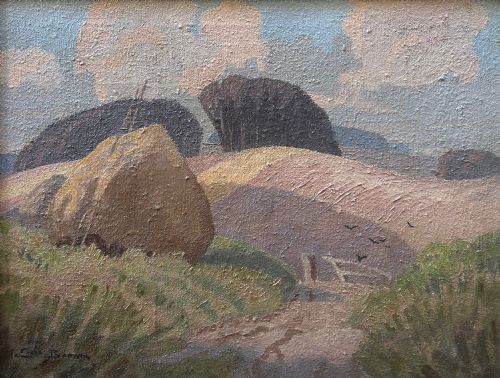
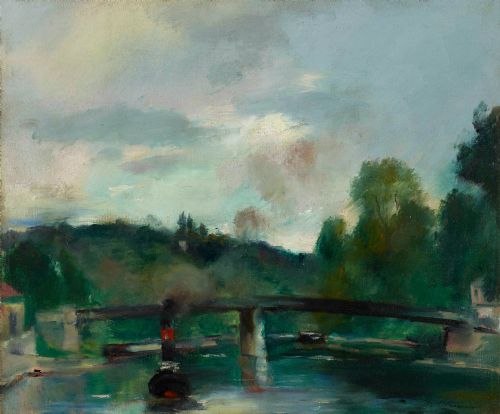
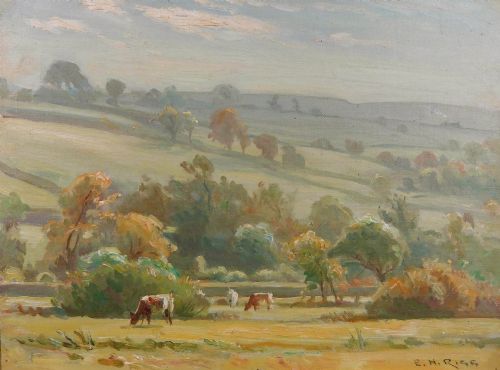
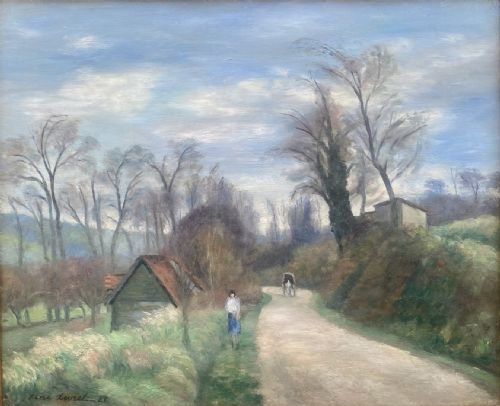
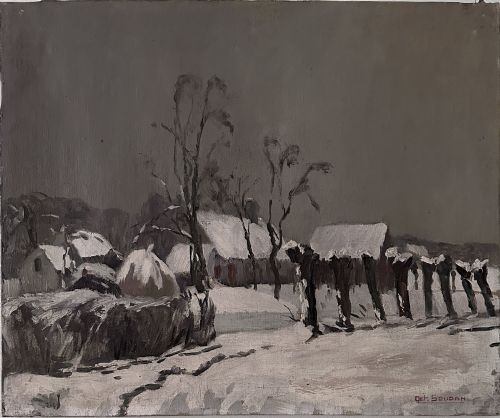
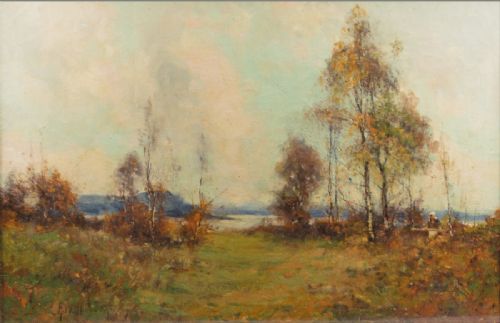
An impressionist countryside landscape painting captures rural views, rivers, villages, and farmland through lively brushwork and atmospheric light effects. The selections on this page span the Victorian era, the nineteenth century, and the early twentieth century up through the nineteen fifties, encompassing British Impressionism, French Impressionism, Post-Impressionism, and Modern British movements.
Most works you encounter here are original oil paintings on canvas or wood panel, alongside waterpaintings on paper. Subjects range widely from Yorkshire dales and West Country horses to Norman riverbanks and sunlit Mediterranean views, painted by artists working in Britain and on the Continent.
How they were made
These works rely primarily on oil paint applied to prepared canvas or wood panel, a technique that allowed artists to build rich textures and work outdoors to catch transient weather. Waterpaintings on paper also appear, utilising fluid washes to capture open skies and countryside vistas.
Artists built compositions using rapid, visible brushstrokes rather than tight academic blending, prioritising the overall sensation of light and atmosphere in a rural setting.
Several canvases record local livestock taking a quiet moment, including sheep under apple blossom and Dartmoor ponies standing in winter fields.
What varies in quality
Quality rests on the confidence of the brushwork and how successfully the painter captures the play of light across fields, water, and hills. A stronger piece demonstrates authority in its composition and a cohesive handling of colour that conveys the specific mood of a season or time of day.
The choice of support and the preservation of the pigment surface also influence the standing of a work. Panels and canvases that retain their original textures without heavy restoration offer a more direct connection to the artist's hand.
Arthur Wardle·Herbert Royle·Robert Morson Hughes·Gabriel Mathieu·Eric Brown·Henri Ottmann·Ernest Higgins Rigg·Rene Levrel·Florence Adelina Hess·Alexander Wellwood Rattray·John Horace Hooper·Hubert Wellington·Owen Bowen·Charles Clair·Edgar Woollatt·Joseph Edward Hennah·Charles Walter Simpson·André Prévot-Valéri·Fred Lawson·Mario Pinetti·Reginald Grange Brundrit·George Graham·William Greaves·James William Booth·Lorenzo Headley
The Impressionist Countryside Landscape Painting Glossary
- Impressionism
- A nineteenth-century painting style focused on the depiction of light in its changing qualities, often painted outdoors. Artists used small, thin yet visible brush strokes.
- Post-Impressionism
- A predominantly French art movement that developed from Impressionism, extending its limitations while retaining its use of vivid colours and thick application of paint.
- Oil on Canvas
- Pigments bound in a medium applied to woven fabric stretched across a wooden frame. This surface provides a slight spring and subtle texture beneath the paint layers.
- Wood Panel
- A rigid wooden support used by artists for oil paintings, offering a stable surface that often preserves fine brushwork and detailed compositions exceptionally well.
Impressionist Countryside Landscape Painting: Frequently Asked Questions
What subjects appear in these countryside paintings?
The canvases and panels show rural scenes including rivers, farmsteads, sheep grazing, horse carts, and snow-covered dales. Many depict specific locations in Britain, such as Yorkshire and Devon, alongside French countryside views in Normandy.
Artists focused on everyday agrarian life and natural topography, recording hayfields, coastal paths, and village tracks under various seasonal conditions.
How do I care for an oil painting on canvas?
Keep the artwork away from direct sunlight and sources of extreme heat or humidity to protect both the canvas and the oil pigments. Dust the surface very gently with a soft, dry brush when necessary, avoiding any liquid cleaners.
Ensure the room maintains a stable climate to prevent the canvas from slackening or the wooden stretcher from warping over time.
How do I identify a wood panel painting?
Look closely at the edges or the reverse of the artwork where the rigid wooden support is visible behind the paint layers. Wood panels provide a solid, unyielding surface unlike the slight bounce found on stretched canvas.
Many artists from the nineteenth and early twentieth centuries favoured panels for smaller outdoor sketches because the rigid wood fit easily into portable travel boxes.
What defines British Impressionism?
British Impressionism refers to the adaptation of French plein-air and light-focused techniques by artists working in Britain around the turn of the twentieth century. These painters combined continental brushwork with familiar British landscapes.
Their works often explore softer northern light, agricultural scenes, and coastal villages through loose, expressive paint handling.