
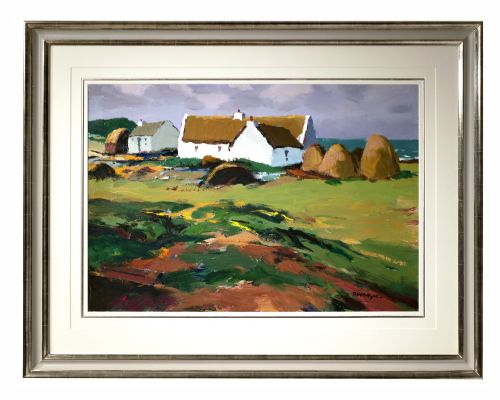


Impressionist Cottage Wall Art
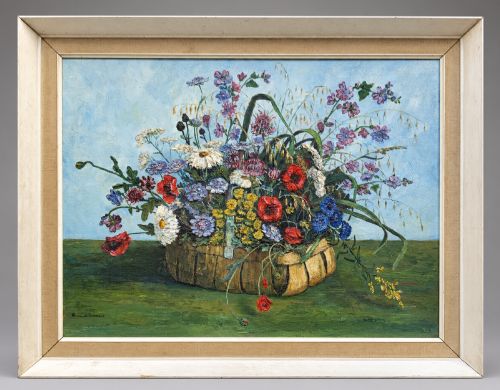
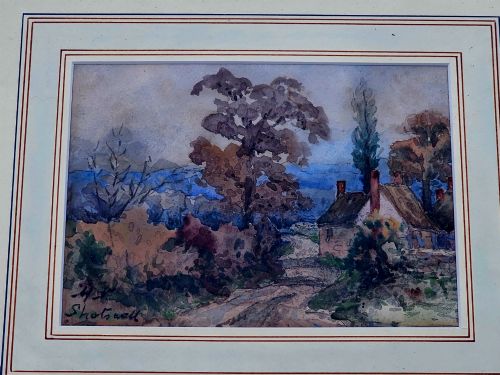
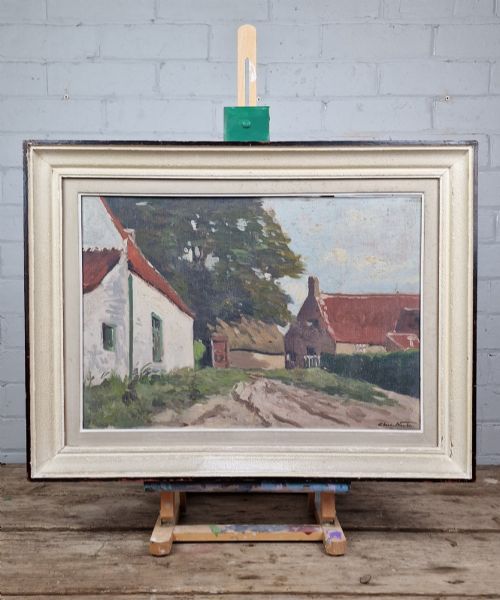
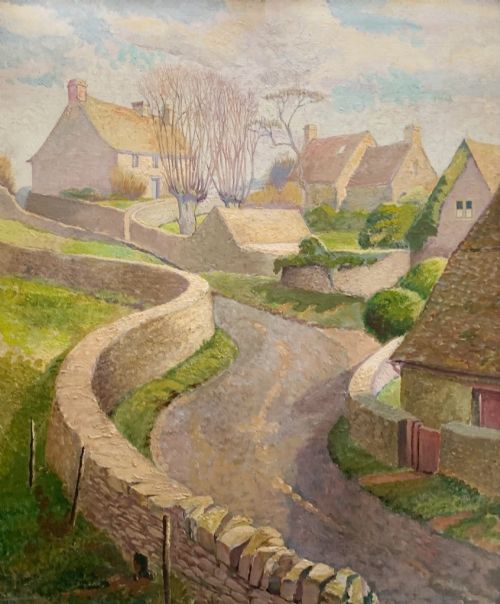
Impressionist cottage wall art brings loose brushwork and rural charm into a room, capturing quiet gardens and rustic buildings.
Impressionist Cottage Wall Art
When someone searches for impressionist cottage wall art, they encounter paintings that record rural dwellings, country gardens, and farmyards through loose brushwork and atmospheric light. The items appearing under this term span from the nineteenth century through the mid-twentieth century, capturing domestic country life on canvas and paper.
The most common formats on this page are oil paintings and watercolours created by British, Scottish, and European artists. These works range from small studies of rural houses to larger depictions of walled gardens and farm buildings.
The periods represented stretch across Edwardian times and mid-century modern decades, showing how painters returned consistently to the subject of the cottage and the country garden. Each piece presents a distinct local view, whether situated in Yorkshire, Cumberland, Wales, or France.
How They Were Made
Artists utilised oil paint on canvas, board, and metal, applying thick or fluid pigments to build texture and capture changing light. Watercolours on paper appear frequently, capturing transparent washes and delicate details of garden scenes.
Support materials vary from traditional woven canvas stretched over wooden frames to wooden boards and heavy paper sheets. These mediums allowed painters to work rapidly outdoors or in the studio to achieve spontaneous effects.
What Varies in Quality
The strength of a composition determines much of its standing, separating routine topographical records from works with dynamic balance and confident brushwork. Handling of light and atmosphere also distinguishes finer examples, where pigments create a convincing sense of weather and time of day.
The surety of the draughtsmanship and the preservation of the original paint surface influence the overall impact of the piece. Works that retain their original support and show minimal intervention hold greater visual integrity.
Charles Houben·Donald McIntyre·Mario Pinetti·Reginald Grange Brundrit·Owen Bowen·Ernest Higgins Rigg·Kershaw Schofield·Helmut Reuter·David Woodlock·George Frederick Nicholls
The Impressionist Cottage Wall Art Glossary
- Impressionism
- A style of painting emphasising loose brushstrokes, open composition, and accurate depiction of light. This approach prioritises the general visual impression over fine detail.
- Oil on canvas
- Pigment mixed with drying oil applied to a woven fabric support. This combination allows for rich colour blending and textured impasto surfaces.
- Watercolour
- A paint consisting of colorants suspended in a water-soluble vehicle, typically applied to paper. It produces luminous, transparent washes.
- Post-Impressionism
- An artistic movement extending impressionism while rejecting its limitations. Artists using this approach focused on more symbolic content and heavier outlines.
- Oil on board
- Pigment mixed with drying oil applied to a rigid wooden or composition panel. This sturdy support was often favored for smaller plein air studies.
Impressionist Cottage Wall Art: Frequently Asked Questions
What periods do these paintings come from?
The works span from the nineteenth century through the mid-twentieth century, including Edwardian and mid-century eras.
Most items date between the early 1900s and the 1960s, reflecting changing regional painting styles across those decades.
How should I frame an old canvas?
Selecting a frame that matches the period of the painting helps preserve its historic character. Simple wood mouldings often complement impressionist textures without distracting from the artwork.
Avoid modern synthetic frames that clash with vintage surfaces and aged pigments.
Where were these rural scenes painted?
The locations include various countryside settings across Britain, such as Yorkshire, Cumberland, and Wales. Several pieces also record views in France and other European regions.
Artists frequently worked outdoors to capture local cottages and gardens from direct observation.
Are watercolours as durable as oil paintings?
Watercolour on paper requires careful protection from direct sunlight to prevent fading. Framing behind UV-filtering glass helps maintain the stability of the paper and pigments over time.
Oil paintings on canvas or board are generally more robust but still benefit from stable indoor humidity.