



Impressionist City Scene Art
Impressionist city scene art captures urban life through loose brushwork, bringing bustling streets and iconic landmarks directly into your home.
Impressionist City Scene Art
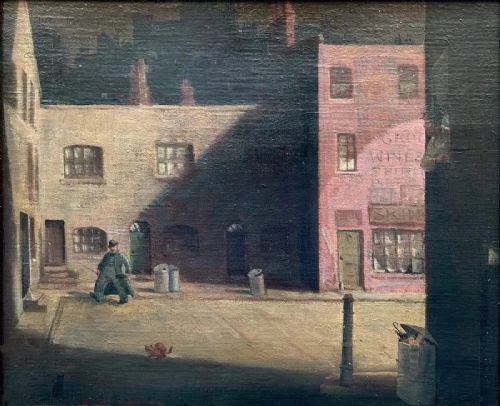
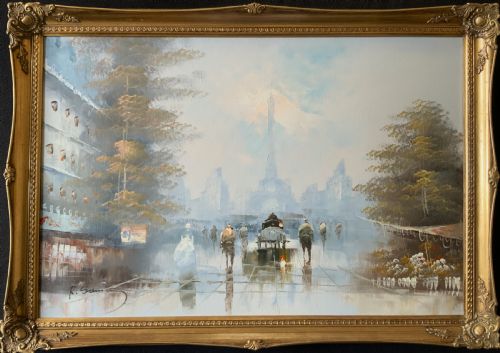
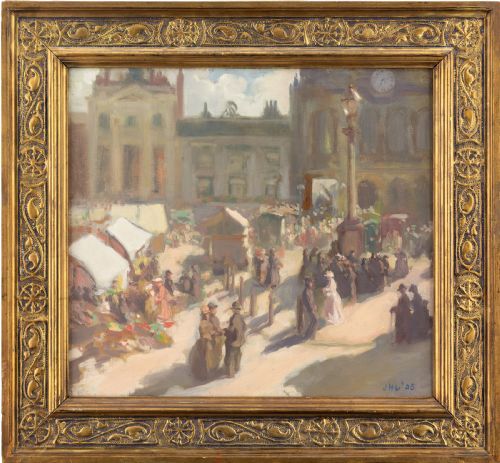
Impressionist city scene art encompasses works depicting urban environments from the nineteenth and twentieth centuries. These paintings portray street life, architectural landmarks, and public squares across London, Paris, Venice, and Huddersfield.
The pieces on this page appear in various forms, most commonly as oil paintings on canvas and watercolours on paper. Artists working within British, French, Flemish, and Post-Impressionist styles dominate the selection.
Framed watercolours and large oil paintings in vintage gilt wood frames represent the primary formats available. Creators of these works capture specific periods ranging from the Belle Epoque through to the mid-century modern era.
What separates works within this range
Quality in impressionist city scene art rests upon the artist's ability to render light and movement within an urban setting. Accomplished hands manage perspective and atmosphere with confident brushwork rather than rigid detail.
The condition of the original support, whether canvas, paper, or board, influences the integrity of the piece. Surviving period frames constructed from wood or gilt wood also contribute to the overall preservation and presentation of the artwork.
Impressionist City Scene Art Retail Price Guide 2026
Typical asking prices for impressionist city scene art among the pieces listed under this phrase on Sellingantiques today, from the lower quarter to the upper quarter. They describe what is for sale here now, not the wider market.
Several canvases capture birds gathering near historic London monuments, proving that even pigeons appreciated prime nineteenth-century architecture.
Francisco Sancha·John Hodgson Lobley·L. De Gent·Albert Ludovici Jnr·Caroline Burnett·Victor Gabriel Gilbert·Charles James Lauder·Ron Folland·Merio Ameglio·Eduard Leon Cortes·Henry Sanders·Rowland Henry Hill·Matthew Hale
The Impressionist City Scene Art Glossary
- Impressionism
- A nineteenth-century art movement characterised by relatively small, thin, yet visible brush strokes and an emphasis on accurate depiction of light. Painters often worked outdoors to capture fleeting visual conditions.
- Post-Impressionism
- A predominantly French art movement that developed from about 1886 to 1905, extending Impressionism while rejecting its limitations. Artists sought greater emotional expression through bold colours and distinct forms.
- Belle Epoque
- A period of French history lasting from the late nineteenth century until the outbreak of World War I in 1914. Art from this era often celebrates urban leisure, Parisian street life, and cultural optimism.
- Gilt Wood
- Wood that has been treated with a thin layer of gold leaf or gold paint. Frames utilising this finish frequently accompany period paintings to enhance their visual depth.
- Watercolour
- A painting method in which the paints are made of pigments suspended in a water-based solution. Works in this medium are typically executed on paper supports.
Impressionist City Scene Art: Frequently Asked Questions
What subjects appear in impressionist city scene art?
These artworks primarily depict urban environments, featuring busy market places, famous monuments, and bustling street corners. Scenes range from Parisian boulevards and the River Seine to London squares and Venetian canals.
Artists focus on daily public life, incorporating figures taking cabs or gathering near historic architecture. Weather conditions such as winter twilight and cold days also shape the composition of these urban views.
How do I date an impressionist city scene?
Dating relies on the recorded period of the work, artist lifespans, and stylistic markers such as Belle Epoque clothing or mid-century framing. Signatures and dates inscribed by the artist on the canvas or paper provide the most reliable chronological evidence.
Framing materials and backing construction can offer secondary clues regarding the era of production. Works spanning the late nineteenth century through the 1960s reflect evolving modernist approaches to urban subject matter.
Where should I hang these paintings?
These works suit reception rooms, studies, and hallways where adequate lighting allows the loose brushwork and atmospheric colour to be appreciated. Selecting a wall away from direct sunlight helps preserve the integrity of oil paint and watercolours.
Pairing the piece with a suitable wall space ensures the accompanying wood or gilt frame complements your interior. Scale matters, as large panoramic canvases require broader wall expanses compared to intimate watercolours.
How do I care for framed watercolours and oils?
Oils on canvas require stable indoor humidity and temperature to prevent cracking of the paint layer or warping of the stretcher frames. Dusting should be done gently with a soft, dry brush without applying pressure to the painted surface.
Watercolours on paper demand protection behind glass to prevent atmospheric damage and fading from light exposure. Keeping both mediums away from moisture sources ensures long-term preservation of the paper and wood components.