

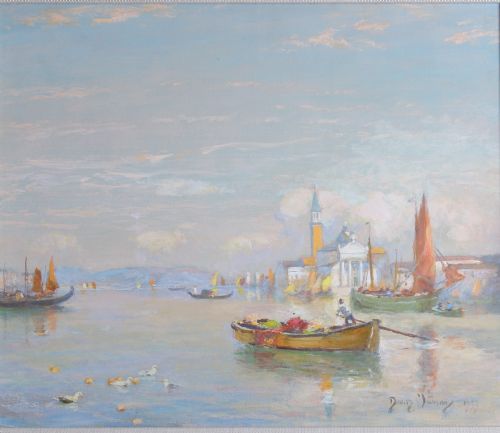
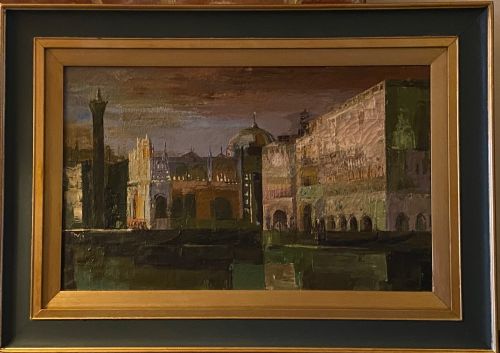
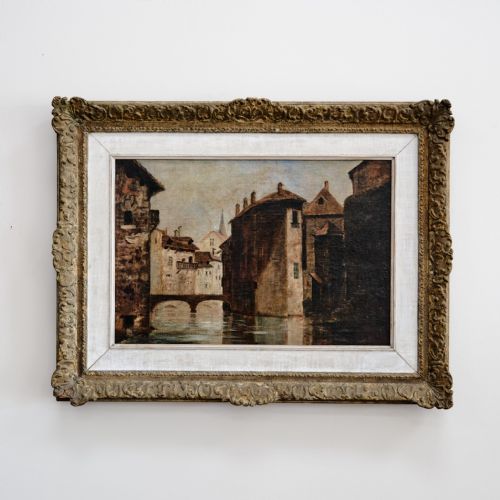


Impressionist Canal Scene
An impressionist canal scene captures light and water through loose brushwork, bringing the atmospheric charm of historic waterways directly into a room.
Impressionist Canal Scene
When searching for an impressionist canal scene, you encounter works that focus predominantly on Venetian waterways, French rivers, and British canals. These pieces capture shimmering water, historic architecture, and passing barges through the characteristic lens of nineteenth and twentieth-century painting.
The selections available here span from the late nineteenth century through to the mid-twentieth century, encompassing both French and Italian schools alongside British and Flemish examples. You will frequently find subjects featuring gondolas, bridges, and old mansions rendered with spirited brushwork.
The dominant formats on this page are oil paintings on canvas and watercolours on paper. These range in scale from intimate watercolours to large oil compositions depicting sweeping views of grand waterways.
Markers of quality
Quality rests on the artist's handling of light, atmosphere, and perspective, where confident brushwork brings movement to the water and solidity to the masonry. Stronger compositions demonstrate a purposeful balance between the reflective surface of the canal and the surrounding buildings.
The depth of the pigment application and the preservation of the canvas or paper surface also separate works. Pieces that retain vibrant colour harmonies and clear definition in the architectural details demonstrate superior execution by the painter.
Impressionist Canal Scene Retail Price Guide 2026
Typical asking prices for impressionist canal scene among the pieces listed under this phrase on Sellingantiques today, from the lower quarter to the upper quarter. They describe what is for sale here now, not the wider market.
Gondoliers navigate under centuries-old bridges while oblivious to the decades of art history watching them.
Antonio DeVity·Fred Lawson·Claude Jousset·Marc Aldine·Antoine Bouvard Senior·Vittore Zanetti Zilla·Herbert Royle·FRANK WASLEY·Charles Clement Calderon·Helen Donald-Smith
The Impressionist Canal Scene Glossary
- Impressionism
- A style of painting that emerged in the nineteenth century characterised by relatively small, thin yet visible brush strokes and an emphasis on accurate depiction of light in its changing qualities.
- Impasto
- The process or technique of laying on paint or gesso thickly so that it stands out from a surface. This technique adds tactile dimension to highlights on water and masonry.
- Watercolour
- Artists' paint made with a water-soluble binder such as gum arabic, used with water on paper supports. It produces translucent washes well-suited to capturing atmospheric canal mists.
- Gesso
- A plaster mixture used as a coating for a canvas or wood panel before painting. It provides a smooth, absorbent surface for oil pigments.
Impressionist Canal Scene: Frequently Asked Questions
What subjects appear in these canal scenes?
The subjects predominantly feature Venetian waterways, gondolas passing beneath bridges, and historic European mansions. You also encounter French and British river landscapes with barges.
These compositions focus on capturing the specific atmosphere of water traffic and historic urban architecture.
How do I care for an oil painting on canvas?
Keep the canvas away from direct sunlight and steady humidity levels to prevent warping and cracking of the oil paint. Dust the surface gently with a soft, dry brush.
Avoid using moisture or chemical cleaners on the painted surface.
How do I distinguish watercolours from oil paintings?
Watercolours are painted on paper, often displayed behind glass to protect the delicate pigment from atmospheric damage. Oil paintings use heavy pigment on canvas or wood panels and have a textured surface.
Watercolours rely on the white of the paper for luminosity, whereas oils use opaque layers.
Which periods do these artworks cover?
The pieces span from the late nineteenth century through the 1960s, encompassing nineteenth-century French schools, early twentieth-century views, and mid-century interpretations.
Each period brings slight shifts in colour palette and brushwork while maintaining the impressionist focus on light.