




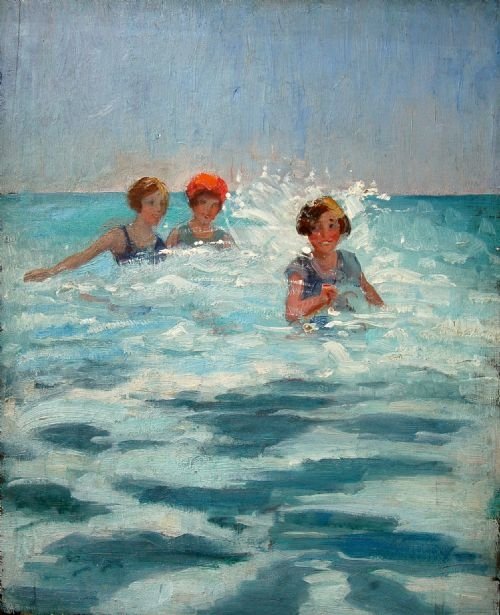


Impressionist Beach Scene
Impressionist beach scene paintings capture fleeting coastal light using loose brushwork, appealing to collectors seeking atmospheric seaside views.
Impressionist Beach Scene
An impressionist beach scene presents coastal life, harbours and shorelines through the lens of late nineteenth and twentieth century artistic movements. These works range from Victorian fine art watercolours to mid century oils on canvas depicting seaside gatherings and children playing in the surf.
The pieces on this page span several decades, notably the nineteenth century up to nineteen sixty, capturing British, Scottish and European interpretations of the coast. Subjects stretch from St Ives and the Scottish Borders to Welsh bays and French shores.
The most frequent form encountered here is the oil painting on canvas or wood panel, alongside marine watercolours on paper. Artists recorded local fishermen, lighthouses, tidal mudflats and sunny beach holidays with rapid, evocative marks.
How They Were Made
Painters applied oil paint or watercolour onto prepared canvas, wood boards or paper to achieve these coastal views. Brushwork remained energetic and visible rather than blended away, recording the movement of water and shifting light.
Many of these works are housed in period gilt or gilt wood frames that complement the painted surface. Canvas supports provide texture beneath the oil layers, while watercolour paintings on paper rely on white grounds for luminosity.
Impressionist Beach Scene Retail Price Guide 2026
Typical asking prices for impressionist beach scene among the pieces listed under this phrase on Sellingantiques today, from the lower quarter to the upper quarter. They describe what is for sale here now, not the wider market.
The site records styles ranging from Victorian British impressionism and Newlyn school to Scottish and European impressionist traditions.
What Varies in Quality
Quality rests upon the artist's ability to manipulate light and atmosphere with conviction. Stronger works demonstrate confident tonal control and precise observation of coastal weather, while weaker examples rely on formulaic compositions.
The handling of pigment separates standard decorative output from accomplished regional school paintings. Superior pieces capture the distinct character of specific locations like St Ives or Welsh shores through nuanced colour relationships.
William Banks Fortescue·Ernest F Hill·Sir David Murray·Jeffrey Pratt·Owen Bowen·Robert Macaulay Stevenson·William Greaves·Alfred Egerton Cooper·Harry John Pearson
The Impressionist Beach Scene Glossary
- Impressionism
- A nineteenth century painting style characterised by relatively small, thin yet visible brush strokes and an emphasis on accurate depiction of light. This approach suited artists working outdoors by the sea.
- Post-Impressionism
- A predominantly French art movement that developed from about eighteen eighty-six, extending impressionism while rejecting its limitations. Artists applied arbitrary colours and distinct forms to coastal subjects.
- Newlyn School
- An art colony based in Cornwall during the late nineteenth and early twentieth centuries that specialised in naturalistic plein air painting. Members often depicted local fishing communities and harbour scenes.
- Gilt Wood
- Wood that has been coated with gold leaf or a gold coloured substance. Frames made in this manner frequently surround nineteenth and early twentieth century oil paintings.
- Watercolour
- A painting method in which the paints are made of pigments suspended in a water soluble vehicle. Artists used this medium on paper to capture translucent effects in marine landscapes.
Impressionist Beach Scene: Frequently Asked Questions
What periods do these paintings cover?
The available works span from the nineteenth century through the nineteen sixties. Most pieces originate from distinct stylistic movements like British impressionism and the Newlyn school.
Collectors will find items dated across various decades of the twentieth century, reflecting changing approaches to marine art.
Are these works painted outdoors?
Many artists of this period worked plein air to capture immediate atmospheric conditions by the shore. This direct observation informed studio works as well.
Watercolours and oils alike record the specific light found at locations such as St Ives and Welsh coastal bays.
How should I frame an unframed painting?
Select a frame appropriate to the period of the artwork, such as a traditional gilt wood moulding for a late nineteenth century oil. Ensure the depth accommodates the canvas or wood panel securely.
Consult a professional framer to avoid acidic materials touching the canvas edges or paper margins.
How do I distinguish regional schools?
Regional groupings often share a palette and subject matter influenced by specific artist colonies. The Newlyn school typically focuses on Cornish fishing life and harbour atmospheres.
Scottish impressionism displays distinct tonal qualities and landscape interpretations unique to northern painters.