

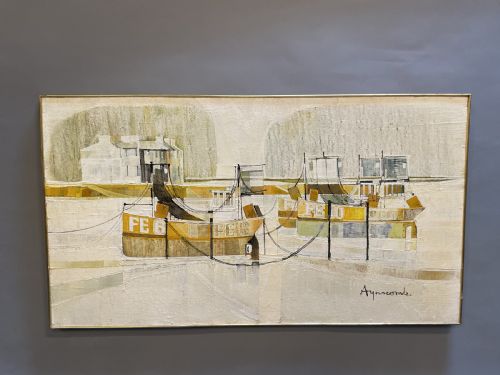


Impasto Marine Art
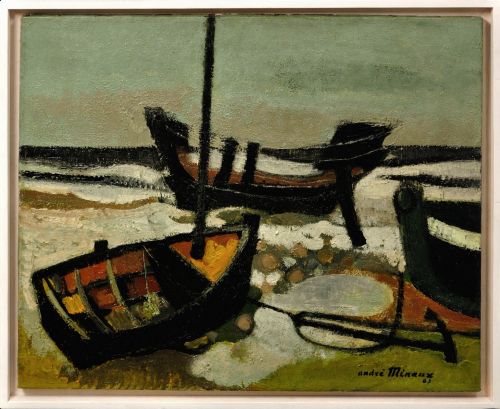
Impasto marine art brings coastal scenes and maritime life into focus through heavy, textured oil paint applied directly to canvas and board.
Impasto Marine Art
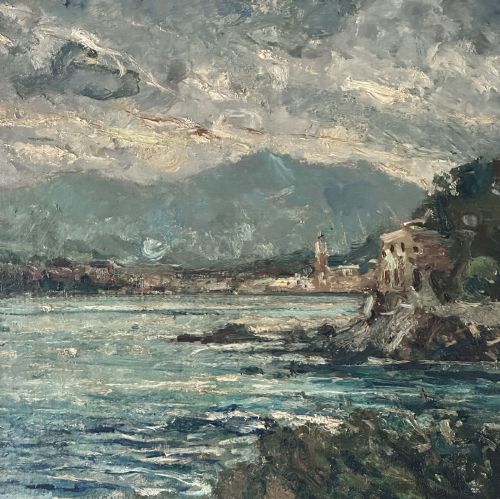
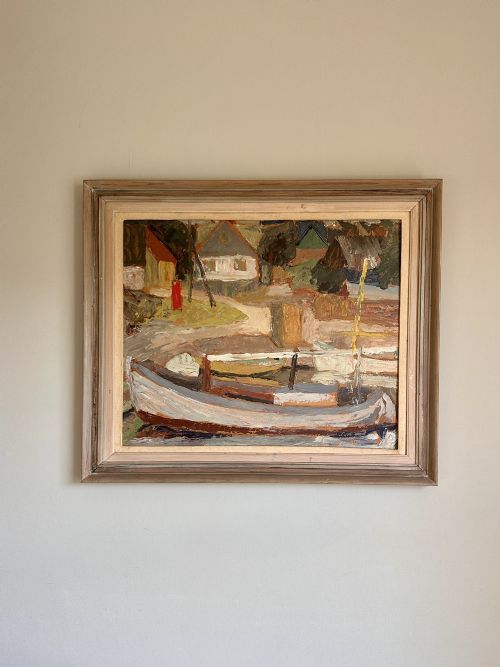
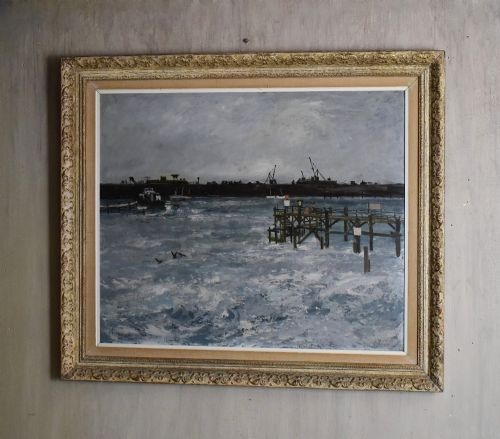
Impasto marine art captures coastal views, harbours, estuaries, and fishing boats through thick applications of pigment. These works span from the nineteenth century through the mid-twentieth century, encompassing British and French regional scenes.
Buyers meet paintings executed across several decades, notably the nineteen-twenties, thirties, forties, fifties, and sixties. Mid-century impressionism and post-impressionism dominate the selection on this page, alongside earlier nineteenth-century harbour views.
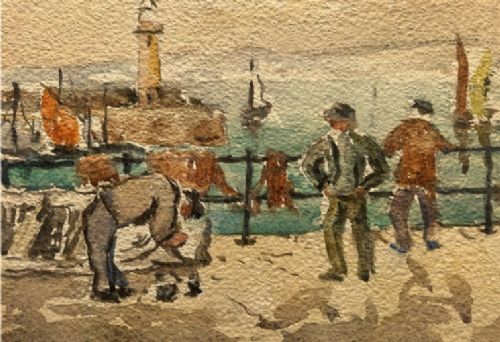
Works appear in various formats including oil paintings on canvas, board, and hardboard, as well as a watercolour painting. Subjects range from Welsh bays and Cornish ports to French coastal harbours and Mediterranean shores.
Materials and construction
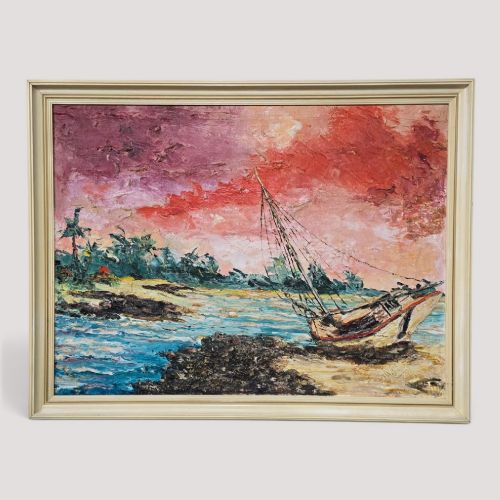
Artists utilise oil paint applied thickly with brushes or palette knives to build tangible relief onto supports of canvas, wood, board, or hardboard. This heavy build-up of pigment gives the water, boats, and skies a physical presence.
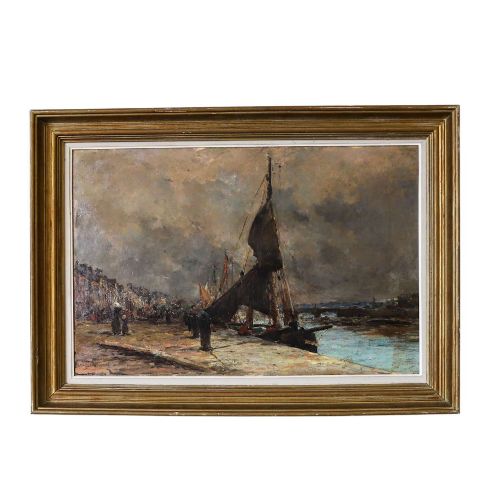
Surviving works retain their original mounting setups, including traditional wooden stretchers and period gilt frames that complement the textured surfaces of the paintings.
Impasto Marine Art Retail Price Guide 2026
Typical asking prices for impasto marine art among the pieces listed under this phrase on Sellingantiques today, from the lower quarter to the upper quarter. They describe what is for sale here now, not the wider market.
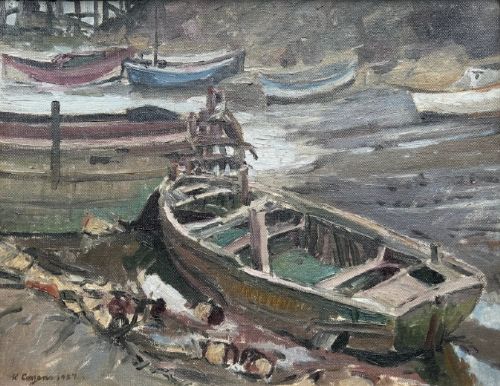
Several coastal scenes capture busy harbour walls where boats rest patiently on muddy estuaries waiting for the tide to return.
Distinguishing quality in these works
Quality rests in the handling of the medium and the confidence of the brushwork or knife work. Stronger examples use pigment thickness deliberately to create light and movement across water and sky.
Compositional strength and atmospheric clarity separate accomplished regional views from simpler decorative scenes. The integration of colour and texture defines the success of each maritime composition.
George F Pennington·Kenneth Cozens·Peter Brannan·Elisabeth Bardon·Raymond Picque·James Fry·Donald McIntyre·Edward M. Elliott·Jack R Mould
The Impasto Marine Art Glossary
- Impasto
- A technique where paint is laid onto a surface in very thick layers, usually thick enough that the brush or painting-knife strokes are visible. This method adds tactile depth to waves, sails, and clouds.
- Maritime
- Depicting ships, shipping, sea, and related coastal subjects. These scenes focus on harbours, estuaries, and coastal villages.
- Post-Impressionism
- An art movement that extended impressionism while rejecting its limitations, focusing on more symbolic content and heavier painterly application. Artists in this tradition emphasised distinct brushstrokes and bold forms.
- Board
- A rigid flat substrate used as an alternative to canvas for oil paintings. Hardboard and wood panels provide a firm foundation for heavy pigment applications.
Impasto Marine Art: Frequently Asked Questions
What periods do these marine paintings cover?
The selection includes works from the nineteenth century through the nineteen-twenties, thirties, forties, fifties, and sixties. Mid-century examples are particularly common.
These dates reflect movements such as early twentieth-century impressionism and mid-century modern British painting.
What subjects appear in this art?
Compositions feature coastal landscapes, fishing boats, harbour scenes, rivers, estuaries, and sailing yachts. Locations range from British coastal spots like St Ives, Polperro, and the Tees to French ports like Concarneau and the Cote d'Azur.
Figures on promenades and industrial river views also feature among the maritime subjects.
How should I display these textured paintings?
These works suit traditional wall art placement in spaces with good natural or directional lighting. The side lighting helps accentuate the raised texture of the thick oil paint.
Ensure they hang away from direct heat sources to protect the canvas and wooden supports.
What surfaces support these oil paintings?
Artists painted on traditional stretched canvas, wood panels, and hardboard boards. Each surface provides a different level of rigidity beneath the heavy paint layers.
Canvas offers natural give, while boards present a completely firm foundation for the impasto technique.