





Imari China Plates
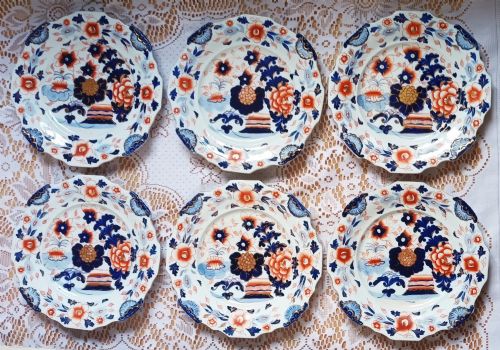
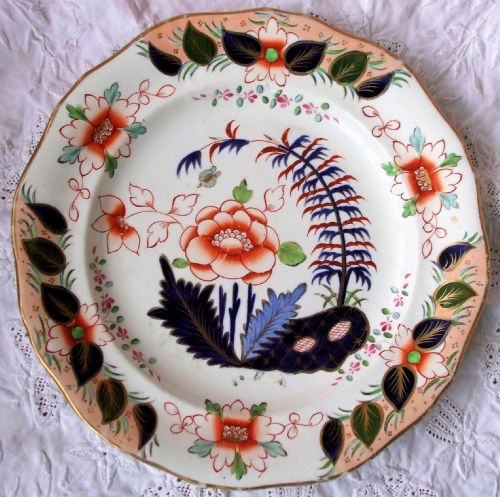
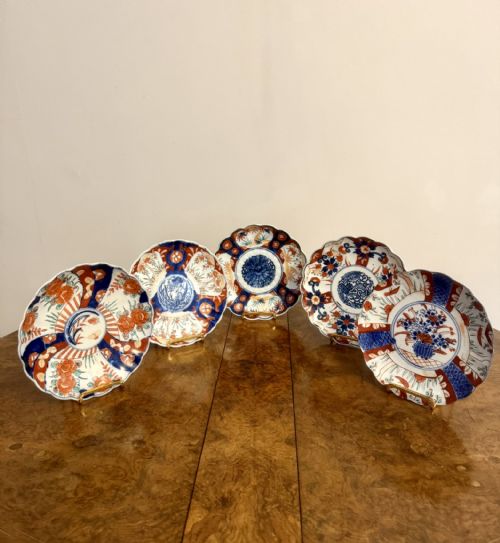
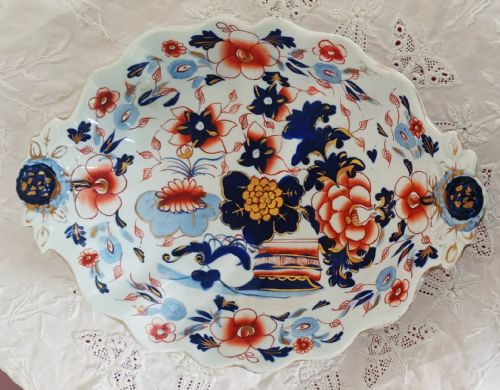
These imari china plates bring together rich palettes of iron red, cobalt blue and gilt across Japanese and English ceramics.
Imari China Plates
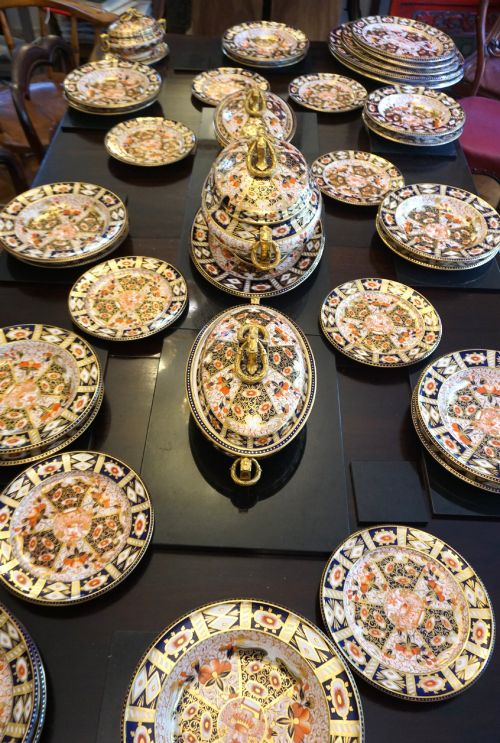
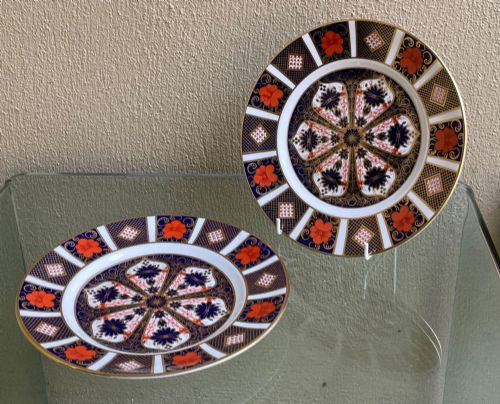
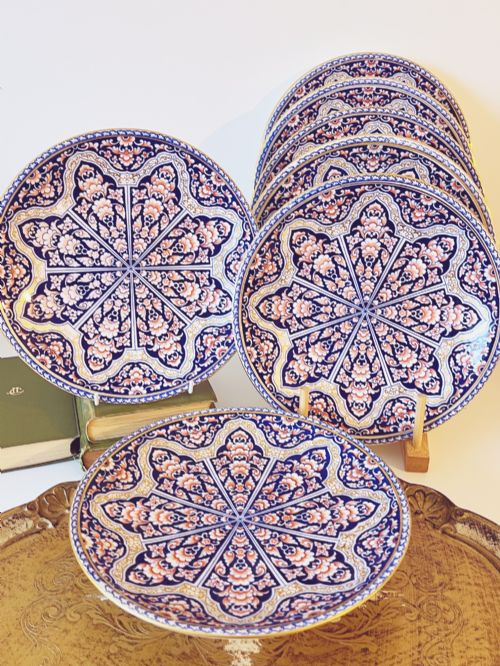
When you search for imari china plates, you encounter pieces that bridge Eastern and Western ceramic traditions from the eighteenth century onwards. The selection on this page ranges from Japanese imports to English interpretations produced by factories such as Davenport, Royal Crown Derby and Masons.
Forms span decorative plates, scalloped edge dishes, low comports and serving platters. You find single items alongside matched sets and larger dessert or dinner services designed for display or dining.
Materials and Methods
Maker workshops built these wares using porcelain, bone china and dense ironstone ceramic bodies shaped into plates, dishes and platters. Artisans applied underglaze cobalt blue alongside overglaze enamels in iron red, complemented by gold leaf or gilt details.
Firing techniques fixed the complex palettes and patterns, including traditional Japanese designs, dragon motifs and Japan pattern adaptations, ensuring durability across daily service items and decorative display pieces.
Imari China Plates Retail Price Guide 2026
Typical asking prices for imari china plates among the pieces listed under this phrase on Sellingantiques today, from the lower quarter to the upper quarter. They describe what is for sale here now, not the wider market.
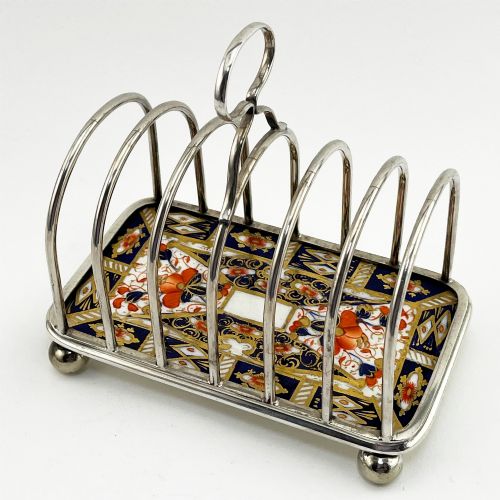
Object types include dessert services, dinner services, toast racks, soup bowls and individual serving platters.
Assessing Quality and Execution
Quality rests in the crispness of the underglaze painting, the vibrancy of the enamel colours and the precise application of gold leaf. Superior examples maintain intact gilding and clear, sharp transfer or hand-painted motifs across the surface.
The weight and refinement of the ceramic body also distinguish the pieces, from robust ironstone platters to delicate bone china dessert plates and deeply lobed serving dishes.
Davenport·Royal Crown Derby·Masons·Worcester·Minton
The Imari China Plates Glossary
- Ironstone
- A heavy, durable ceramic body patented in the nineteenth century for utilitarian and decorative tableware.
- Comport
- A raised dish or bowl used for serving fruit or dessert as part of a formal service.
- Gilt
- A thin layer of gold leaf or gold paint applied to ceramic surfaces for decorative accent.
- Enamel
- Opaque vitreous material fused to the ceramic body over the glaze to create coloured patterns.
- Japan Pattern
- An English ceramic design style inspired by Japanese Imari imports, utilising blue, red and gold.
Imari China Plates: Frequently Asked Questions
What is an imari plate?
An imari plate is a ceramic dish decorated in a distinctive palette typically combining underglaze blue, iron red and gilt highlights. The style originated in Japan and was subsequently copied by English potteries.
These pieces function as both decorative wall or cabinet displays and functional servingware for desserts and meals.
How do I date imari china?
Dating relies on maker marks, registration diamonds, ceramic bodies such as ironstone versus porcelain, and stylistic indicators. English pieces often feature specific factory imprints from the nineteenth century.
Japanese examples span the Edo and Meiji periods, identified through paste characteristics and brushwork styles.
Were these plates used for dining?
Many items formed part of larger dessert services or dinner services intended for formal entertaining in country houses. Comports and serving platters accompanied matching sets of plates.
Others were made primarily as decorative plates for display in cabinet collections rather than daily table service.
How do I care for antique imari plates?
Antique ceramics require gentle hand washing in lukewarm water with mild soap to protect overglaze enamels and gold leaf. Dishwashers and abrasive cleaners cause permanent damage to the surface.
Display them securely on stable plate stands or store them with protective dividers between stacked pieces.