


Imari Ceramic Punch Bowl
An imari ceramic punch bowl brings rich cobalt blue and rust-red palettes into a room, offering both decorative presence and historical depth.
Imari Ceramic Punch Bowl
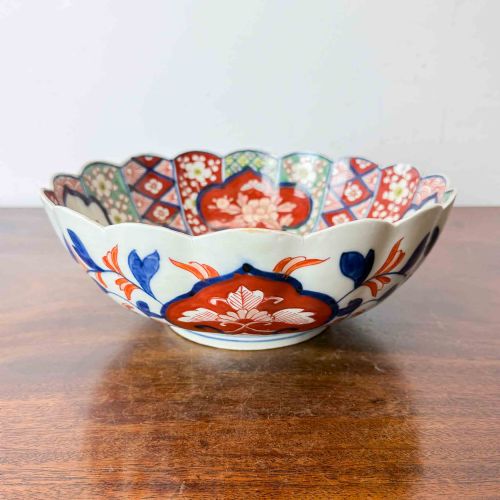
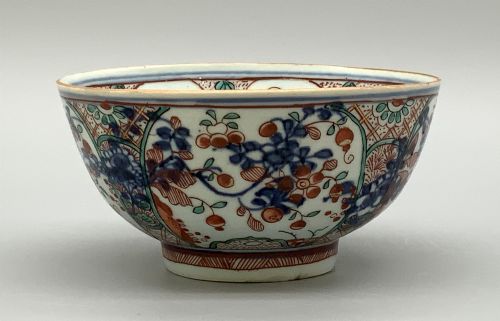
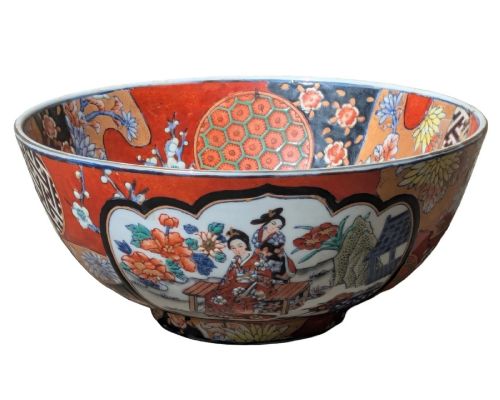
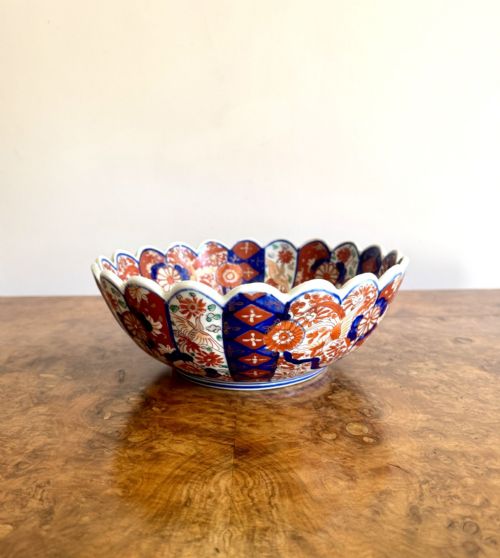
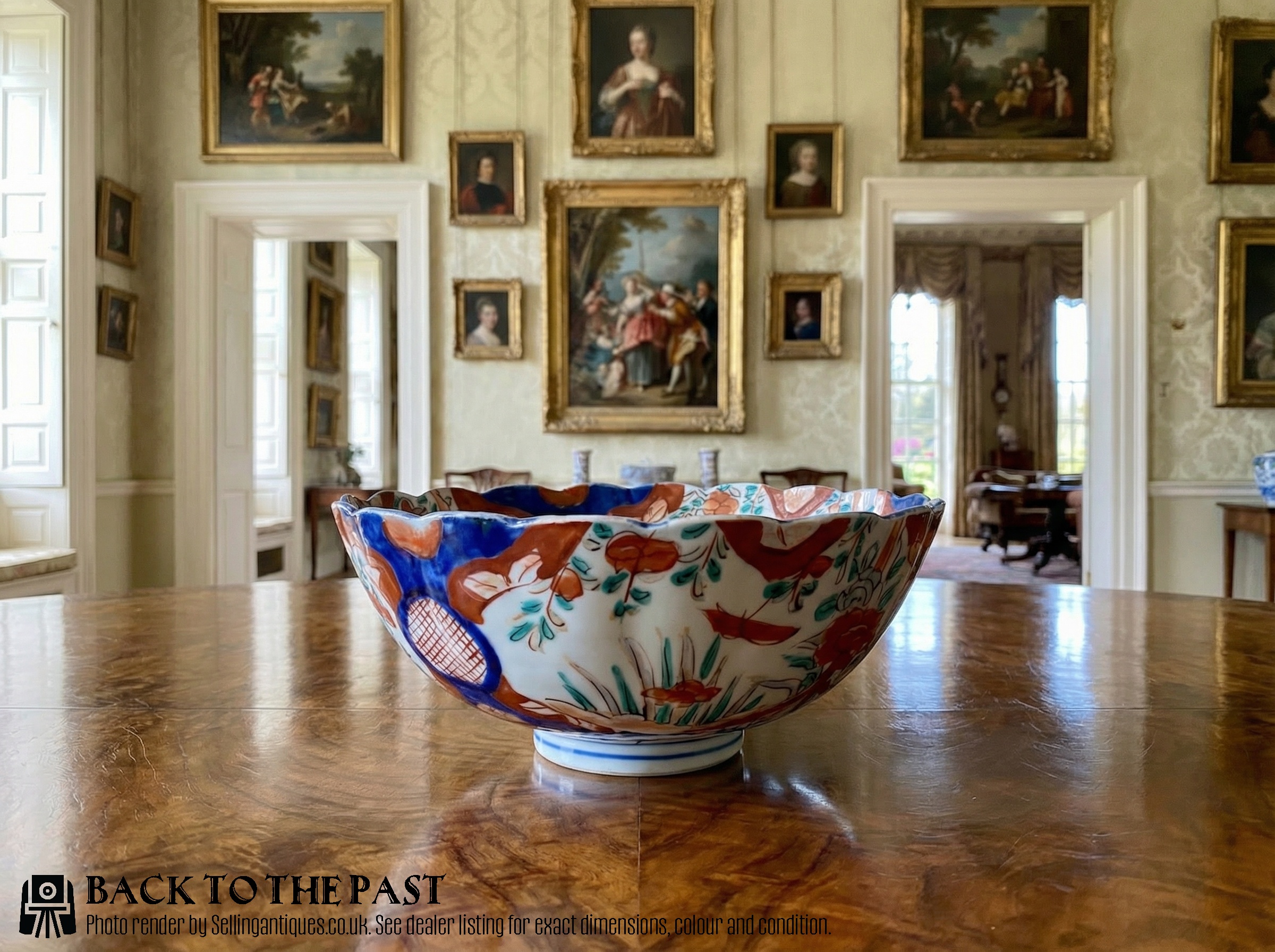
An imari ceramic punch bowl is a substantial vessel designed historically for serving punch, featuring vibrant hand-painted decoration that draws the eye across the room. You will most frequently encounter Japanese examples from the nineteenth century alongside eighteenth-century Chinese export pieces created in the Kangxi tradition.
The forms vary from simple rounded profiles to scalloped edges and footed bowls, often serving as centrepieces on large dining tables or sideboards. These pieces cross various periods including the Meiji era, the Victorian age, and the early twentieth century.
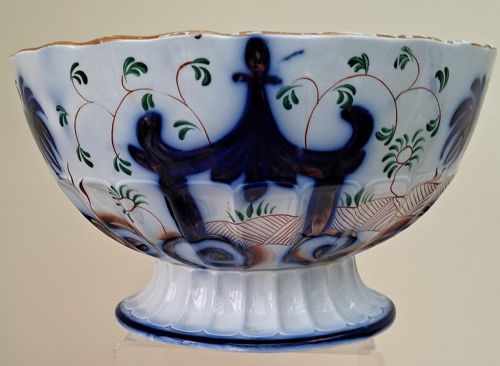
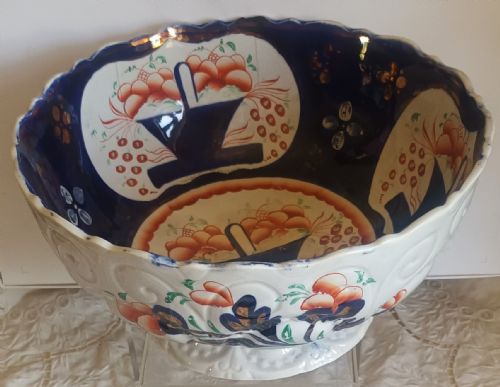
Beyond Japanese and Chinese origins, British makers like Mason's Ironstone, Chamberlain Worcester, and Gaudy Welsh potteries produced their own distinct interpretations of the palette. These diverse origins mean a buyer can find anything from a delicate porcelain dish to a heavy ironstone footed bowl.
Materials and construction
Potters built these vessels using porcelain or ironstone, shaping the clay before applying underglaze cobalt blue pigment. Artisans then added enamel colours such as rust-red and sometimes gold leaf over the glaze before firing the piece again to fix the pigments.
Many Japanese imari ceramic punch bowl examples rely on hard-paste porcelain fired at high temperatures to achieve a dense, ringing body. British adaptations utilise durable earthenware or ironstone to support larger, heavier forms intended for everyday service.
Listings feature pieces spanning the seventeenth, eighteenth, nineteenth, and early twentieth centuries, including Japanese porcelain and British ironstone.
Factors of quality
The crispness and density of the hand-painted cobalt blue and enamel decoration dictate the visual success of the piece. Superior examples display precise brushwork and well-defined compartmentalised motifs without bleeding or smudging in the glaze.
The integrity of the body and the retention of delicate overglaze enamels and gold leaf elevate certain pieces above others. Thicker ironstone vessels rely on sturdy form and clean transfer or hand-applied patterns, while porcelain pieces depend on thin, translucent walls and refined potting.
The Imari Ceramic Punch Bowl Glossary
- Imari
- A style of ceramic decoration originating in Japan, characterised by a palette of underglaze cobalt blue, iron red, and supplementary colours like gold. The style was widely copied by Chinese and European potteries.
- Kangxi Period
- A period of Chinese history spanning from sixteen sixty-two to seventeen twenty-two noted for fine porcelain production. Pieces from this era often influenced later imari designs.
- Meiji Period
- A Japanese historical era lasting from eighteen sixty-eight to nineteen twelve that produced abundant export porcelain. Many decorative bowls date from the later decades of this time.
- Ironstone
- A type of durable earthenware patented in nineteenth-century Britain as a robust alternative to porcelain. It allowed potteries to create heavy, practical bowls with rich printed or painted patterns.
- Scallop Edge
- A rim shaped into a series of continuous curves resembling the edge of a scallop shell. This decorative profile appears frequently on nineteenth-century Japanese porcelain bowls.
Imari Ceramic Punch Bowl: Frequently Asked Questions
How were punch bowls used originally?
These large vessels sat at the centre of social gatherings to hold mixed punches containing spirits, water, fruit, and spices. Guests used ladles to serve themselves directly from the communal bowl during feasts and celebrations.
Over time, as dining habits shifted, many of these bowls transitioned into purely decorative display pieces on sideboards or tables rather than serving vessels.
Can I use an antique bowl for serving food?
While these vessels were originally created for communal dining and punch service, historical glaze formulations and potential hairline cracks require caution today. Using them for dry items or display avoids modern wear on fragile nineteenth-century surfaces.
If you choose to use a sturdy ironstone or heavy porcelain bowl for serving, wash it gently by hand without soaking to protect the historical glaze and any remaining overglaze enamel.
What is Gaudy Welsh pottery?
Gaudy Welsh refers to colourful Staffordshire and Welsh earthenware produced in the nineteenth century featuring bright cobalt, copper lustre, and pink or red enamel. These patterns were inspired by expensive Japanese imari imports but made accessible for domestic households.
Footed bowls in Gaudy Welsh patterns bring a rustic, folk-art interpretation of the imari aesthetic to British ceramic collecting.