




Hunting Hound Picture
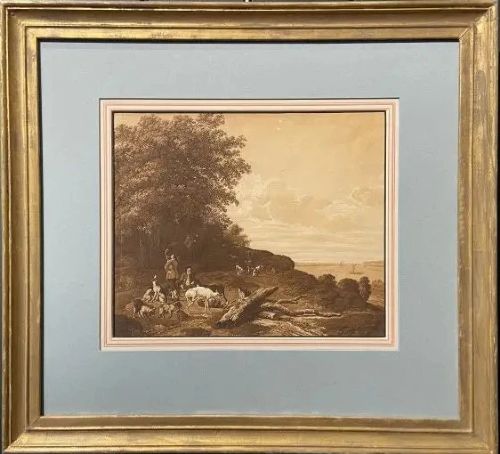
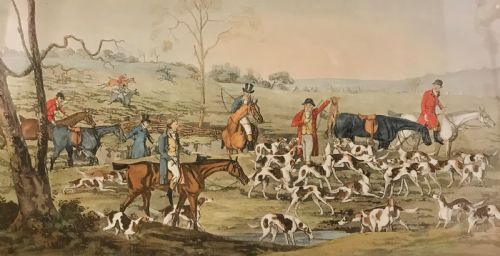
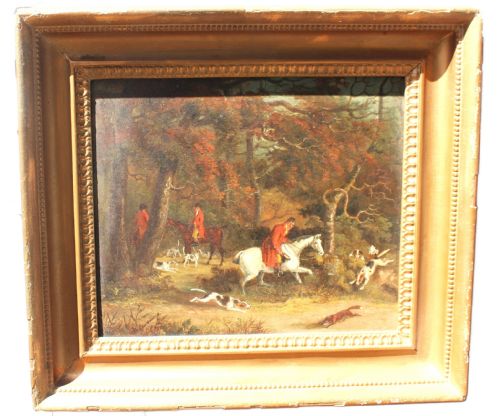
A hunting hound picture captures the drama and pageantry of the chase through oil on canvas, watercolour, and engraved paper.
Hunting Hound Picture
A hunting hound picture brings the energy of the field directly to the interior, depicting packs, huntsmen, and quiet kennels in compositions that span centuries. These works range from small Georgian oil paintings and delicate Victorian watercolours to hand-coloured engravings and original nineteenth-century photographs.
The material record shows a strong preference for oil on canvas and watercolour, framed in traditional wood and giltwood formats. Subjects vary from single named hounds with litters to sweeping panoramic views of the Berkeley Hunt and mounted packs taking hedges.
Collectors encounter pieces categorised under British Sporting Art, Dutch Golden Age influences, and nineteenth-century realism. The majority date across the Victorian era and the broader nineteenth century, reflecting a period deeply invested in equestrian and canine portraiture.
Materials and execution
Painters relied principally on oil on canvas or board, applying pigment to capture the musculature of hounds and the texture of coats. Watercolours on paper offered a lighter, more immediate medium, often finished with delicate hand-colouring as seen in period engravings.
Frames play an integral role in the presentation of these works, frequently employing moulded wood finished with gold leaf or heavy giltwood. Works executed on wood panels and paper prints utilise the natural qualities of their supports to preserve fine detail over generations.
Listings feature works spanning the seventeenth century to the mid-twentieth century, predominantly executed in oil or watercolour.
Distinction in quality
Mastery of animal anatomy and the specific physical characteristics of breeds distinguishes accomplished sporting art from formulaic production. Strong works capture the dynamic tension of a pack in motion or the individual expression of a named hound.
The handling of light, atmosphere, and landscape background separates proficient artists from minor hands. Original draughtsmanship in watercolours and precision in brushwork elevate the visual impact of the composition.
Arthur Wardle·Samuel Raven·Colin Graeme Roe·John Sanderson-Wells·Henri Schouten·Tom Carr·Heywood Hardy·Guillaume Urban Régamey·George Goodwin Kilburne·Wilfred Bailey
The Hunting Hound Picture Glossary
- Sporting art
- Genre of painting and engraving dedicated to depicting rural sports, including hunting, shooting, and equine subjects. It developed a distinct following in Britain during the eighteenth and nineteenth centuries.
- Giltwood
- Wood carved and treated with a thin layer of gold leaf or metallic powder. This finish is standard for traditional frames housing nineteenth-century paintings.
- Lithograph
- A print made from a flat stone or metal plate on which an image has been drawn with a greasy substance. The technique allowed for the reproduction of hunting scenes for a wider audience.
- View halloo
- The traditional shout raised by a huntsman upon sighting the fox breaking cover. The phrase frequently titles dynamic nineteenth-century hunting compositions.
- Watercolour
- Paint consisting of a solution of colour in water-soluble medium, typically used on paper. It forms the basis of many detailed canine portraits from the Victorian period.
Hunting Hound Picture: Frequently Asked Questions
How old are these paintings?
The works span from the seventeenth century through the Georgian and Victorian eras up to the mid-twentieth century.
Most surviving pieces originate in the nineteenth century, reflecting the peak of British sporting art production.
What mediums were used?
Artists employed oil on canvas, oil on wood, and watercolour on paper, alongside hand-coloured engravings and early photographs.
Frames are commonly constructed from wood and finished with gold leaf or giltwood.
How do I identify the subjects?
Titles often record specific packs, locations such as Wales, or named hounds like Marquis and Lady.
Compositions generally focus either on the active chase with huntsmen and hounds or on detailed portraiture of the animals.
Where should I hang them?
These traditional artworks suit studies, libraries, and hallways, particularly alongside period furnishings and wood panelling.
Direct sunlight should be avoided to protect watercolours and oil pigments from fading.