

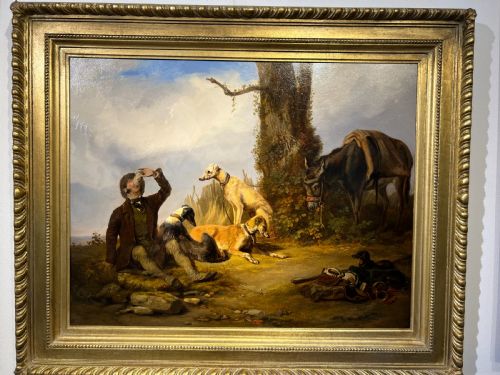


Hunting Dog Canvas
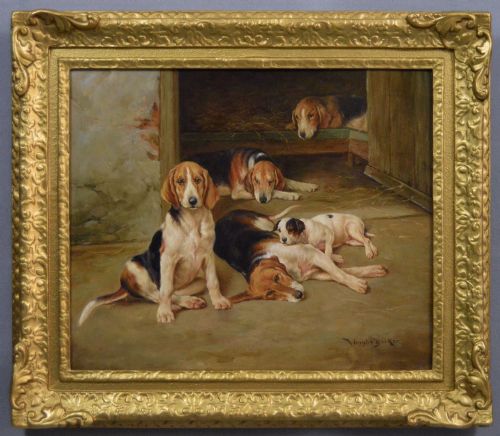
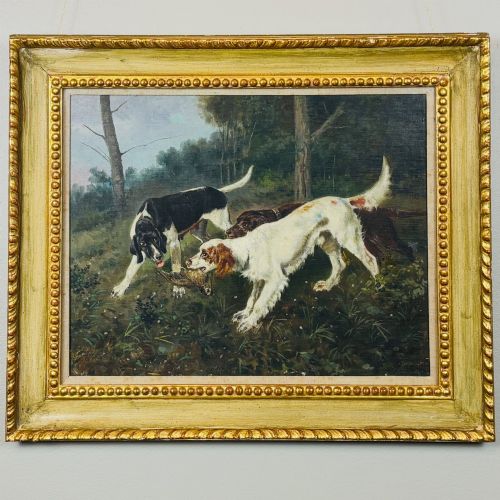
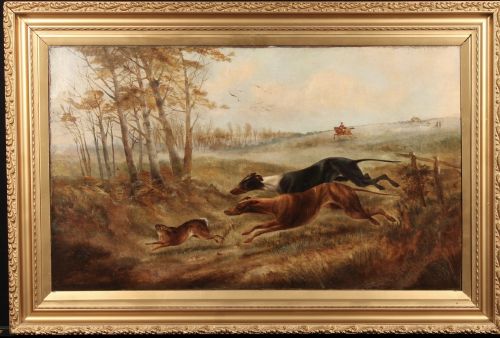
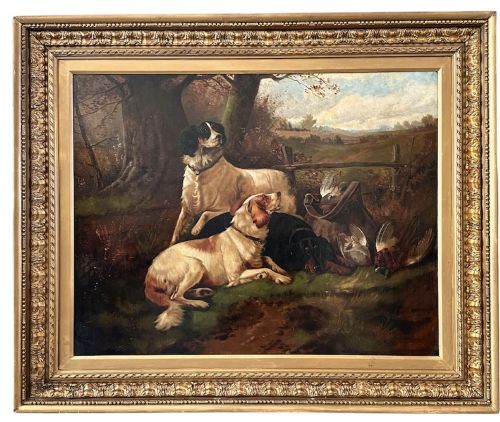
These hunting dog canvas pieces capture the energy of the field and the steady companionship of sporting hounds.
Hunting Dog Canvas
A hunting dog canvas brings the traditional sporting life indoors, depicting spaniels, setters, pointers, and hounds in moorlands, woodlands, and winter snowscapes. Most examples you meet on this page hail from the nineteenth century and the Victorian era, rendered in oils by dedicated animal and portrait artists.
The subjects range from quiet paired setters in a landscape to dramatic moments like gun dogs retrieving game, terriers guarding a trapped rat, or foxes and hares caught on the run. Alongside pure animal portraits, you will find sporting scenes featuring huntsmen, keepers, and ponies.
Originating largely from British and European traditions, these works span the eighteenth century up through mid-century modern interpretations. They reflect a deep historical appreciation for working dogs, executed with the realism prized by sporting art collectors.
Materials and technique
The foundation of these works is oil paint applied to woven canvas stretched over wooden frames, though some pieces utilise board supports. Artists built up depth using rich oil mediums to render the texture of animal coats, feathers, and woodland flora.
Many of these canvases are housed within substantial gilt wood frames featuring intricate gold leaf detailing. The interplay of oil pigment and warm gilt enhances the traditional atmosphere of the artwork.
Hunting Dog Canvas Retail Price Guide 2026
Typical asking prices for hunting dog canvas among the pieces listed under this phrase on Sellingantiques today, from the lower quarter to the upper quarter. They describe what is for sale here now, not the wider market.
The listings on this page span the 18th, 19th, and 20th centuries, featuring oil paint on canvas and wood with gilt wood frames.
Standards of execution
Quality rests upon the artist's command of anatomy, posture, and expression, distinguishing a generic animal depiction from a spirited portrait with true character. The best works capture the intense focus and muscular tension of a hound on the scent.
Composition and background detail separate the exceptional pieces from standard decorative works. A master hand renders the subtleties of moorland light, winter weather, and the rich textures of fur with equal conviction.
Giovanni Milone·George Armfield·John Sargent Noble·Sir Edwin Henry Landseer·Thomas Hicks·Colin Graeme Roe·Fannie Moody·John Charles Tunnard·Jules Chardigny·Alfred Duke·Michael Lyne·Henri Schouten·Robert Cleminson·Thomas Beach·Henry Frederick Lucas-Lucas·William Albert Clark·Samuel John Egbert Jones·Charles Hunt Jnr·Dean Wolstenholme
The Hunting Dog Canvas Glossary
- Canvas
- A heavy woven fabric stretched tightly across a wooden frame to serve as the support for oil paintings. It provides a flexible yet durable surface that holds pigment securely over centuries.
- Gilt wood
- Carved timber finished with a thin layer of gold leaf or metallic paint to create an ornamental frame. These ornate surrounds complement the traditional subject matter.
- Sporting art
- A genre of painting dedicated to depicting field sports, rural pursuits, and working animals such as hunting dogs and horses. It flourished particularly during the Victorian period.
- Realism
- An artistic movement focused on depicting subjects truthfully and accurately without artificial embellishment. In animal painting, this means precise attention to breed characteristics and natural movement.
- Genre painting
- The pictorial representation of scenes from everyday life involving ordinary people and animals. These works often tell a modest visual story within a cottage or rural setting.
Hunting Dog Canvas: Frequently Asked Questions
What is a hunting dog canvas?
A hunting dog canvas is an oil painting on fabric depicting sporting hounds, setters, spaniels, or terriers in outdoor or rural settings. These works celebrate the bond between humans, working dogs, and the field sports of past centuries.
Most surviving examples date from the Victorian era and the nineteenth century, created by artists who specialised in animal portraiture. They serve as historical records of specific breeds and traditional rural pastimes.
How were these paintings displayed?
Historically, these artworks hung in country houses, sporting lodges, and estate libraries alongside trophies and firearms. Their rich oil palettes and ornate gilt frames suited the wood-panelled and dark-toned interiors of the period.
Today, they find a natural home in traditional studies, living rooms, and hallways, adding warmth and a distinct equestrian or sporting character to modern spaces.
How do I date a hunting dog painting?
Dating relies on stylistic clues, artist signatures, clothing worn by any human figures, and the construction of the canvas and stretcher frame. Nineteenth-century works often exhibit a distinct realism and darker tonal palette compared to later interpretations.
Examining the canvas weave, backing materials, and frame style can also help narrow down the period, ranging from eighteenth-century Georgian compositions to mid-century revivals.
What subjects appear besides dogs?
While hounds and gundogs take centre stage, these canvases frequently include game such as pheasants, woodcocks, hares, and foxes. Landscapes, winter snow scenes, moorlands, and rural cottages provide the atmospheric backdrop for the hunt.
Human figures such as huntsmen, trappers, sportsmen, and attendant stable ponies also feature prominently in many of the listed compositions.