

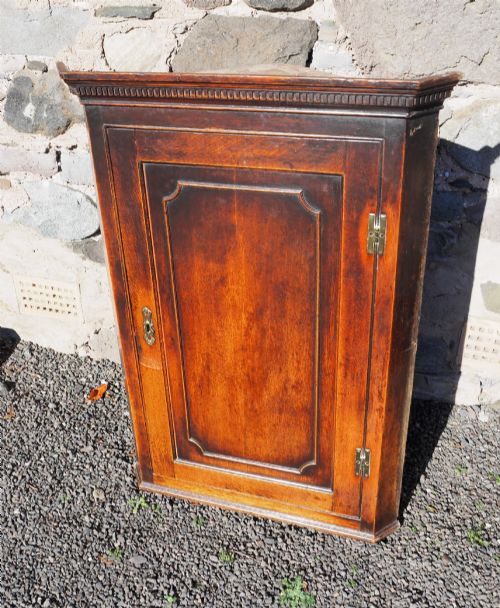
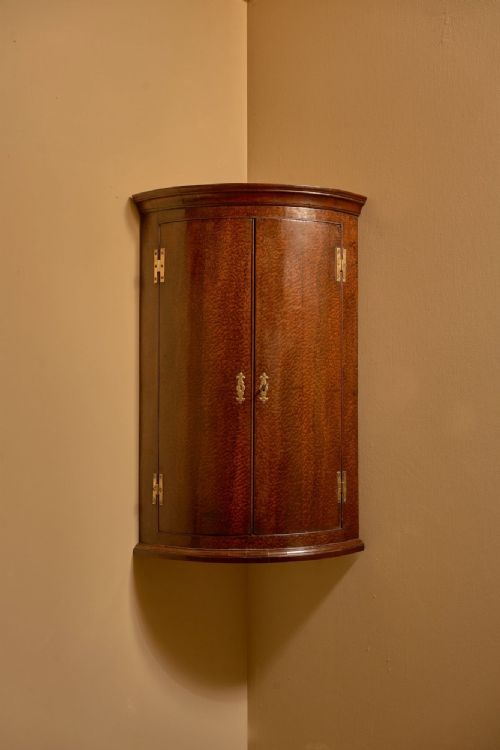
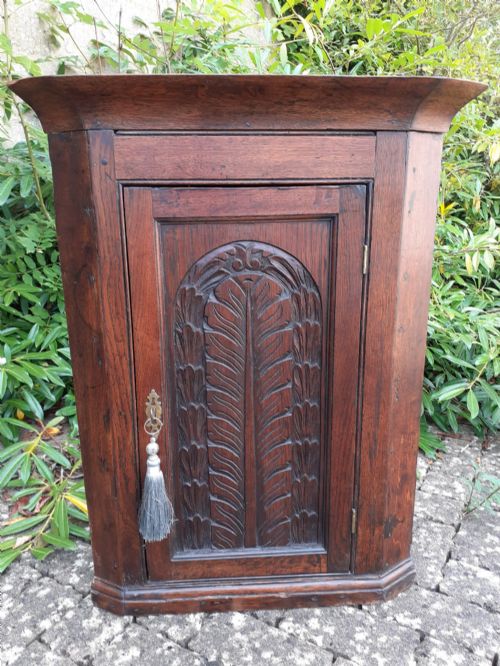
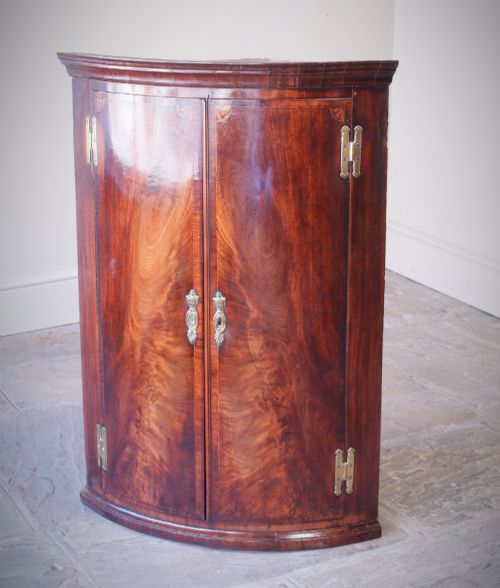
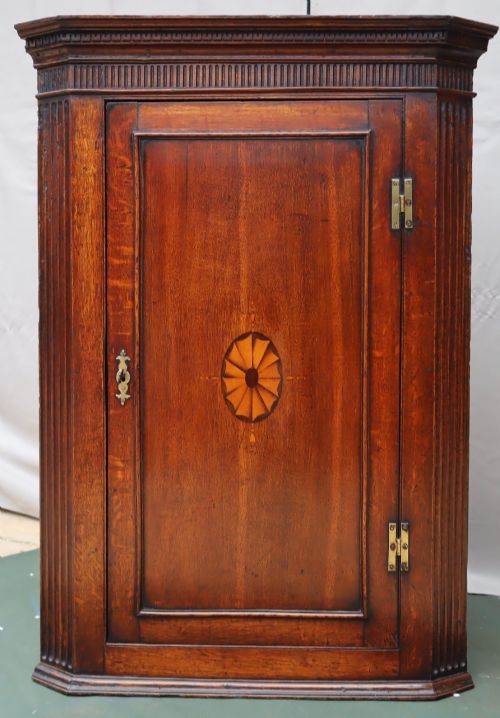
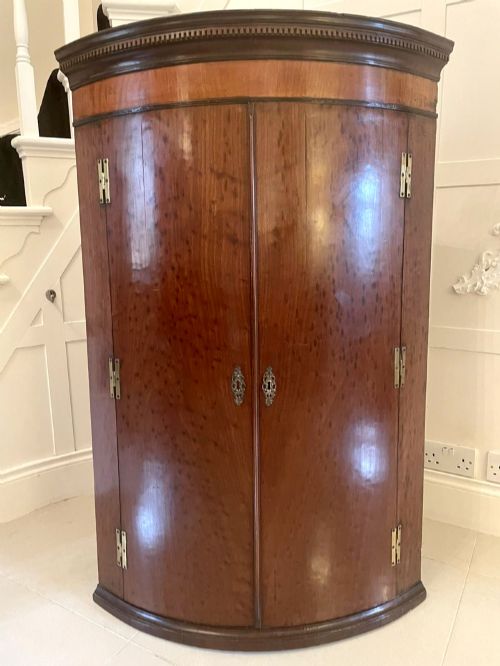
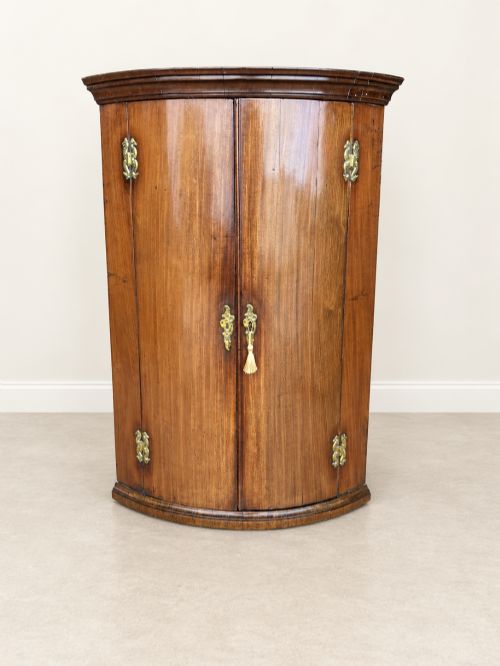
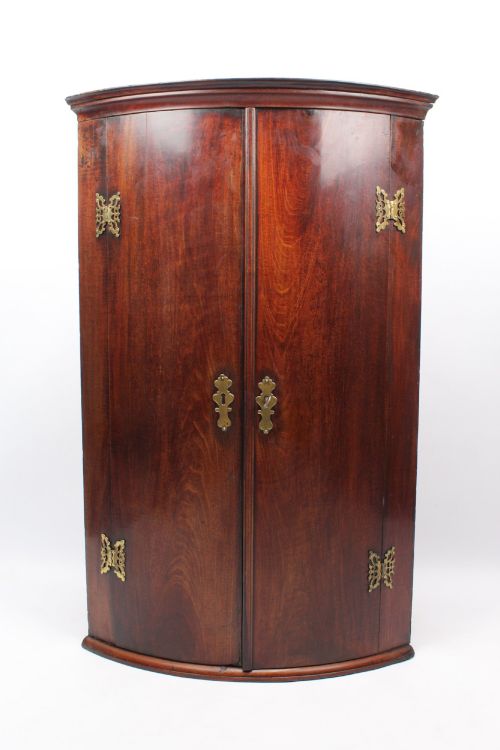
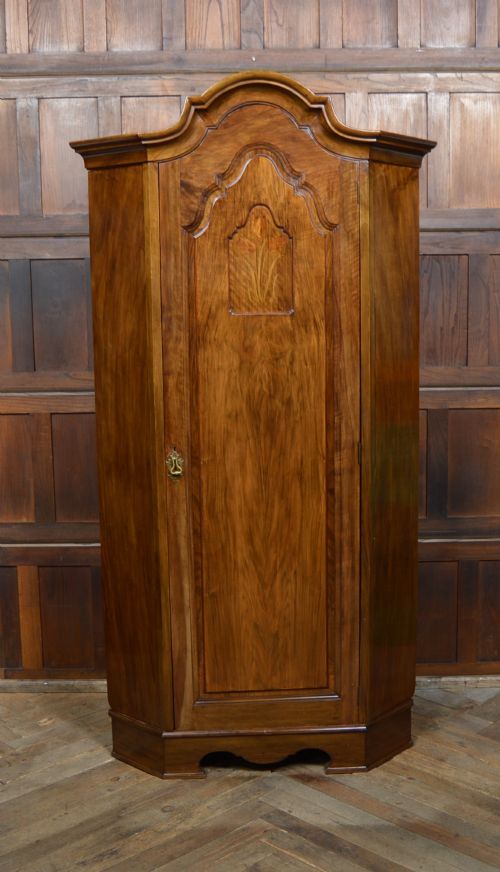
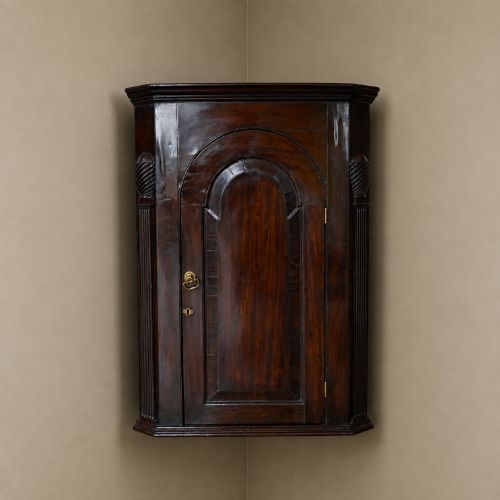
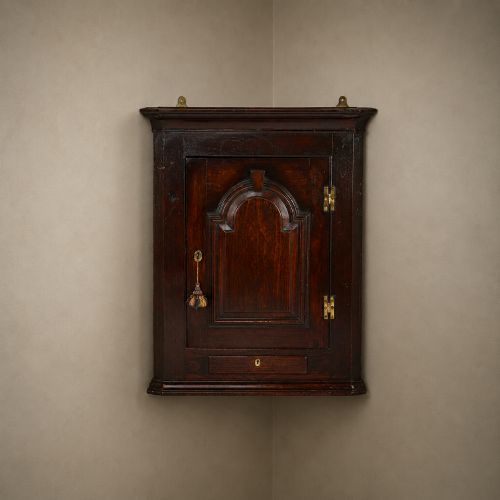
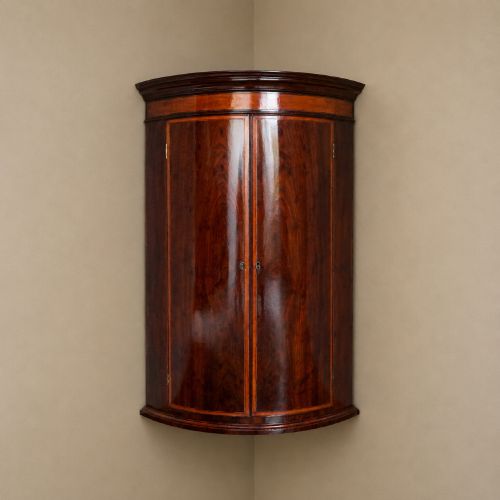
Hung Corner Cabinet
A hung corner cabinet turns an awkward room junction into useful storage, saving floor space while framing your china or glass.
Hung Corner Cabinet
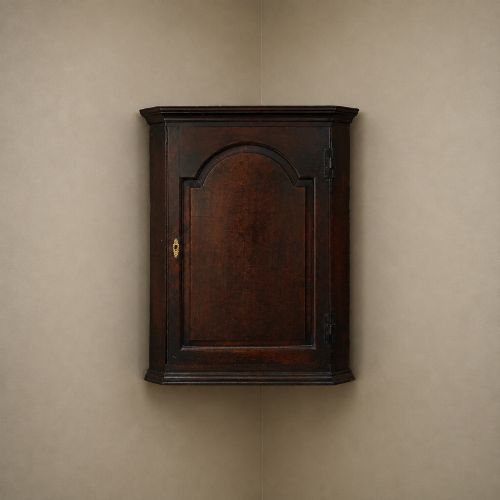
A hung corner cabinet is a wall-mounted storage piece designed specifically to fit into the ninety-degree angle of a room. The search phrase covers wall cupboards and cabinets built to utilise neglected vertical angles rather than floor area.
You will most frequently meet Georgian examples on this page, particularly those dating from the eighteenth century through to the early nineteenth century. These early forms appear regularly in timbers such as oak and mahogany.
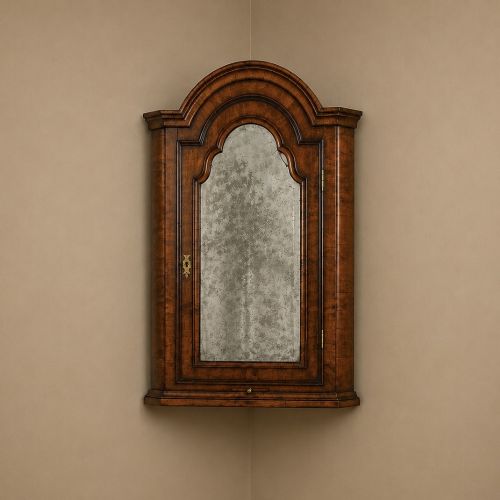
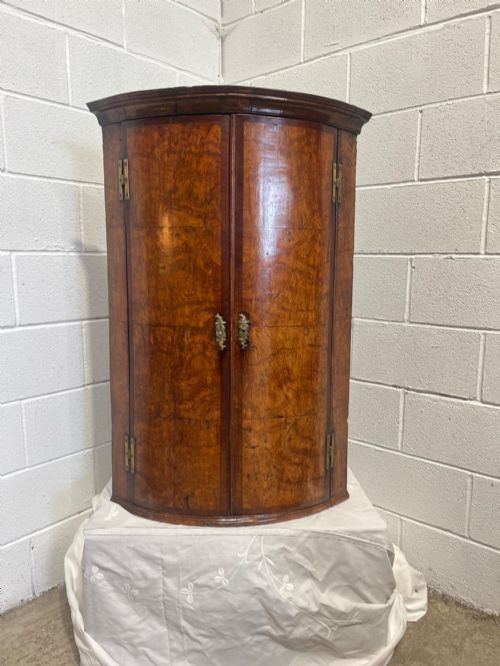
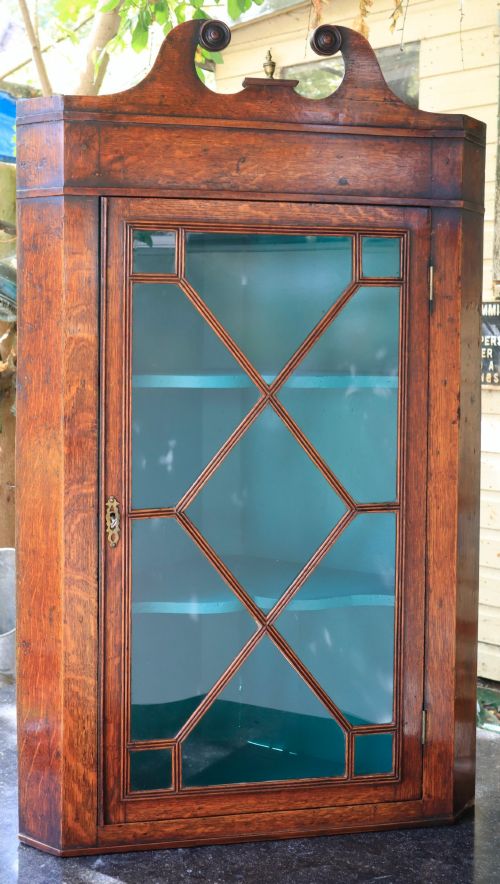
Makers constructed these cabinets with single or double doors, sometimes featuring bow fronts or glazed panels to display the contents within. Variations span from rustic pine country pieces to sophisticated satinwood inlaid designs.
Timbers and construction
Cabinetmakers built these wall units predominantly using solid and veneered hardwoods like mahogany, oak, and walnut, alongside utilitarian pine for country workshop pieces. Timber selection dictated whether the surface received a polished finish, intricate satinwood inlay, or painted decoration.
Joinery techniques focused on creating a sturdy triangular footprint that could securely anchor to wall studs while supporting heavy internal shelving. Brass hinges, escutcheons, and working locks completed the construction, ensuring the doors remained flush against the frame.
Hung Corner Cabinet Retail Price Guide 2026
Typical asking prices for hung corner cabinet among the pieces listed under this phrase on Sellingantiques today, from the lower quarter to the upper quarter. They describe what is for sale here now, not the wider market.
Some eighteenth-century walnut cabinets hide pull-out candle slides beneath the door to illuminate dark corners during midnight searches for tea.
Distinctions in craftsmanship
Quality rests heavily on the choice of timber and the sophistication of its grain, visible in figured plum pudding mahogany or burr oak surfaces. Superior examples display precise dovetail joints, original brass hardware, and well-fitted doors that swing true without sagging.
The decorative treatment separates standard utility cupboards from high-status commissions, seen in delicate inlay work, painted Chinoiserie scenes, or original mirrored panels. Refined proportions and integrated architectural mouldings further distinguish the finest specimens.
The Hung Corner Cabinet Glossary
- Bow front
- A convex, outwardly curved front profile that projects forward from the corner walls. This curved shape requires advanced woodworking skill to form the doors and frame.
- Plum pudding mahogany
- A heavily figured tropical hardwood showing distinctive circular clusters resembling Christmas pudding. Cabinetmakers reserved this prized timber for high-status eighteenth-century furniture facades.
- Japanned
- A European imitation of East Asian lacquerwork using layered varnishes and metallic powders. This decorative technique appears on select eighteenth-century pieces with raised motifs.
- Candle slide
- A pull-out wooden shelf positioned beneath the main cabinet door. Historically used to hold a candle while selecting items from the cupboard.
- Escutcheon
- A protective metal plate surrounding a keyhole. Brass examples often provide a decorative accent on the cabinet doors.
Hung Corner Cabinet: Frequently Asked Questions
What periods do these cabinets span?
The listings span from the early eighteenth century through the Victorian and Edwardian eras, with a strong concentration of Georgian pieces. You will encounter styles ranging from plain rustic farmhouse oak to refined George III mahogany.
Later nineteenth-century and twentieth-century interpretations also appear, including Arts and Crafts and Art Nouveau designs. Each era brought distinct handling of timber, mouldings, and hardware.
Were these always meant for kitchens?
Historical hung corner cabinets served multiple rooms depending on the household status and the size of the property. Parlours, dining rooms, and bedrooms utilised them to store ceramics, glassware, books, or personal items.
In contemporary homes, they function just as effectively in hallways, kitchens, or bathrooms for space-saving display and storage. Their triangular footprint allows them to occupy unused junctions without obstructing room flow.
How do I spot an eighteenth-century cabinet?
Eighteenth-century examples typically display hand-cut dovetails, pegged mortise and tenon joints, and native timbers like oak or early mahogany. Hand-blown window glass with natural ripples and original wrought iron or brass hardware also point to this period.
Construction methods inside the cabinet carcass, such as tongue-and-groove backboards, reveal the hand-tool marks of period joinery. Examining the interior surfaces often confirms the age through the natural oxidation of the wood.