
Housekeepers Linen Press
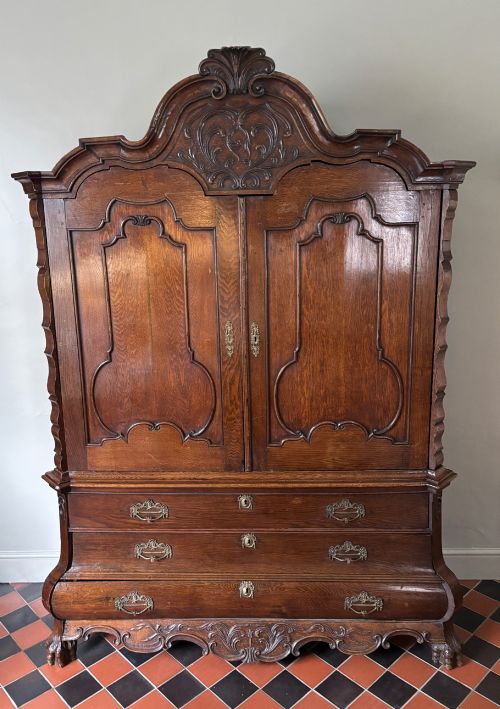
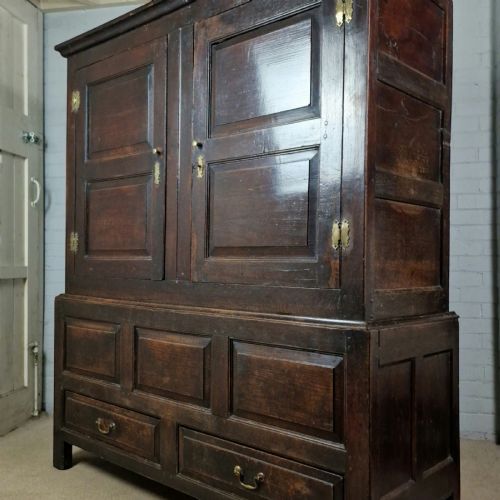
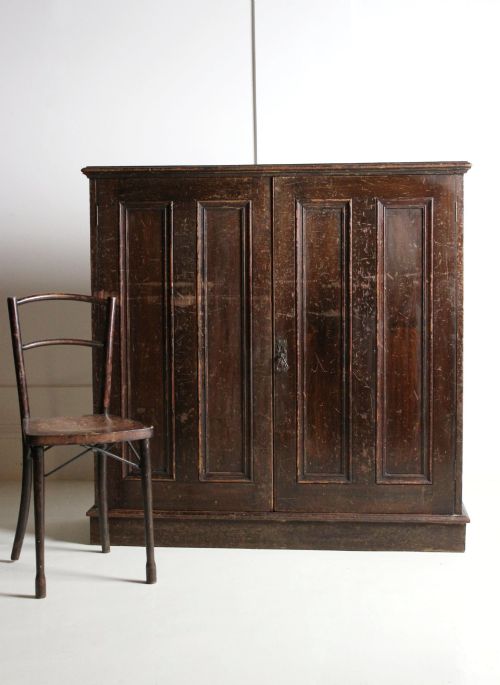
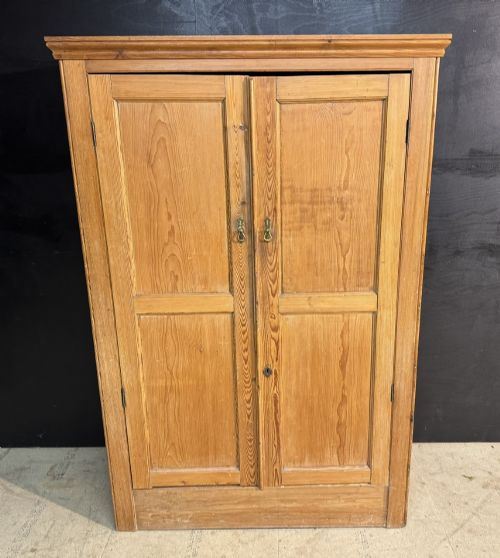
A housekeepers linen press offers serious storage capacity with traditional charm, combining deep cupboards and internal hanging space in a heavy timber frame.
Housekeepers Linen Press
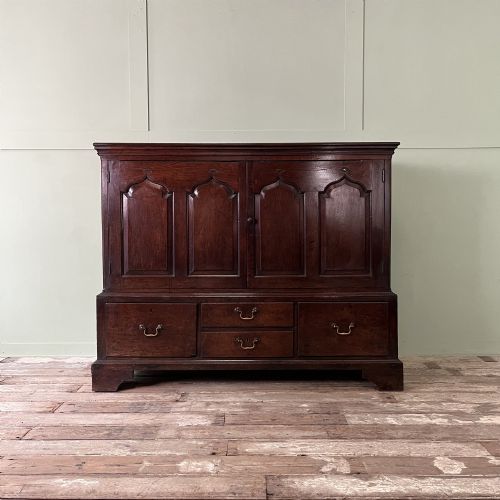
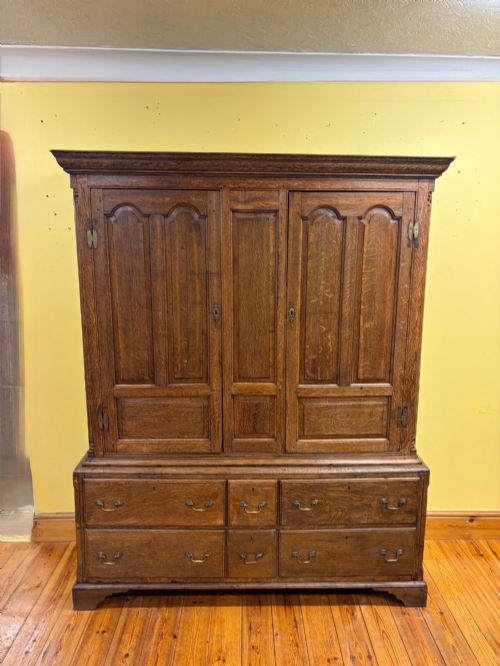
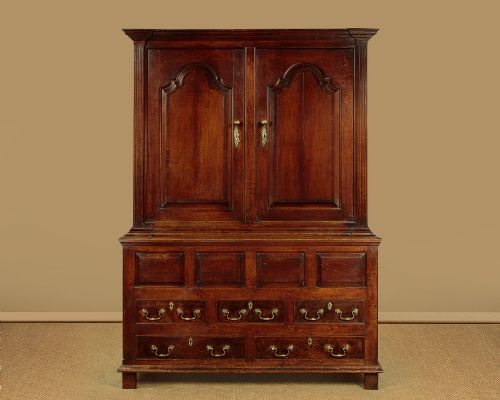
A housekeepers linen press serves as a large storage cabinet originally designed for domestic textiles, combining deep shelving with hanging space. These substantial pieces appear frequently in regional variations including Welsh and Irish vernacular styles alongside formal Georgian mahogany examples.
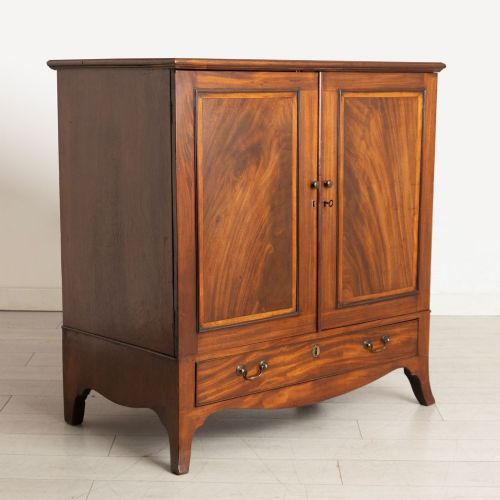
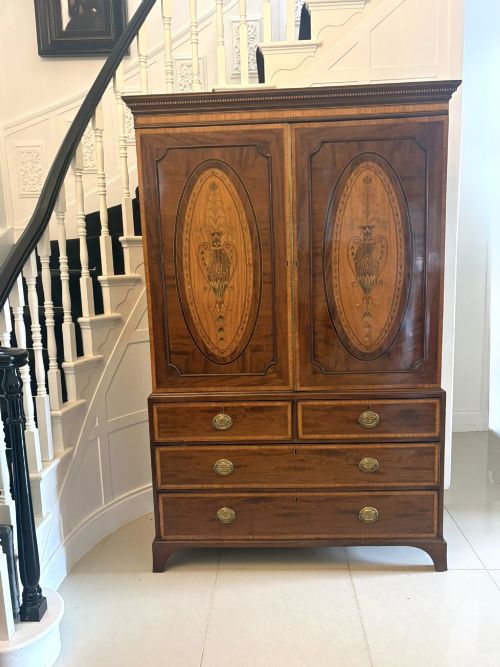
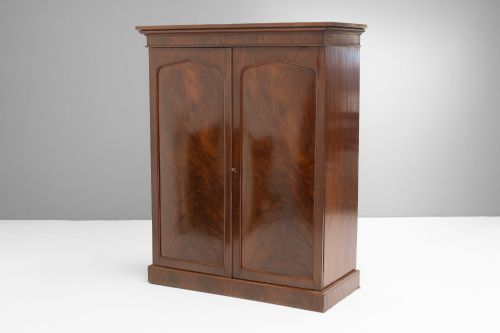
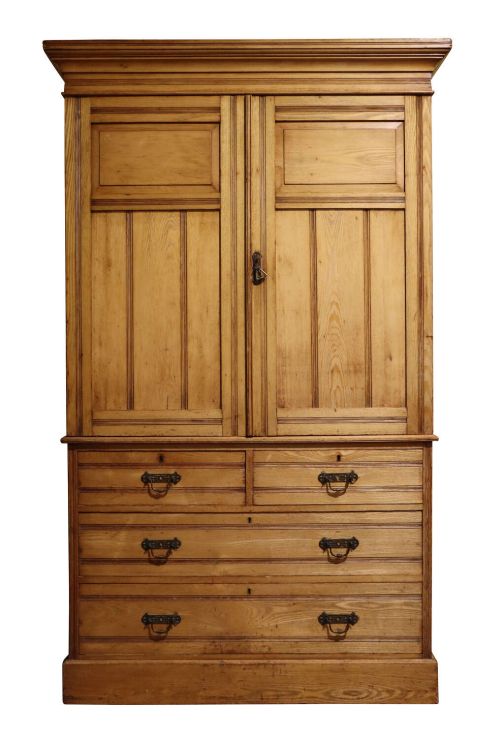
Buyers encounter numerous vernacular pine and oak versions alongside refined mahogany models inlaid with satinwood. The pieces span periods from the eighteenth century through the Victorian era, offering substantial timber construction suitable for modern utility or bedroom storage.
Distinctions in construction and finish
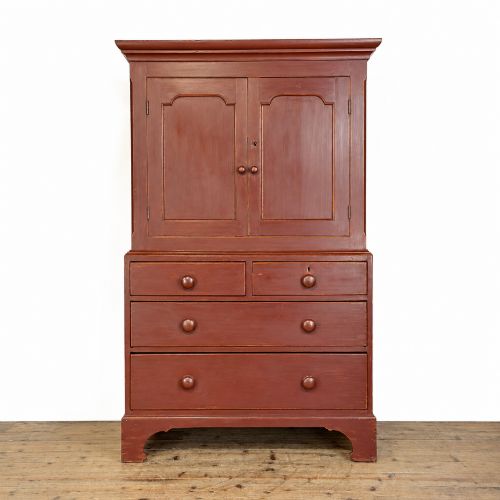
Quality separates primitive vernacular pine pieces from high-status Georgian cabinetwork through the selection of timber and the refinement of inlay work. Finer examples display figured mahogany and delicate satinwood stringing, whereas country pieces rely on honest structural joinery and original painted surfaces.
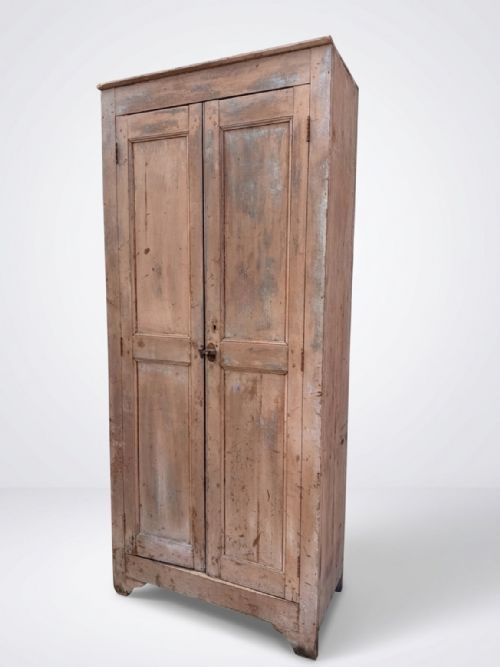
The integrity of internal shelving, drawer construction, and original hardware influences the overall standard of a press. Pieces retaining undisturbed historic paint or scumble work command distinct interest from those stripped down to bare wood.
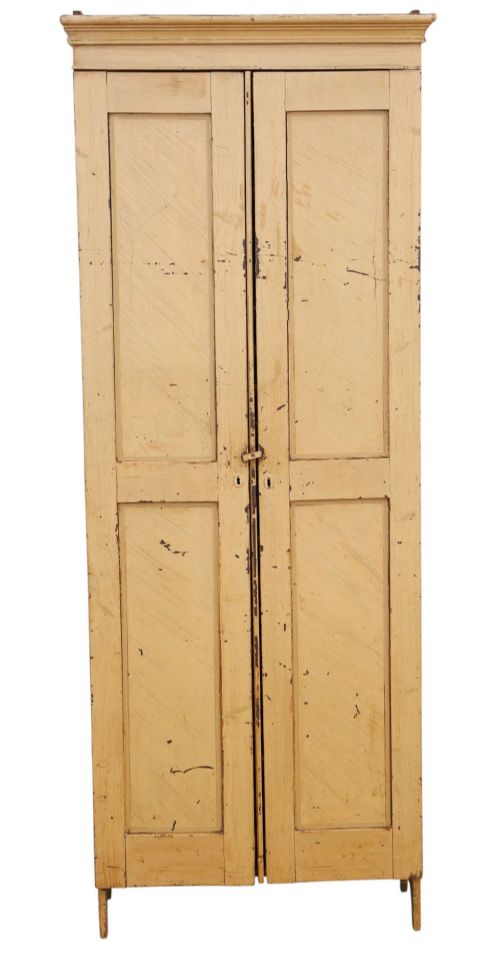
Several country presses retain layers of original scumble paint, applied by industrious nineteenth-century painters determined to make humble pine look like grand oak.
Maple & Co.·Druce & Co.
The Housekeepers Linen Press Glossary
- Linen press
- A tall storage cabinet designed with internal sliding trays or shelves for flat textiles before hanging wardrobes became standard.
- Scumble paint
- A translucent decorative paint glaze dragged across a base coat to imitate the grain pattern of more expensive timber like oak.
- Vernacular
- Regional furniture built by local country joiners using accessible native woods rather than following strict metropolitan stylistic rules.
- Livery cupboard
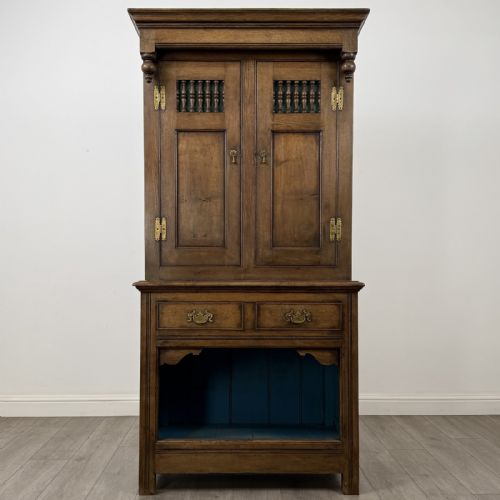
- An early form of storage furniture originally ventilated with turned spindles for keeping food or household provisions.
- Court cupboard
- A heavy two-tier wooden storage piece dating from the seventeenth or eighteenth centuries featuring enclosed upper and lower compartments.
Housekeepers Linen Press: Frequently Asked Questions
How do I use a housekeepers linen press today?
These large cabinets adapt well to modern bedrooms as wardrobes or linen storage, while smaller versions function effectively as kitchen larders.
Their deep shelves and internal hanging spaces accommodate bulky household items and clothing while providing a strong architectural focal point.
What is the difference between oak and pine presses?
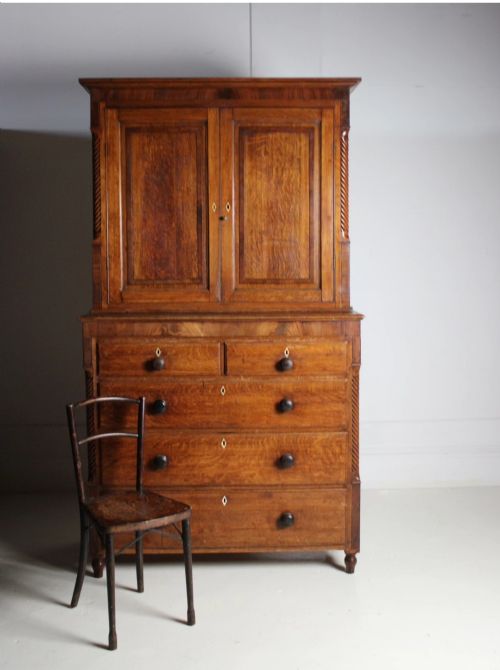
Oak presses generally date from earlier Georgian or seventeenth-century periods and offer a dense, durable dark timber grain.
Pine versions appear more frequently in Victorian country contexts, often featuring painted or scumbled surfaces suited to rustic interiors.
How can I tell a Georgian press from a Victorian one?
Georgian presses typically utilise dense mahogany or figured oak with formal proportions, sometimes incorporating satinwood stringing and bracket feet.
Victorian iterations lean towards softer pine construction, simpler beading, and functional proportions designed for heavy domestic utility.
Do these presses dismantle for transport?
Many larger examples feature a two-part construction or knockdown panels to allow easier movement through doorways and stairwells.
Checking the specific assembly method ensures safe transit for these heavy timber cabinets.