





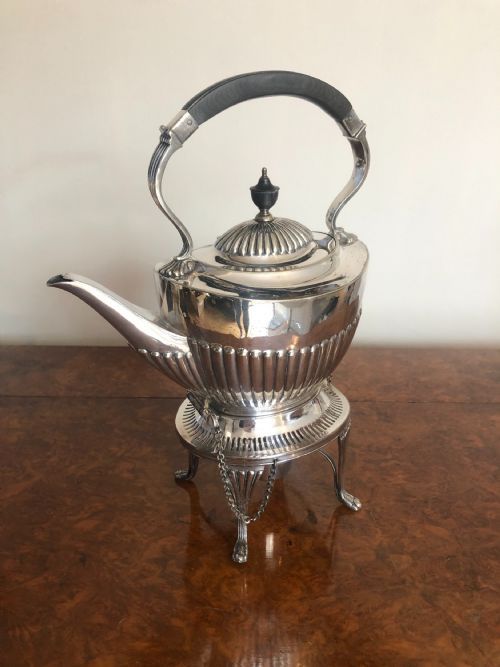
Hot Water Kettle on Stand
A hot water kettle on stand is a traditional brewing vessel raised on its own frame, valued for serving hot tea.
Hot Water Kettle on Stand
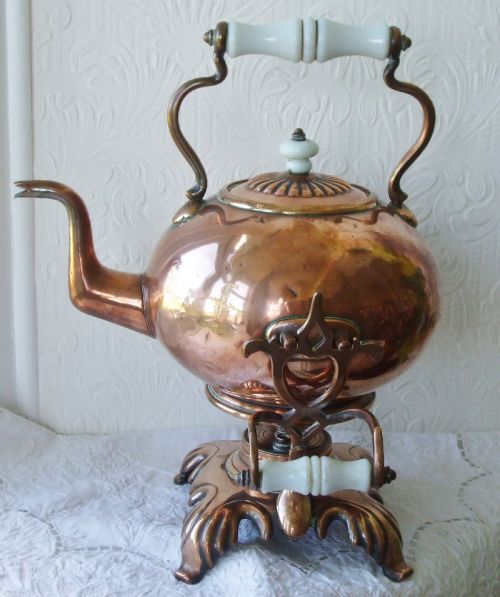
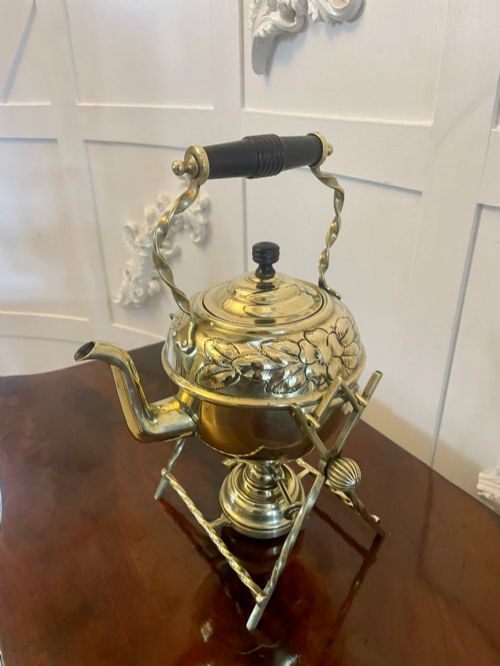
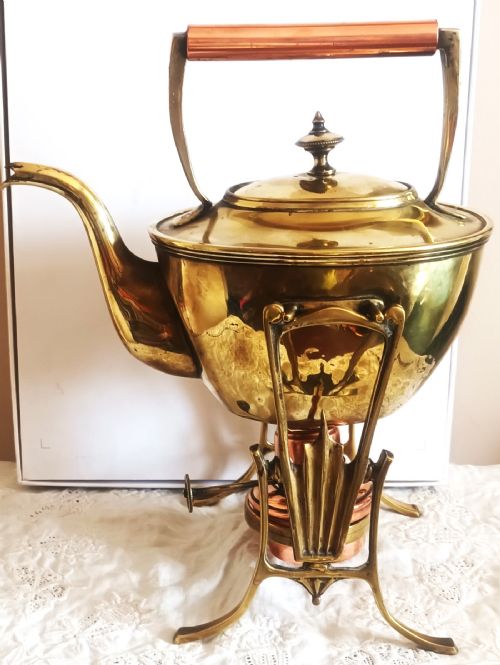
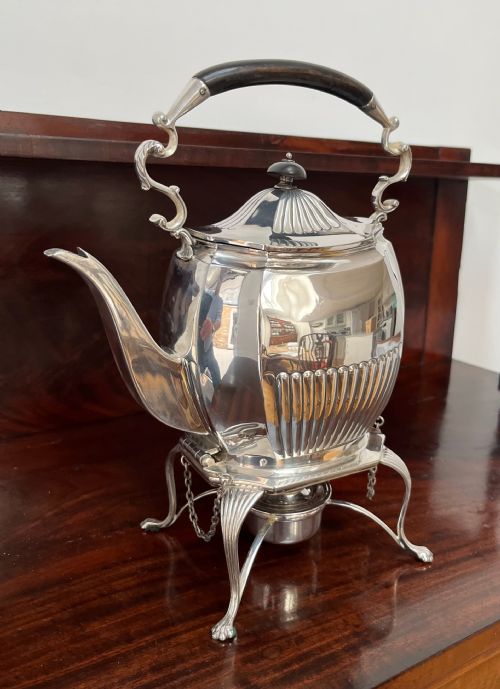
A hot water kettle on stand combines a portable vessel with a dedicated metal frame, designed to keep tea water warm at the table. The form appears across the Victorian and Edwardian eras, spanning the nineteenth and twentieth centuries.
You will most frequently meet brass, copper, and silver plated examples on this page. These pieces often include an integrated burner positioned beneath the vessel to maintain the water temperature during service.
Makers fashioned these teaware items in Victorian, Edwardian, and Arts and Crafts styles. The inclusion of wooden or ebonised handles protects the hand from heat during use.
How they were made
Silversmiths and metalworkers constructed these vessels using sheet silver plate, copper, and brass. Many examples incorporate wooden, ebonised wood, or ebony fittings on the handles and lid finials to provide insulation against the heat.
Frames and stands were engineered to hold the kettle securely above a small burner. Craftsmen hammered or polished the metal bodies to achieve bright reflective surfaces or textured brass and copper finishes.
Hot Water Kettle on Stand Retail Price Guide 2026
Typical asking prices for hot water kettle on stand among the pieces listed under this phrase on Sellingantiques today, from the lower quarter to the upper quarter. They describe what is for sale here now, not the wider market.
The listings on this page span the Victorian, Edwardian, and Arts and Crafts periods, utilising brass, copper, silver plate, and ebonised wood.
What varies in quality
Quality rests upon the weight of the metal and the integrity of the construction. Heavier brass and copper bodies demonstrate a more substantial gauge of metal than lighter alternatives.
The refinement of the stand design and the retention of matching burners distinguish standard production from superior examples. Original insulated handles and intact mounting hardware elevate the character of the piece.
William Soutter & Sons·Frederik Ellis Tim & Co
The Hot Water Kettle on Stand Glossary
- Spirit kettle
- A hot water kettle mounted on a stand with an under-burner fuelled by spirit. This setup kept water hot in the parlour or dining room.
- Silver plate
- A thin layer of silver bonded to a base metal like copper or nickel brass. This technique offered the appearance of solid silver at a lower cost.
- EPNS
- Electroplated nickel silver. A common base metal used beneath silver plating in later Victorian and Edwardian manufacturing.
- Ebonised wood
- Timber treated to imitate ebony. It appears frequently on kettle handles to prevent heat transfer.
- Arts and Crafts
- A design movement favouring handcraftsmanship and simple materials. It influenced several of the brass and copper kettles in this collection.
Hot Water Kettle on Stand: Frequently Asked Questions
What is a hot water kettle on stand?
A hot water kettle on stand is a self-contained brewing vessel raised upon a metal frame. It was designed to keep water hot during tea service.
The inclusion of a burner beneath the vessel allowed users to maintain the temperature without returning to the kitchen.
How do I date a spirit kettle?
Dating relies upon stylistic markers such as Victorian ornamentation, Edwardian simpler lines, or Arts and Crafts construction details. Materials like early copper and brass contrast with later silver plate and EPNS.
Maker marks and the specific form of the burner also provide evidence for the period of manufacture.
Were these kettles used for brewing tea?
These vessels were primarily used to heat and hold water for topping up the teapot. The water remained hot over the spirit burner during the course of a meal or gathering.
Hosts kept the water at hand to dilute freshly steeped tea to taste.
How do I display a kettle on stand?
These pieces suit sideboards, side tables, or dedicated tea stations where the stand and burner can be seen together. Keeping the kettle complete with its burner enhances the visual balance of the display.
Positioning the piece away from direct sunlight protects the polished brass, copper, and silver plated surfaces.