
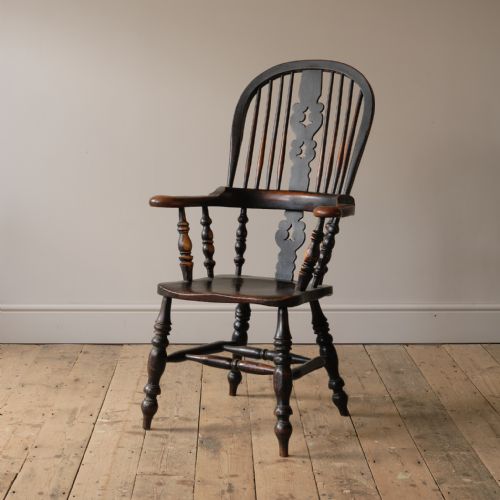
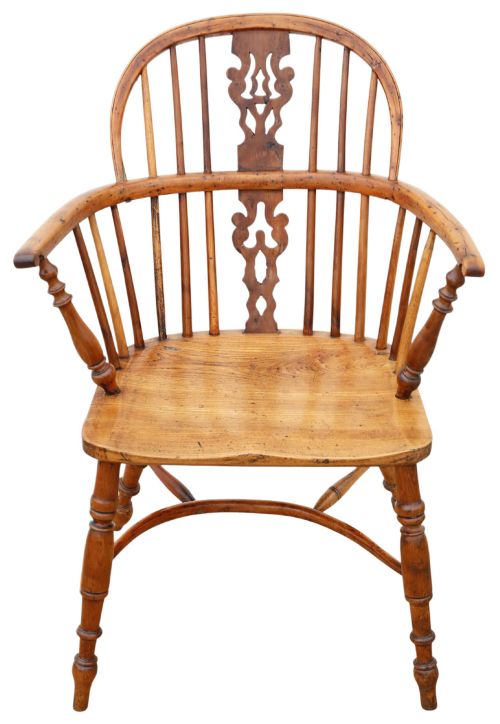
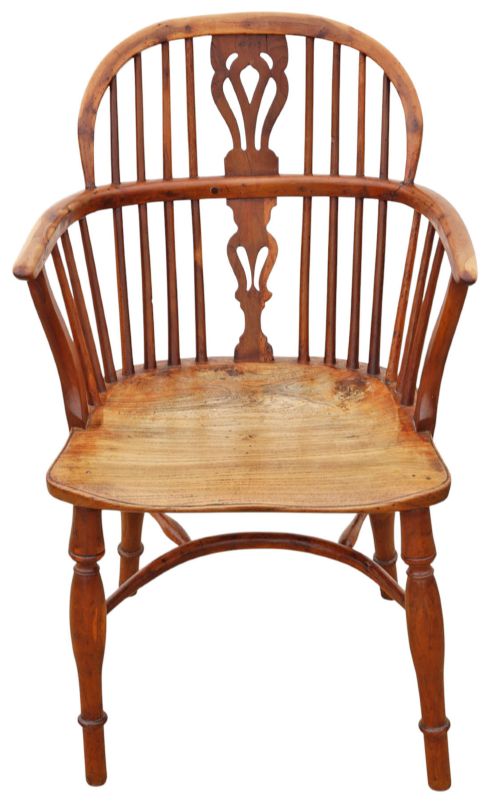
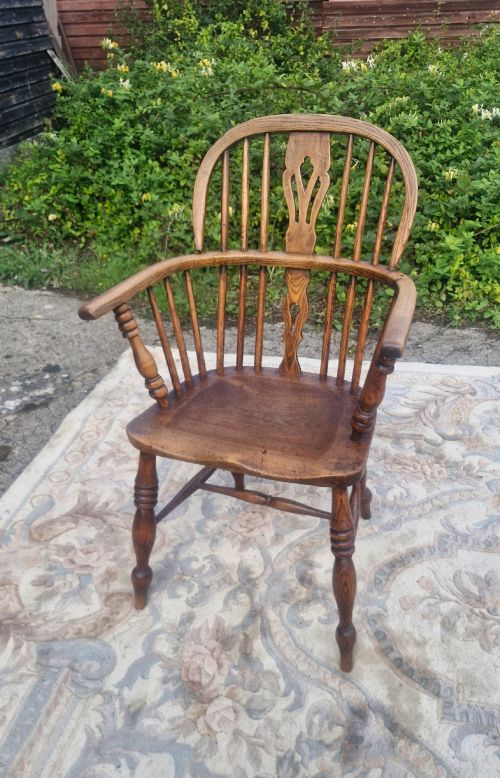


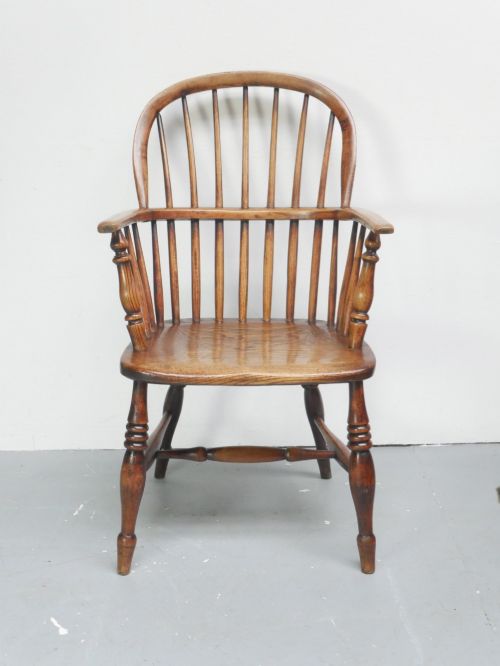
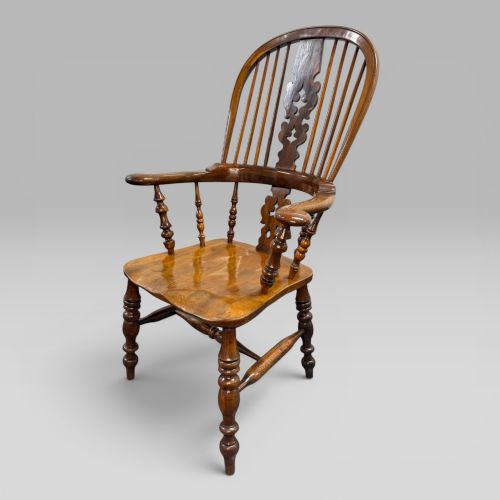
Hoop Back Windsor
A hoop back Windsor balances rustic utility with sculptural form, offering enduring comfort and strong vernacular character.
Hoop Back Windsor
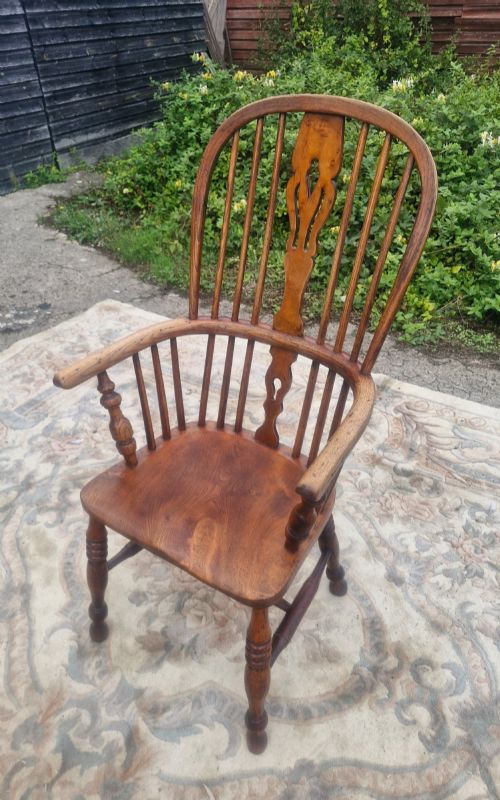
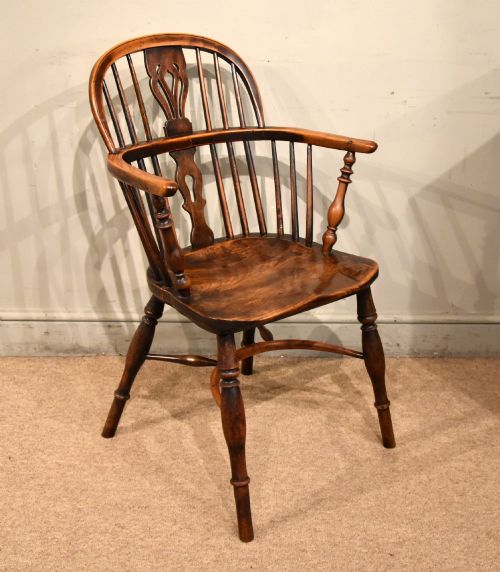
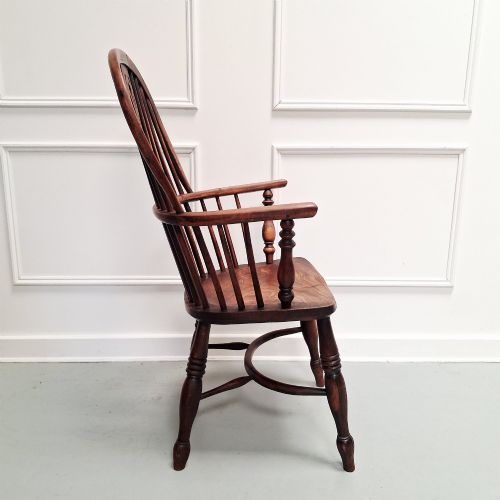
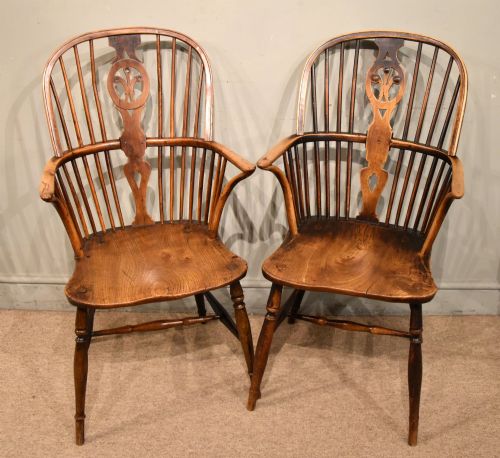
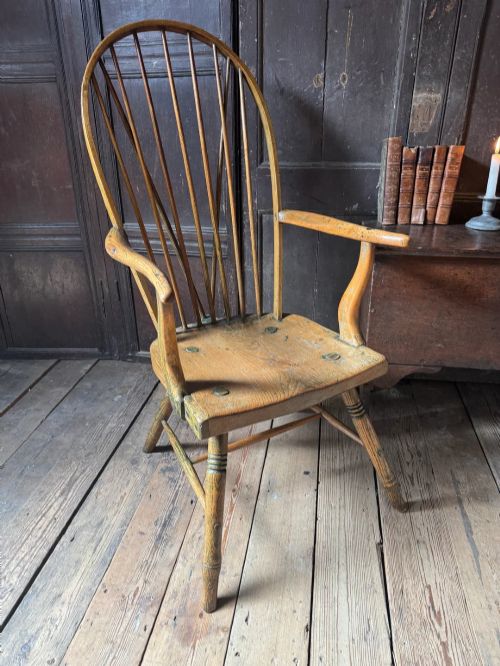
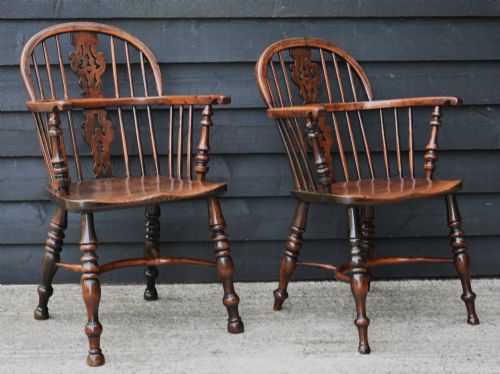
A hoop back Windsor is a traditional wooden seating form characterised by a continuous steam-bent back rail that forms the upper frame. When searching for a hoop back Windsor, buyers encounter pieces originating primarily from the eighteenth and nineteenth centuries, spanning Georgian and Victorian periods.
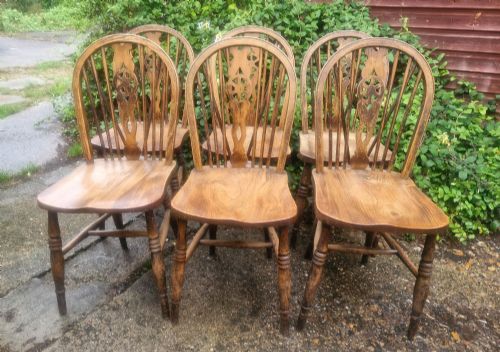
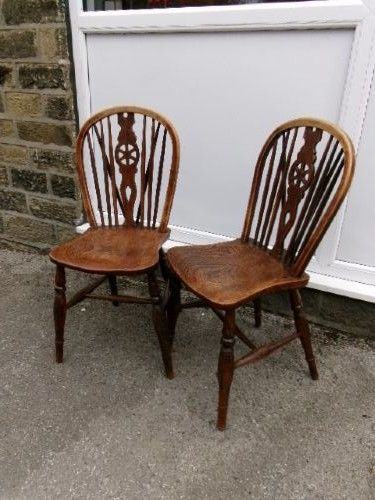
The form appears predominantly as armchairs and carvers, though matching sets of dining and kitchen chairs also occur. Regional variations, such as those from the West Country, Thames Valley, or Yorkshire, influence the specific silhouette and proportion of the hoop.
Most examples combine an elm or fruitwood seat with ash or yew for the spindles and back bows. These seating pieces were built for everyday domestic use in farmhouses, cottages, and country houses.
Materials and Construction Methods
Makers utilised a combination of woods chosen for specific structural properties, pairing dense elm for solid plank seats with flexible ash, beech, or yew for steam-bent components. Elm provided a heavy, crack-resistant base into which the legs and undercarriage were wedged and tenoned.
The defining hoop is created by soaking or steaming straight-grained ash or yew until pliable, then bending it around a form to dry into a rigid curve. Spindles are typically shaved by hand using a drawknife and bodged into position to support the back rail.
Legs and stretchers were turned on pole lathes from local hardwoods and secured using wedged mortise and tenon joints without metal fixings. This pegged and wedged construction allows the individual timbers to move naturally with changes in humidity.
Listings feature ash, elm, yew, beech, and fruitwood across Georgian and Victorian periods.
Distinguishing Quality in Country Seating
The choice of timber significantly elevates a piece, with figured yew wood commanding greater regard than plain ash or beech due to its rich grain and warmth. Grain selection in the elm seat plank, showing pleasing figuring and depth, also separates standard utility chairs from finer examples.
Structural integrity and minimal replacement parts define preservation standards. Original wedging, untouched surface patination, and well-proportioned arm bow turnings indicate a higher grade of provincial craftsmanship.
J SPENCER
The Hoop Back Windsor Glossary
- Hoop back
- A continuous steam-bent wooden bow forming the back and arm rail of the chair. This construction distributes weight evenly and provides robust back support.
- Carver
- An armchair designed with elbow rests, frequently positioned at the head of a dining table. These pieces mirror the simpler dining chair forms in a larger scale.
- Crindoline stretcher
- A bent metal or wooden reinforcer connecting the legs in a curved hoop beneath the seat. It adds structural rigidity while preventing the legs from splaying under heavy loads.
- Saddle seat
- A solid timber seat carved into a dished, ergonomic depression for comfort. Elm is the preferred wood for this component due to its interlocking grain.
- Bodger
- A traditional pole-lathe turner working in woodland clearings to produce chair legs and spindles for urban and rural chairmakers. Their efficiency defined the construction of many country chairs.
Hoop Back Windsor: Frequently Asked Questions
How do I identify a genuine period Windsor chair?
Examine the construction joints underneath the seat where the legs penetrate the plank. Period examples typically display exposed peg ends and hand-carved wedging rather than modern metal screws.
The surface timber should exhibit natural wear and a deep patina accumulated through generations of use. Tool marks from drawknives and adzes further indicate period handcrafting methods.
What is the difference between yew and ash Windsors?
Yew wood chairs feature a striking, highly figured grain with warm golden and reddish tones, generally denoting a more expensive regional product. Ash is paler, straight-grained, and tougher, used extensively for structural spindles and bent bows.
While ash provides exceptional tensile strength for steam-bending, yew was prized by makers for its decorative qualities in finer country house commissions.
Can I use antique Windsor chairs at a dining table?
These chairs were originally built for domestic dining and kitchen environments, making them well-suited for everyday seating. Their solid elm seats and supportive back hoops provide sturdy support for meals.
Ensure you check the seat height against your table clearance, as older chairs can vary slightly in height due to wear on the leg bottoms.
What does vernacular mean in furniture terms?
Vernacular furniture refers to regional pieces made by local craftsmen following traditional local designs rather than following academic London styles. These objects reflect the materials available in the immediate surrounding countryside.
Such pieces possess an unpretentious utility and direct honesty of construction that distinguishes them from formal urban furniture.