





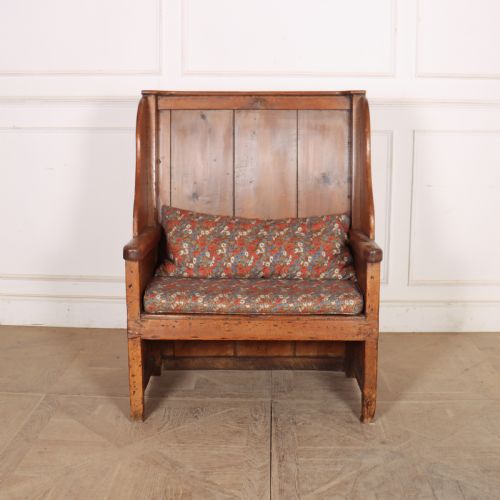
Honey Pine Benches
Honey pine benches are sturdy utilitarian seating pieces offering warm golden tones and practical rural charm for modern interiors.
Honey Pine Benches
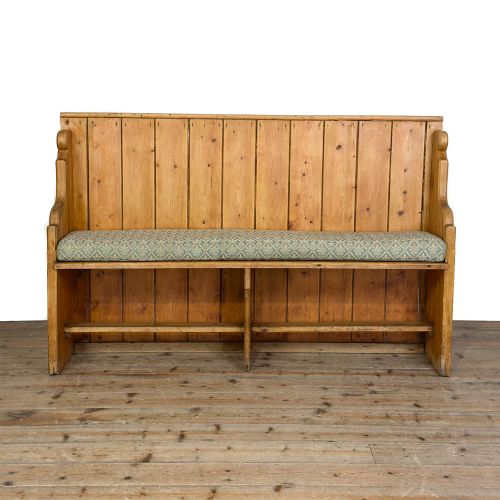
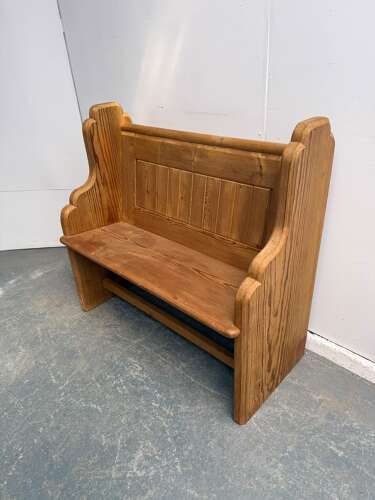
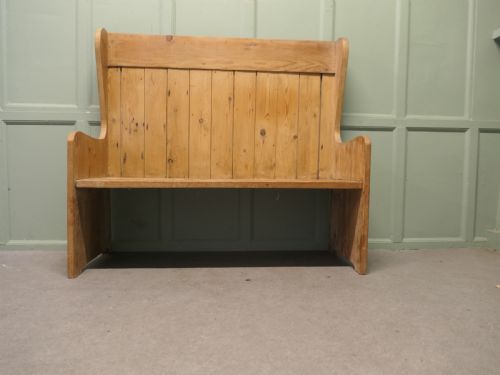
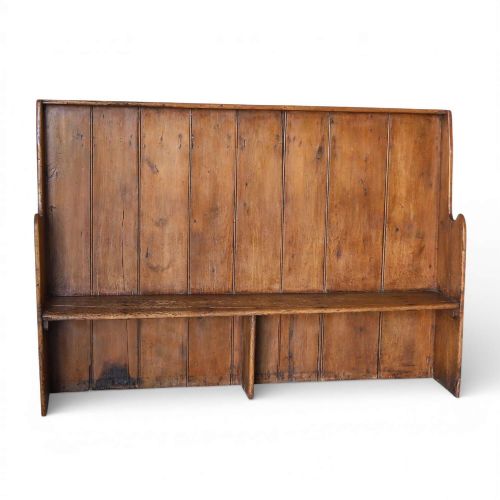
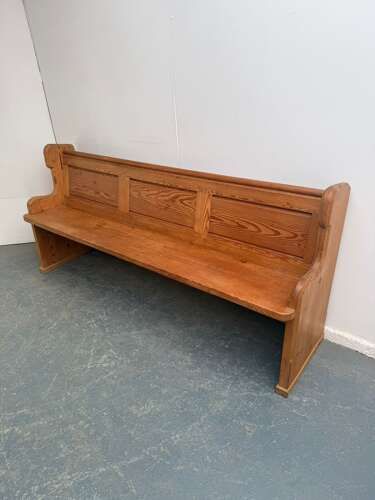
Honey pine benches encompass a range of traditional seating forms including church pews, high-back settles, tavern benches, and school benches. These pieces originate from various regions such as England, Wales, Hungary, Sweden, and Eastern Europe, spanning the Georgian and Victorian eras up to the early twentieth century.
Most examples date from the nineteenth century, utilising straightforward construction methods intended for heavy daily use in schools, pubs, churches, and farmhouses. Their enduring appeal lies in this honest utility combined with honey brown patinas developed through decades of waxing and handling.
How they were made
Makers constructed these benches primarily from solid pine and pitch pine, selecting timber for strength and straight grain before finishing surfaces with protective wax coatings. Iron fixings and hardware occasionally reinforce structural joints, while some examples incorporate fabric elements or scumble paint finishes.
Joinery methods relied on sturdy tongue and groove panels, mortise and tenon joints, and board construction capable of withstanding heavy tavern or church use. Surfaces gained their distinctive honey brown patina through repeated applications of wax over long periods of domestic or institutional service.
Listings feature pieces spanning the Georgian and Victorian eras up to nineteen-twenty, constructed primarily from pine and pitch pine.
What varies in quality
Quality in these benches rests upon the integrity of the original timber, the depth of the honey brown patina, and the survival of untouched structural elements. Pieces retaining their original box storage compartments, high backs, and early wax finishes stand apart from heavily restored or altered examples.
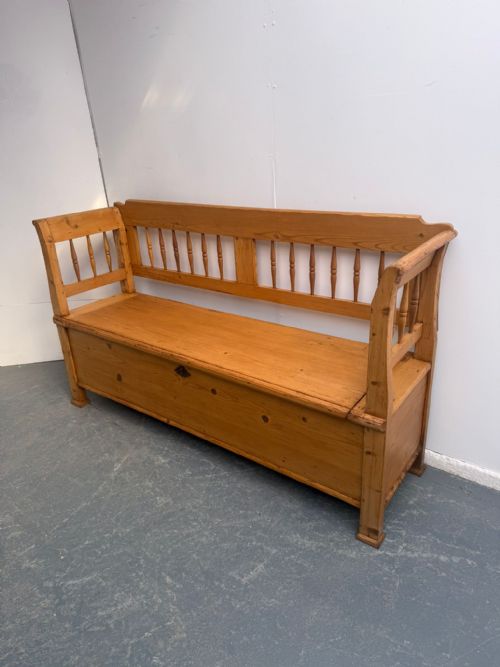
Proportions and regional quirks dictate desirability, with unusual forms like barrel backs, neat proportions, or spindled Hungarian designs commanding particular attention. The thickness of the pine boards and the honesty of the wear patterns further distinguish superior country examples from standard utility seating.
The Honey Pine Benches Glossary
- Settle
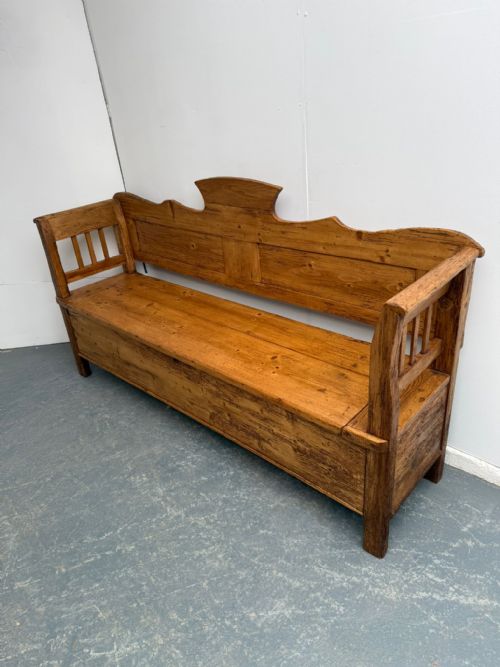
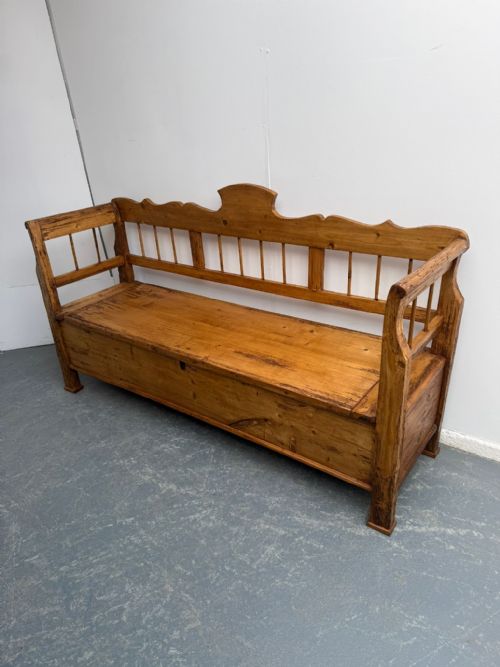
- A wooden bench with a high back, solid arms, and often a storage box beneath the seat. This form protected occupants from draughts in historical homes and public houses.
- Box settle
- A specific variant featuring an enclosed compartment under the seat accessed by lifting the lid. It served as a trunk for household storage.
- Church pew
- A long wooden bench designed for communal seating in ecclesiastical settings. These pieces often feature book ledges and simple panelled backs.
- Pitch pine
- A dense, resinous variety of pine timber known for its durability and strong grain pattern. It appears frequently in Victorian institutional seating.
- Scumble
- A decorative painting technique used to imitate finer wood grains or create mottled surface patterns. It occurs on certain primitive country furniture.
- Patina
- The surface sheen and colour developed by timber over decades through handling, light exposure, and waxing. A good honey brown patina indicates age and care.
Honey Pine Benches: Frequently Asked Questions
Where did these benches come from?
These seating pieces originated across England, Wales, Hungary, Sweden, and Eastern Europe during the Georgian and Victorian periods. They served practical roles in farmhouses, country pubs, churches, and schools.
Craftsmen built them locally using available softwood timber to meet the daily demands of rural and institutional life. Their diverse origins account for variations in height, back design, and structural detailing.
How do I care for waxed pine?
Maintain waxed pine surfaces by dusting regularly with a soft, dry cloth and applying natural beeswax periodically to nourish the timber. Avoid placing these benches near direct heat sources or in damp environments to prevent wood movement.
Treating the wood with respect preserves the honey brown patina accumulated over generations. Gentle handling ensures the surface finish remains rich and protected.
What is a box settle?
A box settle combines a high-backed seating bench with an enclosed storage chest beneath the seat boards. The hinged seat lifts to reveal a compartment historically used for blankets and household goods.
This dual-purpose design provided practical storage while blocking cold floor draughts in domestic interiors. The high back and solid arms trapped body heat near the sitter.