

Honey Pine Bedroom Dresser
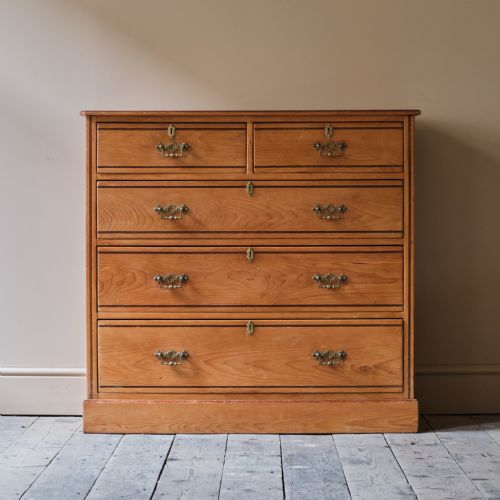
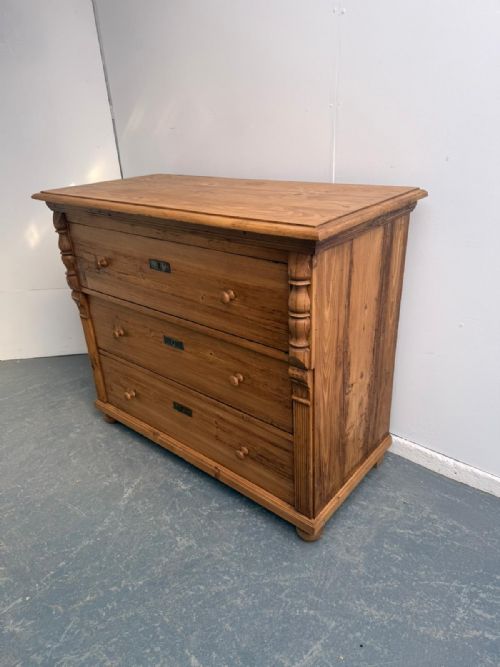
A honey pine bedroom dresser brings warmth and practical storage to a room, featuring the sturdy construction and honest timber surfaces of the Victorian and Edwardian eras.
Honey Pine Bedroom Dresser
A honey pine bedroom dresser primarily takes the form of a chest of drawers, spanning periods from early Victorian to Edwardian with examples dated between eighteen fifty and nineteen ten.
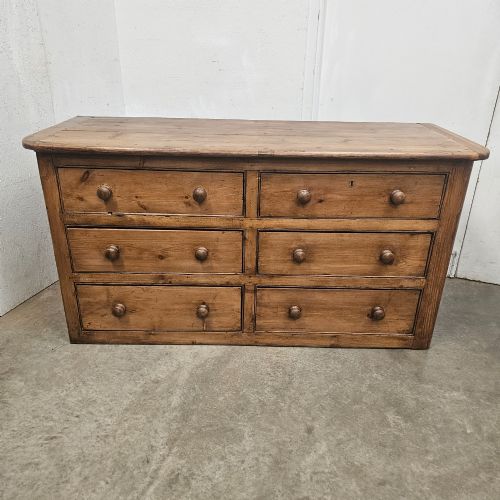
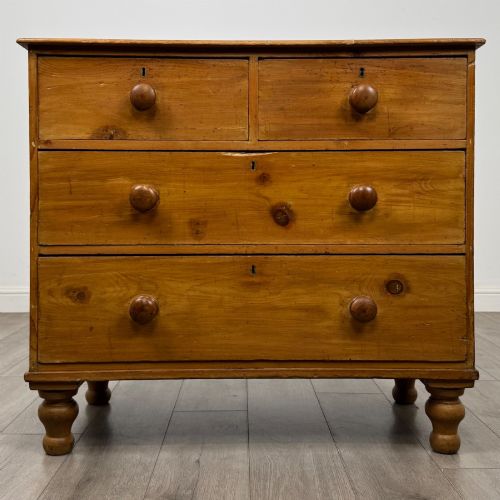
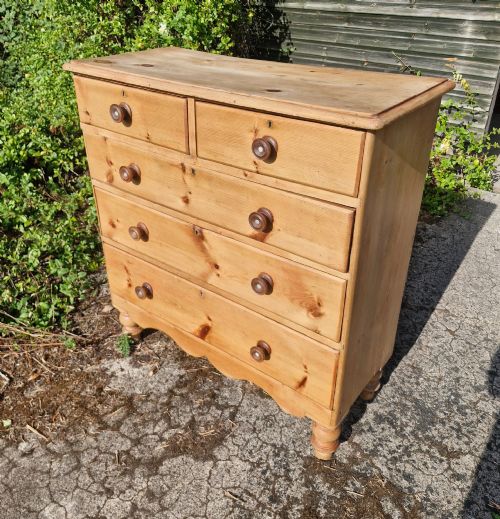
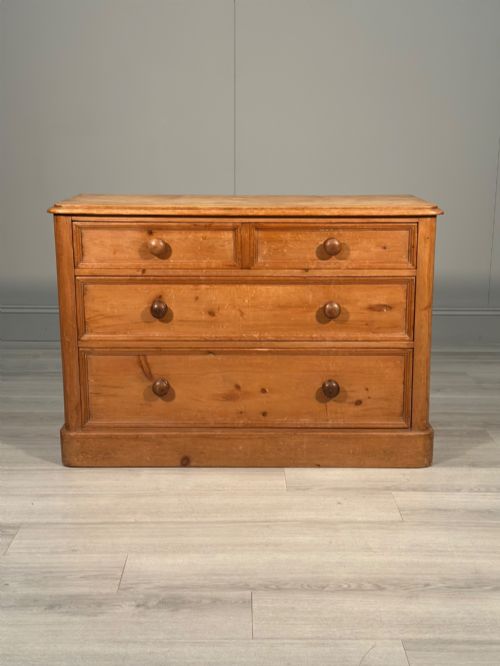
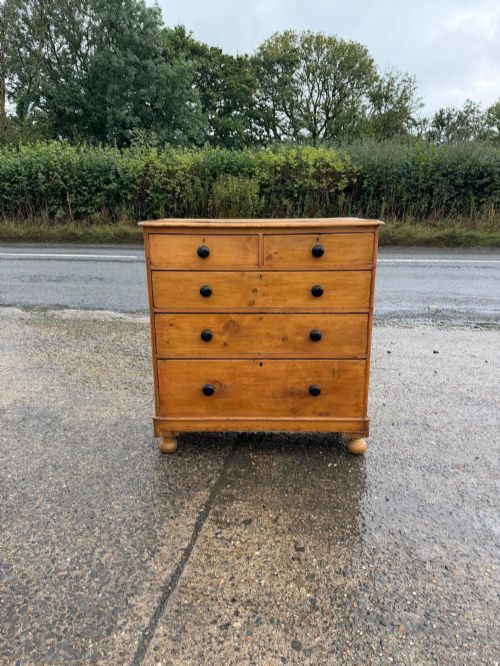
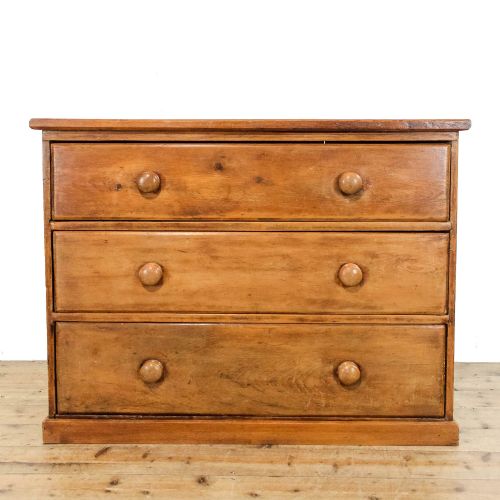
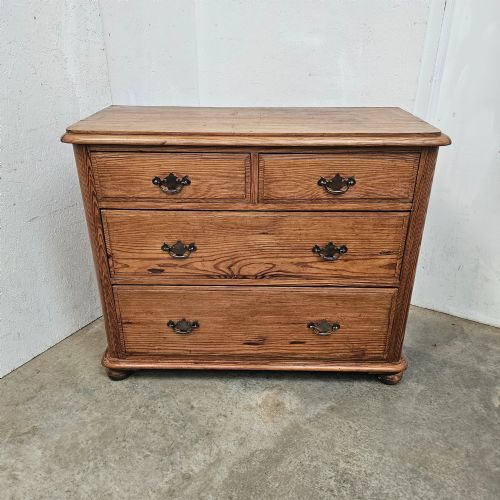
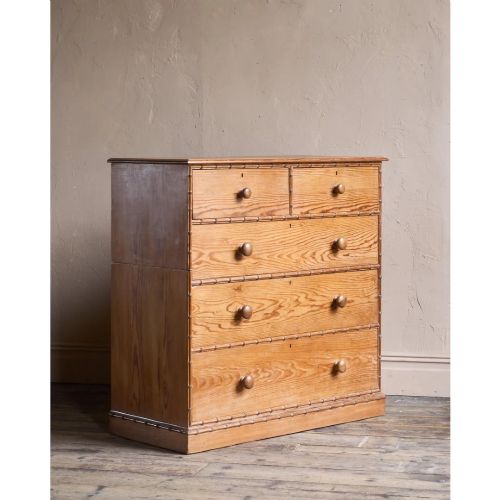
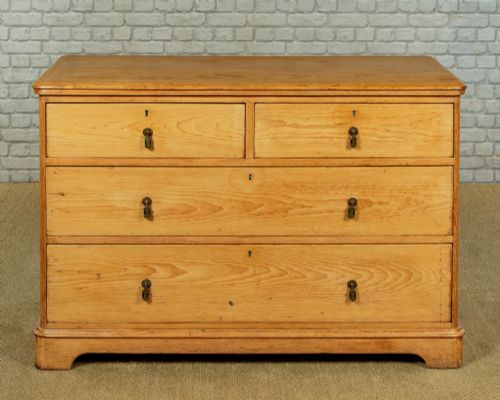
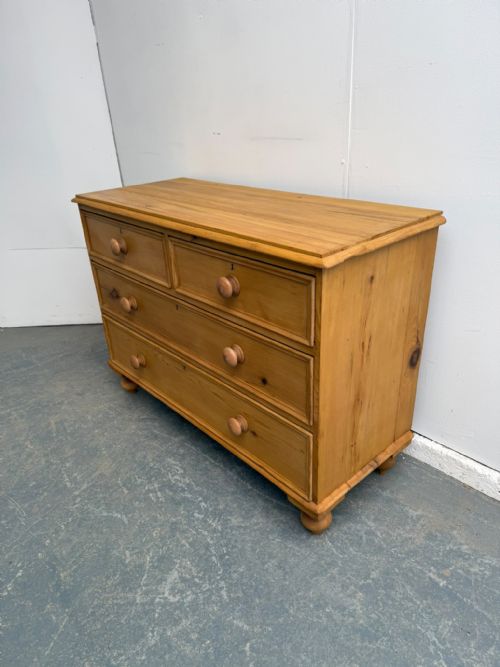
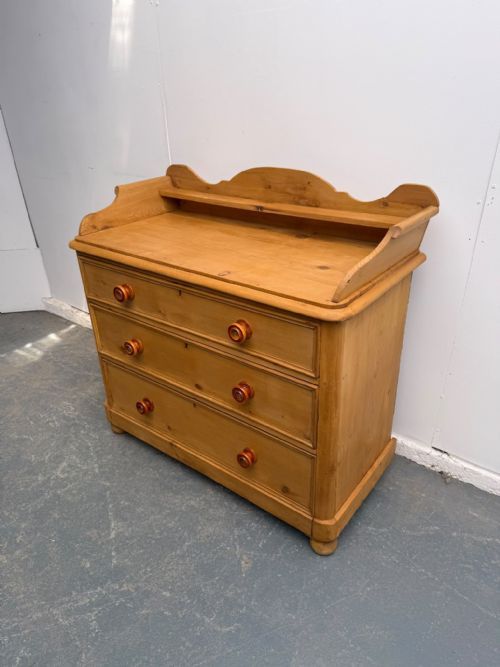
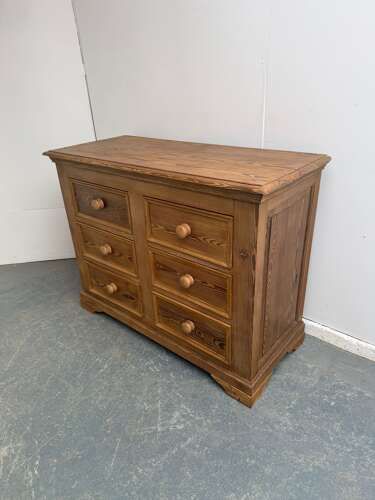
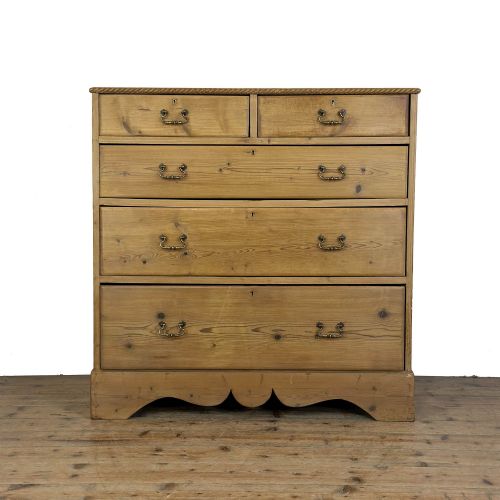
The pieces on this page include standard drawer configurations like two over three arrangements, along with low wide chests, tall five-drawer variants, and specialised forms such as dressing tables and linen presses.
Origin variations range from English workshops to Continental and Irish pieces, occasionally incorporating specific regional timbers like pitch pine alongside standard softwood.
Materials and construction
Makers utilised solid pine and pitch pine for the primary carcass and drawer construction, applying wax finishes to accentuate the grain or retaining original painted surfaces.
Hardware details rely on brass and iron fittings, while specific aesthetic variants incorporate ceramic and glass elements, or employ turned faux bamboo techniques across the frame.
One exceptional piece stands ready in original paint, having avoided the enthusiasm of the Victorian stripping brush entirely.
Judging quality in pine furniture
Proportion and scale separate standard utility chests from finer examples, with well-balanced drawer arrangements like two short drawers over three long ones offering pleasing symmetry.
Surface preparation distinguishes pieces, where traditional waxing enhances the timber depth compared to heavy modern stripping, and original paint surfaces retain historical character.
Howard and Sons
The Honey Pine Bedroom Dresser Glossary
- Pitch pine
- A dense, resinous softwood variant seen in nineteenth-century furniture that provides a robust timber frame with distinct grain patterns.
- Faux bamboo
- A decorative turning technique applied to wood to imitate the segmented stalks of natural bamboo, popular during the Victorian period.
- Waxed finish
- A traditional protective coating rubbed into the timber surface to nourish the wood and create a soft sheen on antique pine.
- Aesthetic Movement
- A late nineteenth-century design style focusing on visual and material qualities rather than narrative content, reflected in select pine and pitch pine pieces.
- Linen press
- A tall storage piece combining upper cupboard doors for textiles with lower drawers for garments, found among the larger bedroom items.
Honey Pine Bedroom Dresser: Frequently Asked Questions
What is a honey pine bedroom dresser?
A honey pine bedroom dresser is typically a chest of drawers or dressing table dating from the Victorian or Edwardian periods, finished with a warm wax that highlights the natural grain of the softwood.
These pieces served as essential bedroom storage for clothing and linens, combining utilitarian function with the domestic charm of nineteenth-century craftsmanship.
How do I date a pine chest of drawers?
Dating relies on observing construction methods, hardware types, and stylistic cues such as the proportions of the drawer configuration or the presence of aesthetic movement details.
Early Victorian examples often feature hand-cut dovetails and solid timber backs, whereas Edwardian pieces display lighter scantlings and machine-finished components.
What is the difference between pine and pitch pine?
Standard pine refers to general softwood varieties utilised widely in domestic furniture throughout the nineteenth century, known for its pale colour and receptiveness to wax finishes.
Pitch pine is a harder, heavier timber with a high resin content and pronounced grain patterns, frequently chosen for pieces requiring greater structural strength.
How do I care for a waxed pine dresser?
Maintenance involves dusting with a soft cloth and periodically applying a traditional beeswax to nourish the timber and maintain the warm surface sheen.
Keep the piece away from direct heat sources and strong sunlight to prevent the timber from drying out or the historic wax finish from degrading.