


Honey Oak Sideboard
A honey oak sideboard brings warmth and practical storage into a room, spanning rustic country pieces and refined Victorian forms.
Honey Oak Sideboard
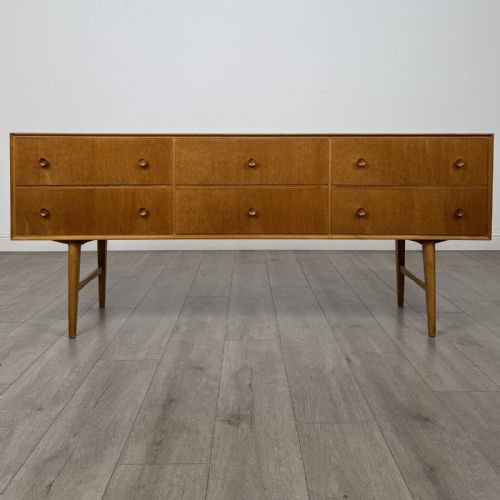
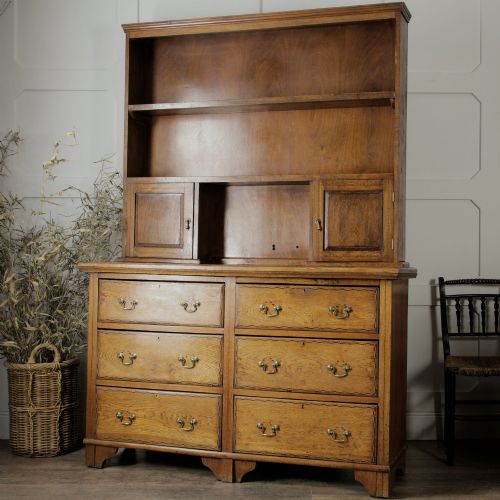
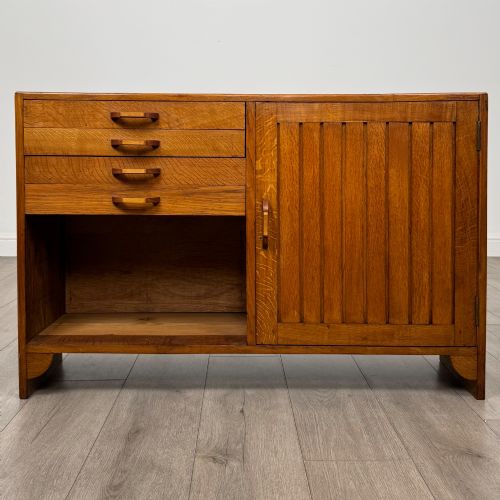
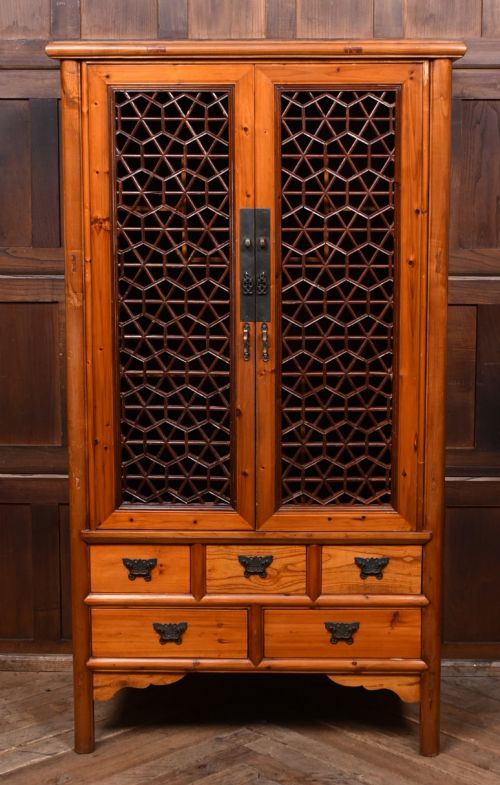
A honey oak sideboard is a sturdy storage piece designed for dining rooms and kitchens, appearing here across diverse periods from the eighteenth century to the twentieth century. The selection includes traditional dressers, dresser bases, larder cupboards, and credenzas alongside more conventional sideboards.
Makers utilised various timber tones, with golden oak and light oak finishes appearing frequently beside heavier pollard oak and contrasting pine or cedar elements. Forms range from compact Edwardian tambour door units to substantial Victorian and Georgian configurations.
Buyers encounter both rustic farmhouse interpretations and formal English country styles, often fitted with brass hardware, mirrors, or multiple drawers for everyday utility.
How they were made
Construction relies heavily on solid oak and wood veneer, supported by secondary timbers like pine and cedar for internal framing and drawer construction. Artisans shaped these robust materials using traditional joinery methods suited to heavy domestic service.
Metal components such as brass handles, iron fittings, and mirrors complete the construction, adding functional detail to pieces ranging from simple storage cupboards to elaborate credenzas.
Materials extend beyond standard oak to include pollard oak, pine, cedar, brass, and iron elements.
What varies in quality
Quality rests in the selection of timber, where richly grained pollard oak or carefully matched solid honey oak distinguish finer examples from simpler pine-backed utility pieces. The sophistication of the hardware and the precision of the drawer construction also set individual items apart.
Proportion and decorative restraint dictate the aesthetic tier, separating restrained Georgian and Edwardian designs from heavier vernacular country furniture.
The Honey Oak Sideboard Glossary
- Sideboard
- A long piece of furniture used for serving food, holding dishes, and storing silverware. These typically feature a combination of cupboards and drawers.
- Credenza
- A formal dining room storage cabinet originating in Italy, often distinguished by substantial proportions and decorative veneering.
- Tambour door
- A flexible door constructed from narrow vertical strips of wood glued to a canvas backing, allowing it to slide smoothly around a curved track.
- Dresser base
- The lower section of a traditional kitchen dresser, comprising a solid counter surface above rows of drawers and enclosed cupboards.
Honey Oak Sideboard: Frequently Asked Questions
Where should I place a honey oak sideboard?
These pieces suit dining rooms, large hallways, and open-plan kitchens where generous surface space and enclosed storage are useful.
Their warm timber tones coordinate well with neutral walls and traditional architectural details.
How do I care for honey oak furniture?
Dust the timber regularly with a dry cloth and apply a quality beeswax periodically to nourish the grain.
Avoid placing these cabinets in direct sunlight or near heat sources to prevent the wood from drying out.
What is the difference between a sideboard and a credenza?
Sideboards traditionally feature legs and focus on everyday dining utility, while credenzas often sit lower and display more elaborate veneering.
Both serve the same primary function of storing tableware and dining accessories.
How can I date an oak sideboard?
Examine the construction methods, hardware types, and secondary woods used in the drawers and back panels.
Stylistic markers such as tambour doors point to the Edwardian era, whereas panel construction often indicates earlier periods.