

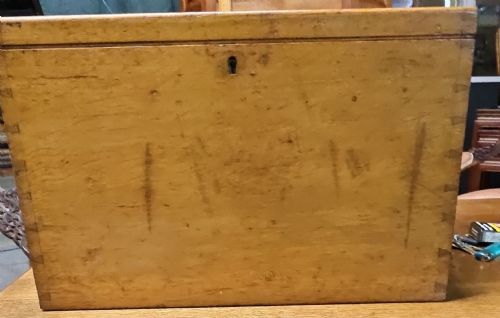
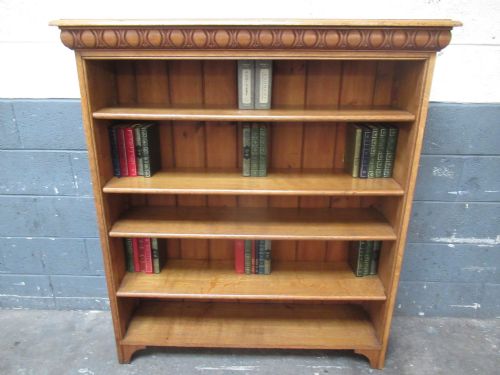
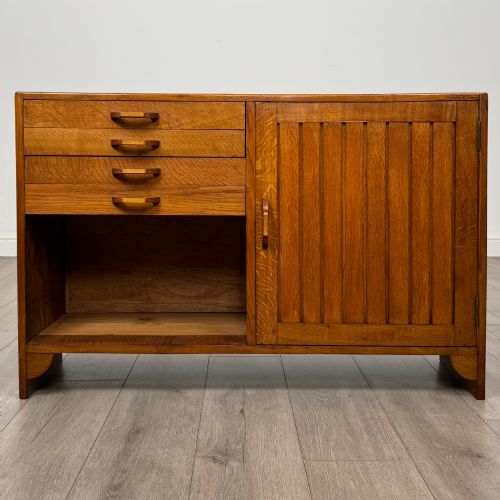
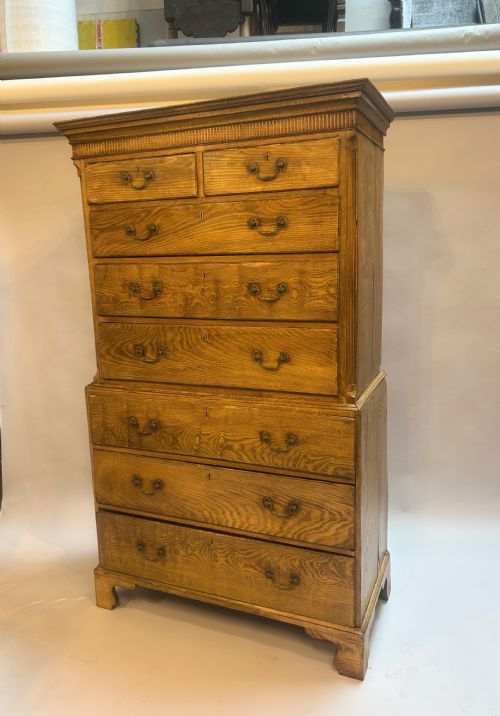
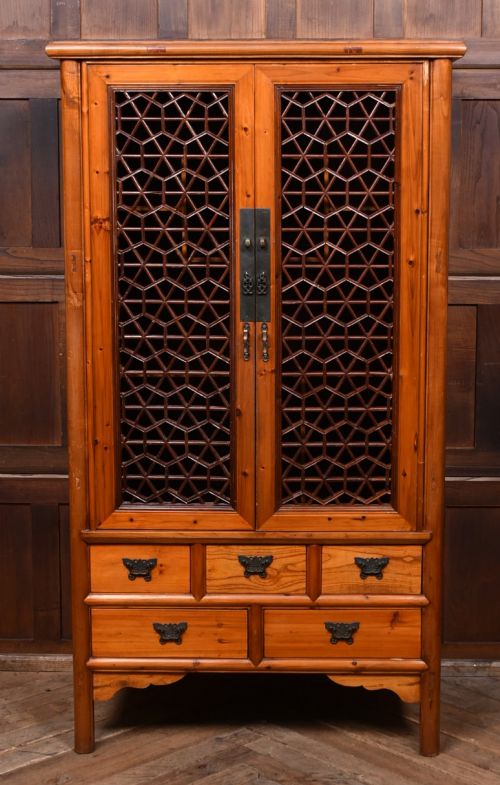

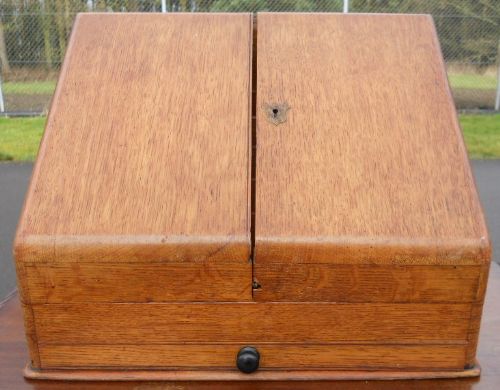


Honey Oak Cabinet
These honey oak cabinet pieces span Victorian, Edwardian, and mid-century periods, offering practical timber storage for the home.
Honey Oak Cabinet
A honey oak cabinet brings together diverse forms ranging from bedside cabinets and sideboards to larder cupboards, dressers, and tallboy chests of drawers. When searching for a honey oak cabinet, buyers encounter items built across several eras, including the Edwardian period, the 1920s, and the 1930s.
The selection here encompasses specific regional and stylistic variants, such as Japanese larder cupboards and Arts and Crafts ash bedside cabinets alongside Victorian credenzas and Art Deco bookcases. Sideboards, storage cupboards, and collectors' cabinets dominate the range of functional wooden furniture.
Makers and designers from different traditions influenced these pieces, as seen in Art Deco items created in the manner of Heals and substantial pollard oak estate pieces. Each object fulfils a storage function, whether housing books, linens, or dining wares.
How they were made
Construction relies heavily on solid timber and wood veneer, utilising oak as the primary wood alongside ash, pine, and distinctive pollard oak. Cabinet makers matched these woods with contrasting secondary timbers to build sturdy frames and panelled doors.
Metal and glass components complete the construction, featuring brass hardware, iron fittings, and glass panels in bookcase and cupboard doors. Wax finishes protect the wooden surfaces while highlighting the natural grain and honey tones of the oak.
Honey Oak Cabinet Retail Price Guide 2026
Typical asking prices for honey oak cabinet among the pieces listed under this phrase on Sellingantiques today, from the lower quarter to the upper quarter. They describe what is for sale here now, not the wider market.
Recorded styles range from George III and Victorian to Arts and Crafts, Art Deco, and Japanese Meiji periods.
What varies in quality
The standard of a piece depends on the selection of timber figures, particularly in pollard oak and golden oak surfaces where grain patterns dictate visual appeal. Cabinet construction methods, from simple tongue-and-groove boards to complex tambour doors, set different pieces apart.
Original hardware such as brass handles and hinges contributes to the integrity of an item. The precision of joinery in drawers and cupboards determines how well the furniture endures through decades of daily use.
The Honey Oak Cabinet Glossary
- Tambour door
- A flexible door constructed from narrow wooden strips glued to a canvas backing, allowing it to slide smoothly around a curved cabinet corner. This mechanism appears frequently on vintage sideboards.
- Pollard oak
- Timber taken from a tree that has been pruned above livestock height, producing dense wood with a distinctive clustered grain pattern. It adorns high-status Victorian credenzas and collectors' cabinets.
- Tallboy
- A tall chest of drawers made by stacking one cabinet section on top of another, maximising storage space while retaining a compact footprint. George III examples showcase traditional proportions.
- Credenza
- A large sideboard or buffet cabinet designed for dining rooms to serve food and store tableware. Victorian versions often feature massive proportions and rich timber veneers.
- Bedside cabinet
- A small enclosed piece of furniture designed to sit next to a bed for nighttime storage. Edwardian and 1930s examples often come in matched pairs.
Honey Oak Cabinet: Frequently Asked Questions
What rooms suit a honey oak cabinet?
These cabinets fit living rooms, bedrooms, and dining spaces depending on the specific form chosen.
Smaller bedside cabinets and writing boxes suit bedrooms and studies, while sideboards, dressers, and larder cupboards serve kitchens and dining rooms.
How do I identify an Edwardian cabinet?
Edwardian pieces date from the early twentieth century and often display lighter oak tones with simple functional lines.
They frequently lack the heavy ornamentation of Victorian furniture, favoring straightforward utility in items like solid oak cupboards and small sideboards.
What is the difference between oak and pollard oak?
Standard oak offers a straight, uniform grain that forms the durable basis for everyday furniture.
Pollard oak comes from pollarded trees and produces a highly decorative, knotted grain pattern utilised on statement furniture like credenzas and estate cabinets.
How should I care for waxed oak furniture?
Waxed surfaces require gentle cleaning with a dry cloth and occasional re-waxing to maintain the timber's moisture and sheen.
Avoiding direct sunlight and excessive heat prevents the oak from drying out or splitting over time.