




Historical Tapestry
Historical tapestry pieces bring centuries of woven narrative and elaborate stitchwork into domestic spaces, offering layered stories from Flemish workshops to Scottish homes.
Historical Tapestry
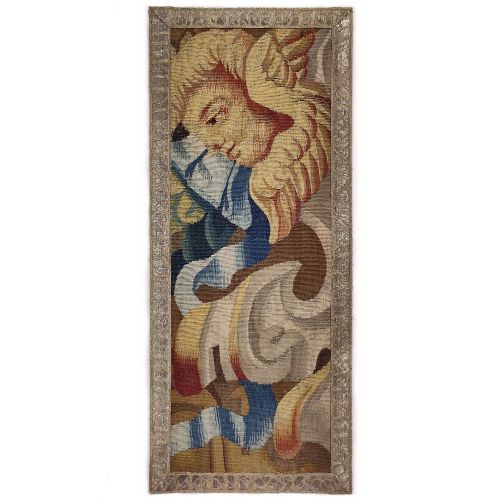
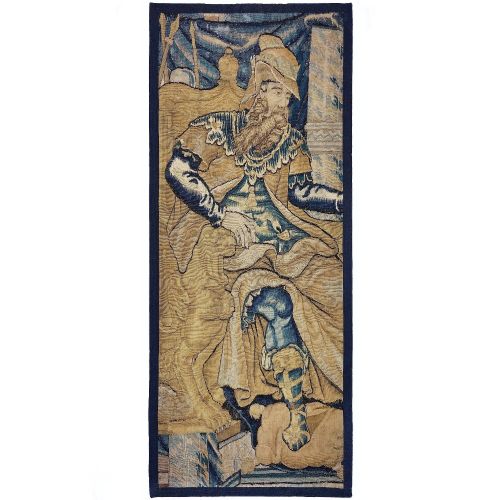
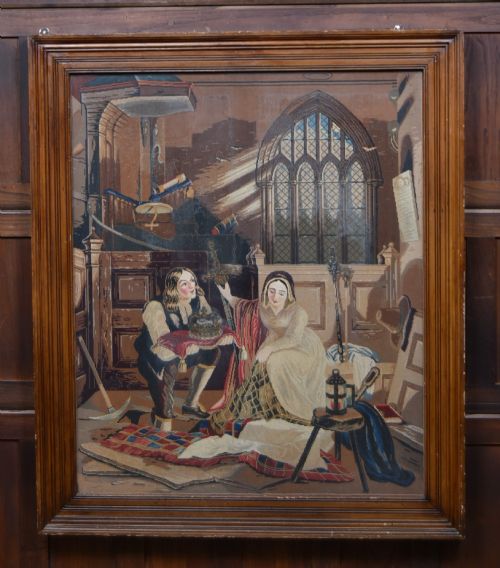
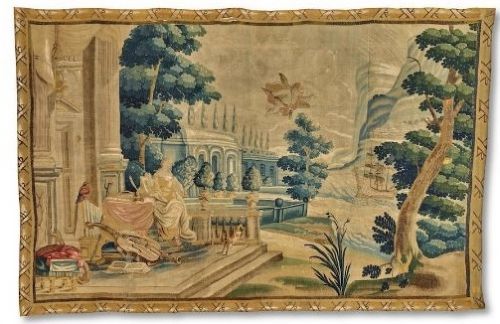
When you search for historical tapestry, you encounter a diverse group of textile art, wall art, wall hangings, needlework pictures, framed artwork, and needlework samplers. These pieces span from the sixteenth century through to the mid-twentieth century, capturing varied domestic and narrative subjects.
The selections available here range from grand Flemish mythological wall pieces dating to the seventeenth century down to smaller nineteenth-century Berlin wool work, Scottish mourning needlework, and framed eighteenth-century silk and metal thread embroidery.
You will also find specific needlework samplers bearing maker names and dates such as Jane Wettmore 1847 and Mary Street Didsbury 1832, alongside toile de jouy fragments and medieval-style nineteenth-century interpretations.
Assessing quality
Quality rests upon the complexity of the design, the fineness of the wool, silk, or metal thread work, and the ambition of the pictorial subject. Grand mythological or racing scenes demand greater technical skill than standard samplers or smaller cushion covers.
The survival of original materials, the integrity of the canvas or weave, and the quality of the surrounding wooden or gilded framing also determine the standing of each piece within its period.
Historical Tapestry Retail Price Guide 2026
Typical asking prices for historical tapestry among the pieces listed under this phrase on Sellingantiques today, from the lower quarter to the upper quarter. They describe what is for sale here now, not the wider market.
Jane Wettmore and Mary Street left their needlework signed in thread forever, quietly outliving the nineteenth century by sitting patiently on canvas.
The Historical Tapestry Glossary
- Berlin wool work
- A type of counted-thread embroidery popular in the nineteenth century, often worked in bright coloured wools on canvas. It produced dense pictorial wall hangings and domestic furnishings.
- Needlework sampler
- A piece of canvas or linen stitched by hand to demonstrate proficiency in various embroidery stitches, frequently including alphabets, dates, and maker names. They serve as personal historical records from the eighteenth and nineteenth centuries.
- Toile de jouy
- A cotton or linen fabric printed with repetitive monochrome pastoral or historical scenes from a single engraved copperplate. Eighteenth-century fragments survive framed as textile art.
- Metal thread embroidery
- The use of gold-wrapped or silver-wrapped threads stitched alongside silk to create reflective highlights in historical needlework. It appears frequently in eighteenth-century framed pieces.
- Wall hanging
- A large textile designed to be mounted directly onto interior walls for decoration and insulation. Examples include grand seventeenth-century Flemish pieces and later German wool work.
Historical Tapestry: Frequently Asked Questions
How do I hang a textile piece safely?
Large textile works and heavy wall hangings require even weight distribution across a sturdy wooden batten or hidden support system rather than a single hanging point. This prevents undue strain on the historic fibres.
Lighter framed samplers and needlework pictures hang securely on standard picture hooks, provided they are kept away from direct sunlight and damp walls to preserve the wool and silk threads.
How should I clean historical needlework?
Historic wool, silk, and canvas pieces require very gentle surface dust removal using a soft brush or low-suction vacuum through a protective mesh screen. Water and chemical cleaning agents cause irreversible shrinkage and dye bleeding.
Professional textile conservators should handle any deep cleaning or structural repairs needed for fragile seventeenth-century or eighteenth-century pieces.
What is the difference between tapestry and needlework?
True tapestries are woven on a loom where the design is built directly into the fabric structure using warp and weft threads, as seen in grand Flemish wall hangings. They require specialised horizontal or vertical looms.
Needlework involves stitching threads through an existing woven canvas or linen foundation by hand, encompassing Berlin wool work, samplers, and embroidered pictures.
How do I date an antique sampler?
Many samplers include stitched names, locations, and exact calendar years directly into the composition, providing a clear point of origin. Stylistic markers such as alphabet fonts and specific floral borders also help narrow down the decade.
Examining the fibre type, linen weave, and framing materials confirms whether the piece belongs to the Georgian period or the later nineteenth century.