





Historical Scene Painting
Historical scene painting captures narrative moments from past eras on canvas, paper, and porcelain to bring dramatic human stories into domestic interiors.
Historical Scene Painting
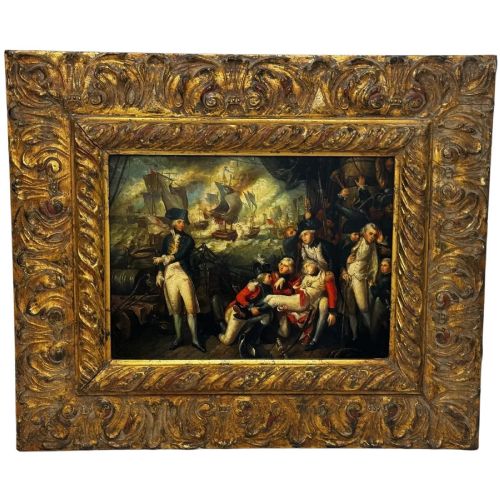
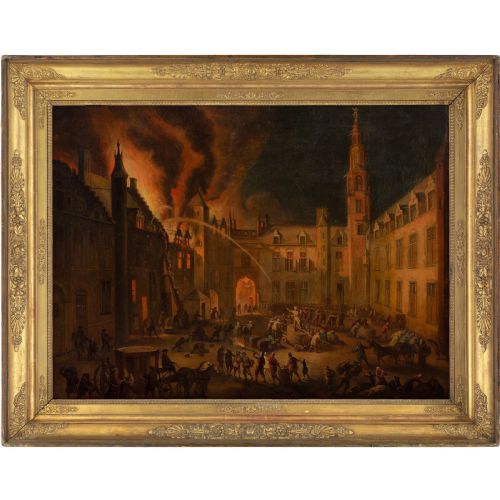
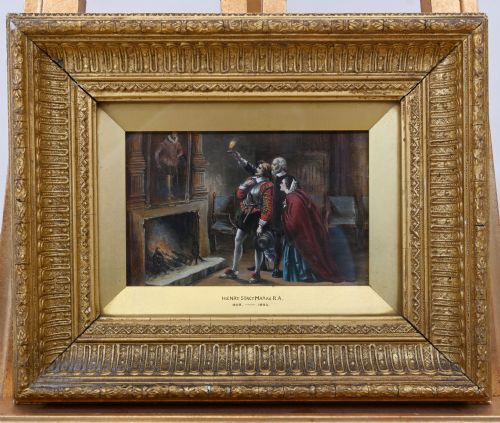
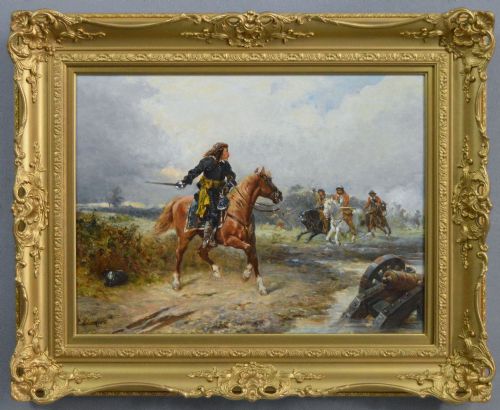
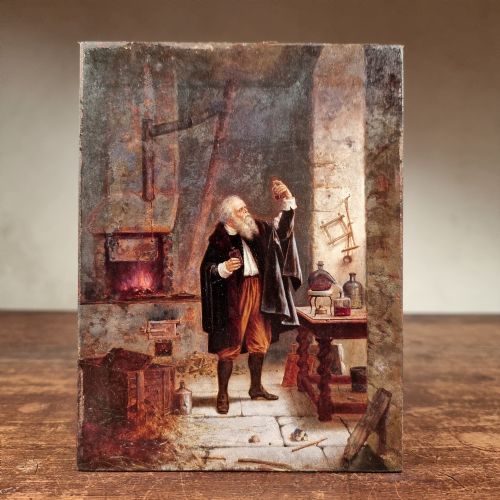
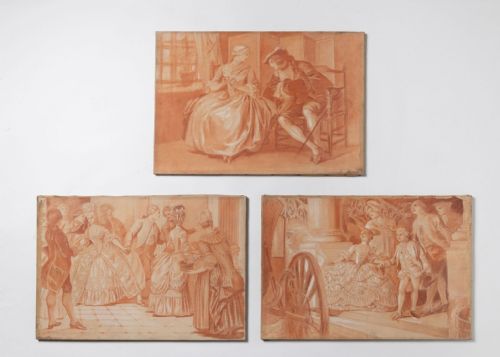
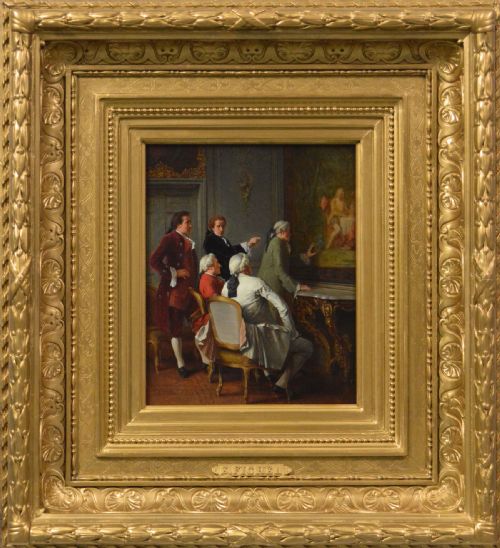
Historical scene painting encompasses narrative oil paintings and watercolours depicting past events, literary moments, and domestic historical genre scenes. Collectors seeking historical scene painting encounter works originating primarily from the seventeenth century through to the mid twentieth century.
The selection ranges from grand maritime battles and cavalry skirmishes to intimate domestic interiors involving cavaliers, maids, and gentlemen. Makers span British and continental European schools, working across various formats including canvas, wood panel, paper, and decorative ceramic chargers.
The most prevalent examples on this page are nineteenth and early twentieth century oils and watercolours illustrating historical genre scenes, military subjects, and architectural landmarks.
Methods and materials of historical narrative art
Makers utilised oil paint on stretched canvas and wooden panels, alongside watercolours applied to paper, building rich narrative depth through layered pigments and brushwork. Many works rely on traditional ground preparations and varnishes that preserve the integrity of the image across centuries.
Ceramic pieces utilise porcelain and maiolica grounds, decorated with detailed istoriato narrative scenes fixed through kiln firing and complemented by giltwood frames embellished with gold leaf.
Historical Scene Painting Retail Price Guide 2026
Typical asking prices for historical scene painting among the pieces listed under this phrase on Sellingantiques today, from the lower quarter to the upper quarter. They describe what is for sale here now, not the wider market.
Several gentlemen are caught mid-conversation, mid-nap, or interrupted during domestic shaving rituals by watchful spouses.
Distinctions in quality across historical works
Quality separates through the precision of draftsmanship, particularly in the rendering of human anatomy, facial expressions, and complex costume details within crowded compositions. Superior examples demonstrate a confident command of light and shadow that creates genuine theatrical depth and atmosphere.
The handling of secondary elements, such as architectural backgrounds or domestic props, distinguishes accomplished academic hands from more formulaic studio output. Frame preservation and the original relationship between the painting and its giltwood mounting also influence the overall standard of a piece.
Felix Stone Moscheles·Benjamin Eugene Fichel·George Morland·Frank Moss Bennett·Heywood Hardy
The Historical Scene Painting Glossary
- Istoriato
- A style of ceramic decoration where narrative historical or mythological scenes cover the entire surface of a plate or charger. This technique flourished on Italian maiolica during the Renaissance and later revivals.
- Cavalier
- A term describing seventeenth century royalist soldiers or figures dressed in the fashion of the English Civil War era. These subjects frequently appear in nineteenth century genre revivals.
- Genre painting
- The pictorial representation of scenes from everyday life, often involving figures engaged in common domestic or social activities. Historical genre applies this approach to past eras.
- Giltwood
- Timber carved and coated with gold leaf or metallic paint to create a decorative frame. These frames often feature complex moulding characteristic of specific historical periods.
- Watercolour
- A painting method where water-soluble pigments are applied to paper supports. Works in this medium rely on the white of the paper to provide luminosity and tone.
Historical Scene Painting: Frequently Asked Questions
What is a historical genre painting?
A historical genre painting depicts fictional or real narrative moments from past centuries, focusing on human interaction rather than official portraiture.
These works interpret history through domestic settings, literary scenes, or social gatherings set in earlier periods.
How do I date an oil painting?
Dating relies on stylistic evidence, costume details, framing methods, and the physical characteristics of the canvas and stretcher. Pigment analysis and inscribed signatures or dates on the reverse offer further confirmation.
Comparative study of known artist oeuvres helps narrow the active period of production.
What are porcelain charger plates?
Porcelain charger plates are large, highly decorative display dishes rather than functional tableware. They frequently feature detailed painted historical or mythological scenes across their expansive surfaces.
Factories like Vienna and Sèvres produced these substantial decorative pieces during the nineteenth century.
Where should I hang large oils?
Large oil paintings require stable wall spaces away from direct sunlight, dampness, and extreme temperature fluctuations. Adequate wall space allows the composition and its original giltwood frame to be viewed properly without crowding.
Proper lighting enhances the layered oil pigments and varnish without causing heat damage.