
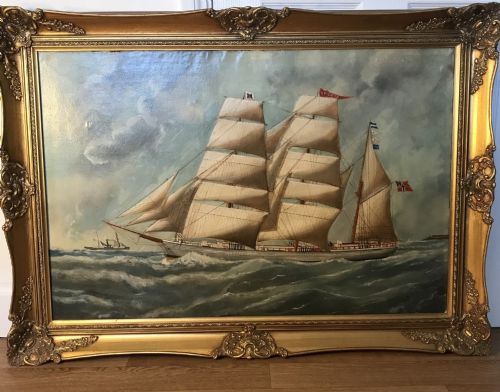


Historical Maritime Portrait Painting
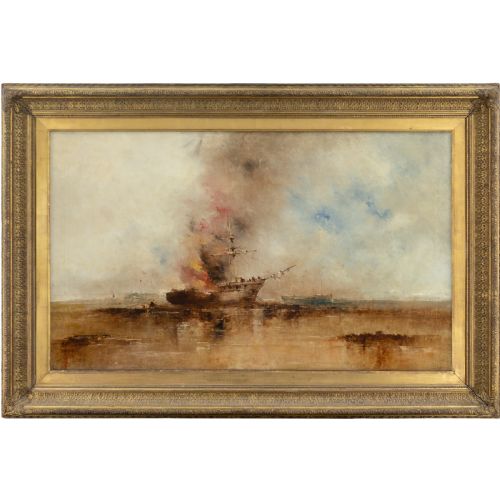
These historical maritime portrait painting works capture sea captains and naval officers alongside the vessels they commanded across four centuries.
Historical Maritime Portrait Painting
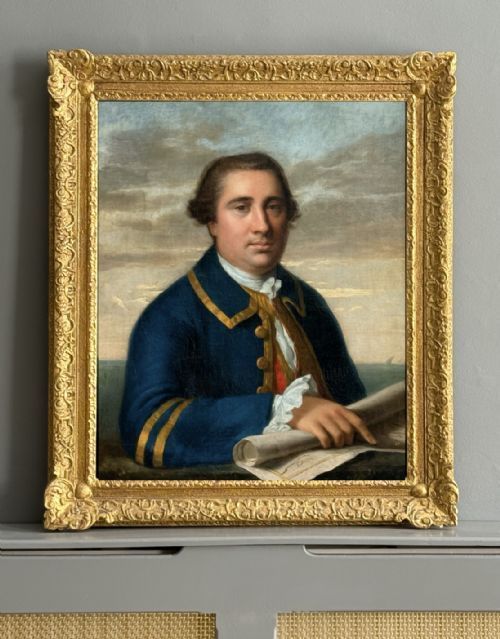
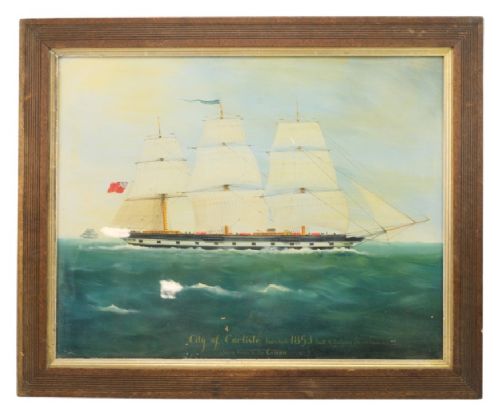
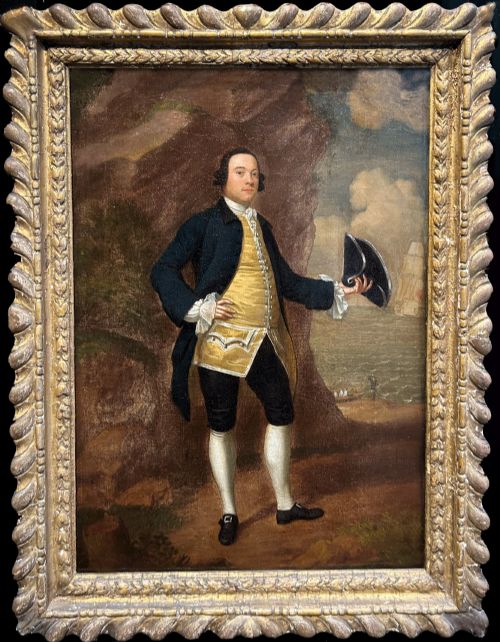
A historical maritime portrait painting merges personal likeness with naval records, depicting merchant captains, naval officers, and privateers against backdrops of sailing ships and coastal waters. The pieces span from the seventeenth century through the Edwardian era, showing both named commanders and unidentified gentlemen of the sea.
Most examples on this page are oil paintings on canvas housed in giltwood frames, ranging from intimate depictions of single officers to grand scenes of steamships and three-masted schooners in rough waters.
How they were made
Artists painted primarily in oil on canvas stretched over wood frames, applying pigments to capture the precise rigging of vessels and the solemn expressions of naval sitters. Giltwood frames, often finished with gold leaf, completed the presentation of these works.
Support materials include paper and glass within various frame constructions, while some related sculptural works utilise wood for busts of naval gentlemen.
Listings feature oil on canvas works spanning from the seventeenth century through to the Edwardian period.
What varies in quality
The distinction in these works lies in the precision of the ship rigging and the psychological depth of the sitter's portrait, rather than mere decorative appeal. Master hands render maritime architecture and human anatomy with equal conviction, whereas lesser works treat the background vessel as a stiff backdrop.
The survival of the original giltwood frame and the clarity of the canvas surface heavily influence the character of each piece, distinguishing accomplished period works from standard studio output.
William McAlpine·LEMUEL FRANCIS ABBOTT·Francis Hayman·F CORPUZ·Vincenzo D’Esposito·Claude Lorrain·Richard Ball Spencer·Richard Hall
The Historical Maritime Portrait Painting Glossary
- Giltwood
- Wood carved and coated with gold leaf or gold paint. This finish creates a reflective, ornate border typical of period picture frames.
- Privateer
- A privately owned armed ship commissioned by government licence to fight enemy shipping. Portraits of privateer captains often celebrate specific wartime exploits.
- Barque
- A sailing vessel with three or more masts. The rear mast is rigged fore-and-aft while the others are square-rigged.
- Seaplane carrier
- A ship designed to transport and launch seaplanes for naval reconnaissance. These vessels appear in early twentieth-century maritime works.
Historical Maritime Portrait Painting: Frequently Asked Questions
How do I identify the rank of a naval officer in a portrait?
Uniform details such as lace, epaulettes, and collar insignia indicate the specific naval rank of the sitter. These elements changed across the eighteenth and nineteenth centuries.
Painters often included subtle background cues, such as particular types of sailing ships or coastal forts, to denote the command responsibilities of the officer.
Are these paintings usually signed by the artist?
Many works bear signatures or studio inscriptions, while others remain attributed to specific English or continental schools of the period. Documentation often relies on contemporary records or family provenance.
Unsigned portraits still offer strong visual evidence through costume, canvas preparation, and framing style.
How should I care for an oil on canvas painting?
Keep the painting away from direct sunlight and steady temperature fluctuations to prevent canvas slackening and paint cracking. Gentle dusting with a soft, dry brush maintains the surface.
Avoid using liquid cleaners or attempting restoration on the oil layer without professional conservation advice.
What is the difference between a marine painting and a naval portrait?
A marine painting focuses primarily on the vessel, sea state, and coastal weather conditions. A naval portrait places the human subject in the foreground.
Many historical works bridge both categories by featuring a detailed likeness of a captain set against an accurate depiction of their ship.