




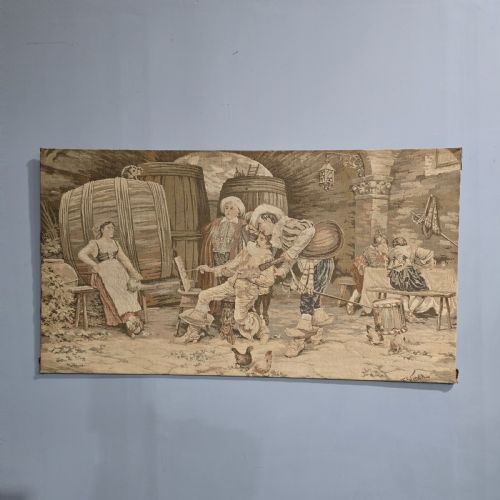
Historic Wall Tapestry
Historic wall tapestry pieces bring centuries of hand-woven narrative and rich texture into a room, offering grand Flemish verdure panels and detailed English crewelwork.
Historic Wall Tapestry
A historic wall tapestry search encounters diverse textile forms, ranging from large Flemish verdure panels and Biblical Aubusson scenes to framed English crewelwork and needlework samplers. The selections spans several centuries, touching the sixteenth, seventeenth, and eighteenth centuries with later nineteenth-century revivals.
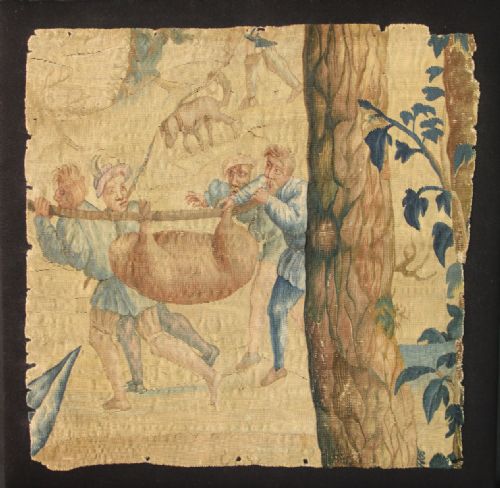
Buyers most frequently meet fragments, full panels, and mounted textile works originating from Flemish, English, French, and Italian workshops. These range from substantial architectural wall hangings to intimate framed needlework picture panels and map samplers.
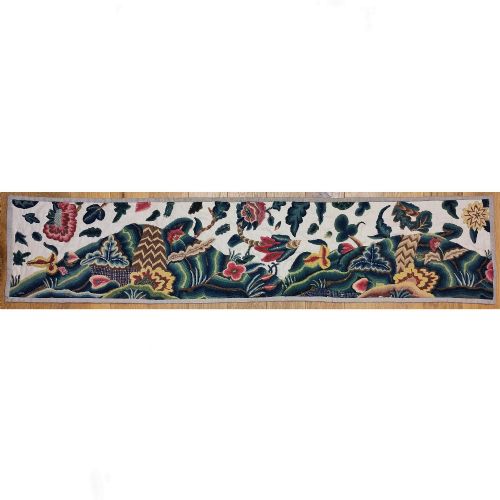
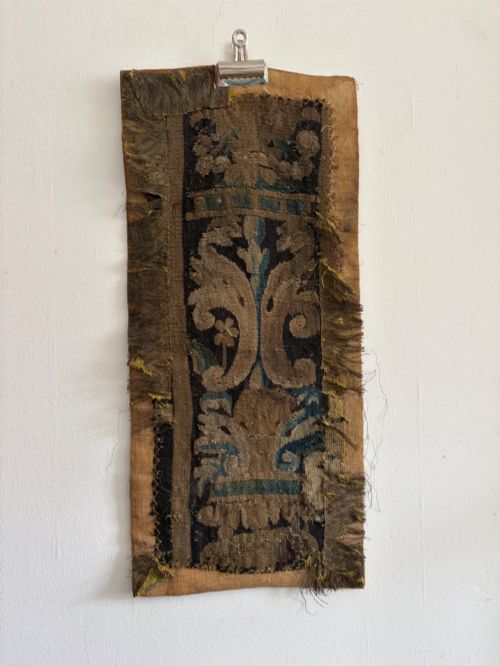
The assortment includes specialised decorative items derived from larger textiles, such as cushion covers and border fragments mounted to linen. Each piece preserves traditional hand-stitched artistry intended for interior display.
Materials and construction
Artisans built these works primarily using natural textile fibres such as wool, silk, linen, cotton, and canvas. Metal threads occasionally appear alongside wool and silk to introduce shimmering detail into woven panels.
Construction techniques combine traditional hand-weaving, crewelwork embroidery, and needlepoint stitching executed on supportive linen or canvas foundations. Completed textiles frequently find support through mounting onto linen backing or framing in wood, giltwood, and oak.
Historic Wall Tapestry Retail Price Guide 2026
Typical asking prices for historic wall tapestry among the pieces listed under this phrase on Sellingantiques today, from the lower quarter to the upper quarter. They describe what is for sale here now, not the wider market.
The listings span from sixteenth-century Flemish panels to nineteenth-century needlework samplers, utilising wool, silk, linen, and giltwood frames.
Distinctions in quality
Quality rests upon the fineness of the needlework and the complexity of the woven design, separating coarse utility pieces from exceptionally detailed courtly scenes and fine crewelwork. Superior examples display intricate pictorial depth, skillful use of varied threads like silk and metal, and sophisticated composition.
The structural integrity of the textile foundation and the historical preservation of the panel dictate overall excellence. Complete panels or well-preserved fragments retain greater visual power than heavily altered elements.
The Historic Wall Tapestry Glossary
- Crewelwork
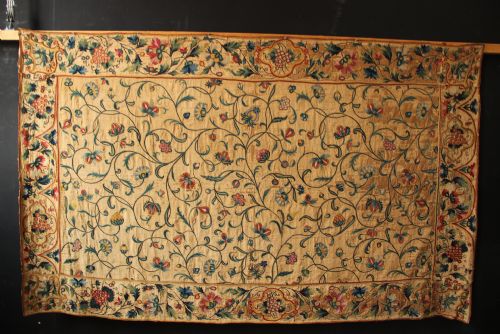
- Embroidery executed with wool yarn on a fine linen or cotton ground. This technique often produces textured English wall panels and samplers.
- Verdure tapestry
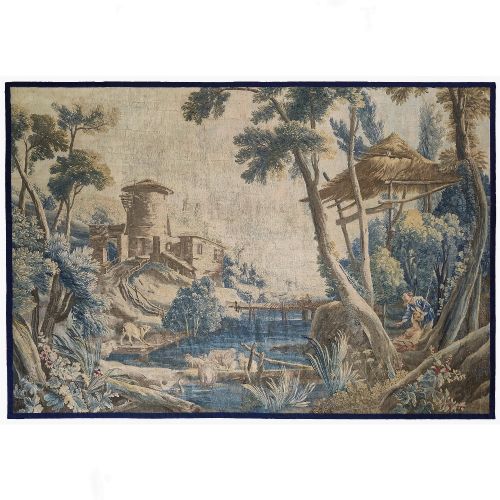
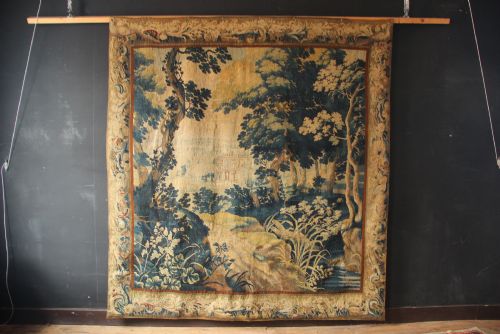
- A woven textile design dominated by lush foliage, trees, and landscape elements, frequently populated by birds or animals. These Flemish panels capture rustic natural scenes.
- Sampler
- A piece of needlework produced to demonstrate skill in various stitches and patterns. Examples range from map designs to dated works signed by young makers.
- Aubusson
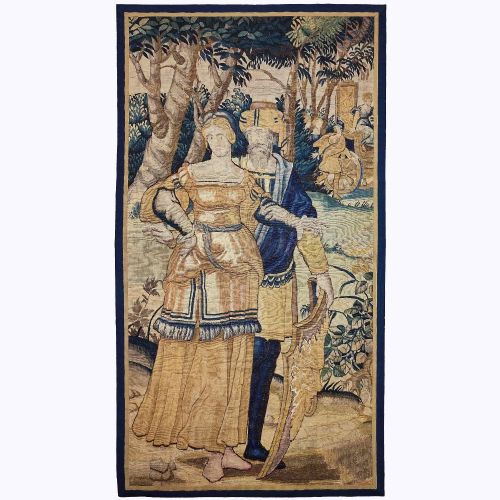
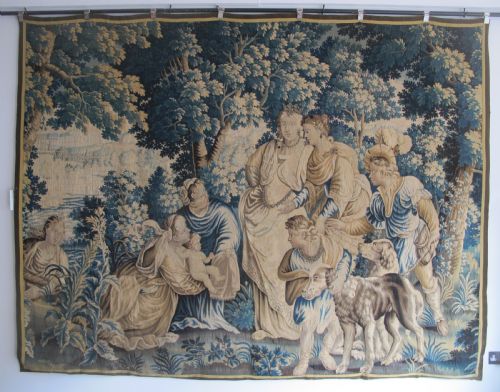
- A style of tapestry originating from the French town of the same name. These works typically depict figurative scenes or classical subjects.
- Needlepoint
- Embroidery stitched onto a stiff open-weave canvas foundation, completely covering the ground. It appears in framed picture panels and decorative cushions.
Historic Wall Tapestry: Frequently Asked Questions
How do I hang a heavy tapestry safely?
Large textile panels require even weight distribution across a supportive wooden batten or hidden mounting bar. Stitching a sturdy linen sleeve to the reverse prevents undue strain on the historic fibres.
Direct contact with nails or pins damages the wool and silk threads. Professional mounting ensures the textile hangs flat without distorting the weave.
What is a verdure tapestry?
Verdure tapestries depict stylized forests, gardens, and dense foliage rather than human figures or historical narratives. They bring natural greenery and shaded landscapes into interior spaces.
Originating largely from Flemish workshops, these verdant scenes often incorporate subtle animal life hidden amongst the woven trees and leaves.
How should I clean historic textiles?
Historic needlework and woven panels require professional conservation rather than standard domestic cleaning methods. Gentle surface dusting using low suction through a mesh screen is the limit of safe home maintenance.
Water and chemical solvents cause irreparable shrinkage and dye transfer in antique wool and silk. Specialist conservators handle washing and stabilization procedures.
Can I frame a needlework sampler?
Framing protects delicate samplers and needlepoint panels from airborne dust and physical handling. Glazing should remain separated from the textile surface to prevent moisture accumulation and flattened stitches.
Using conservation-grade backing materials prevents acid migration into historic linen and cotton grounds. Framed samplers hang securely away from direct sunlight.