




Historic Textile Panel
Historic textile panels bring centuries of handwork, from Flemish tapestries to crewelwork and samplers, into modern rooms.
Historic Textile Panel
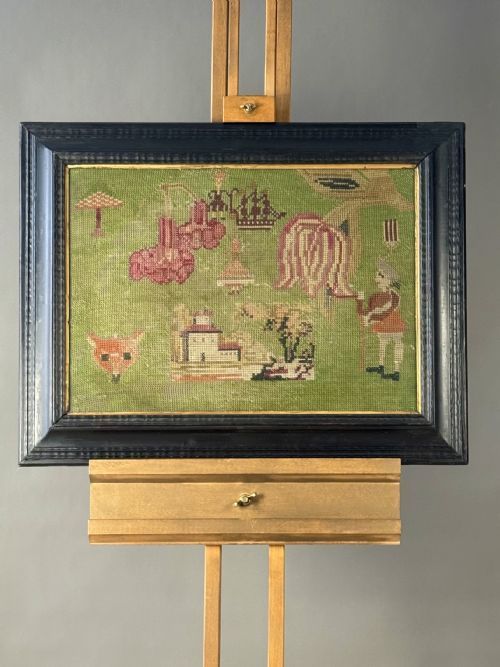
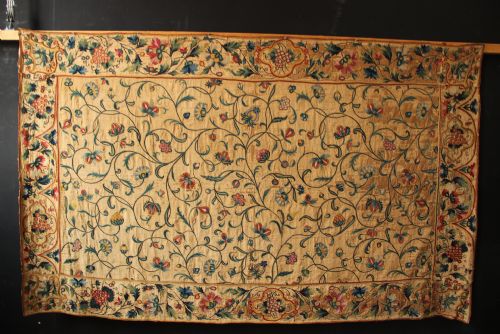
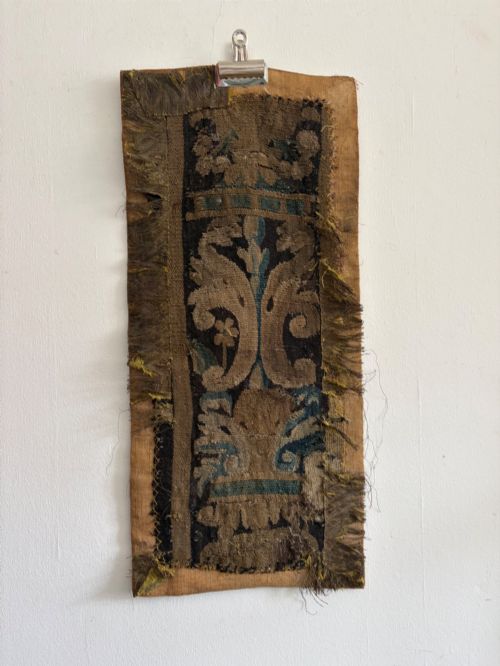
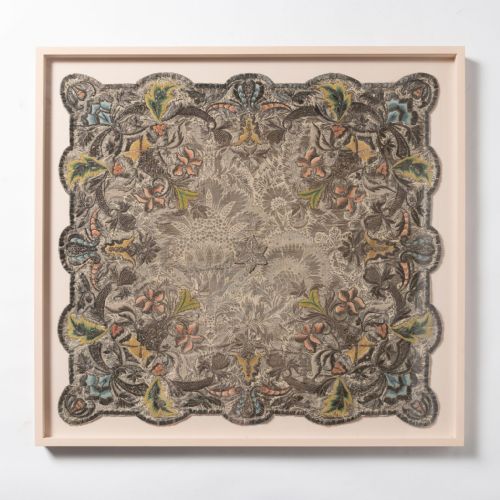
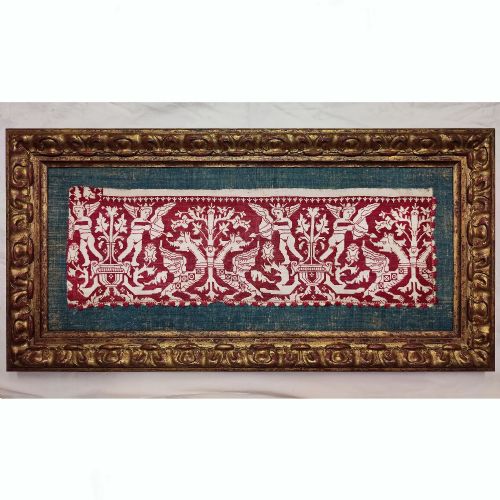
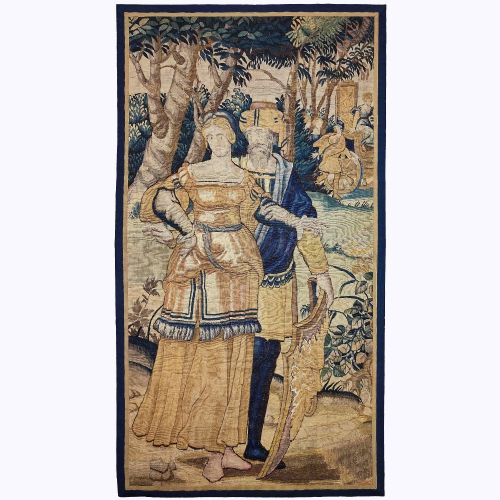
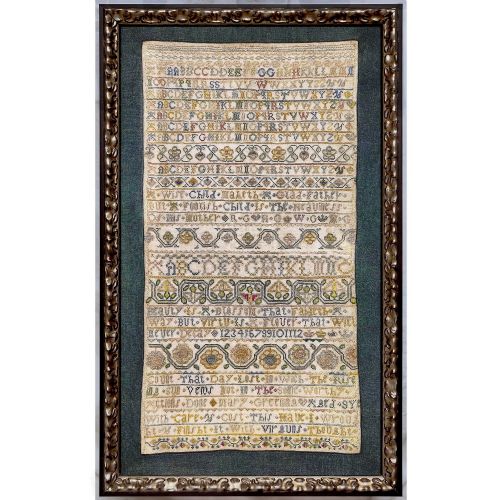
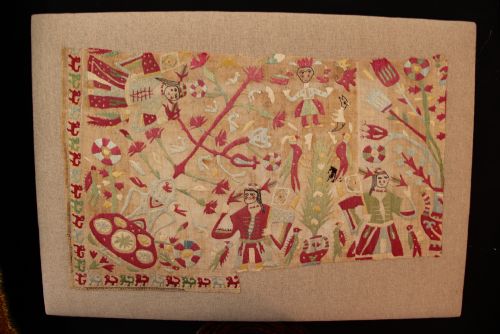
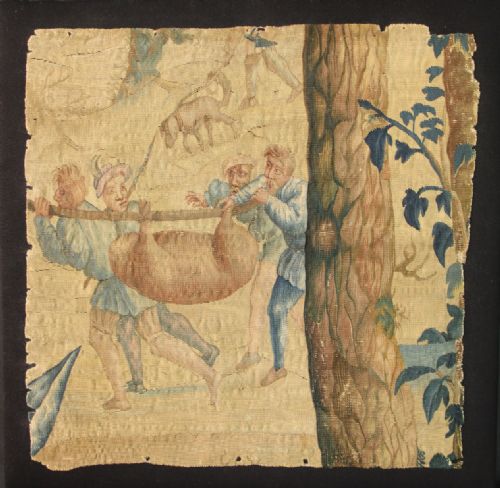
A historic textile panel represents centuries of needlework, tapestry weaving, and embroidery spanning the sixteenth to the nineteenth centuries. When searching for a historic textile panel, buyers encounter framed needlework pictures, verdure tapestry fragments, crewelwork, and band samplers worked in England, Italy, Flanders, and France. These pieces range from monumental wall hangings to small mounted fragments and cushion covers.
The sixteenth, seventeenth, and eighteenth centuries provide many of the tapestries and crewelwork panels seen here, often executed in wool, silk, and linen. Later nineteenth-century examples frequently take the form of needlework samplers worked by young makers, alongside revival tapestry panels. These textiles survive mounted on linen, framed in gilded wood, or preserved as wall hangings and furnishing lengths.
What varies in quality
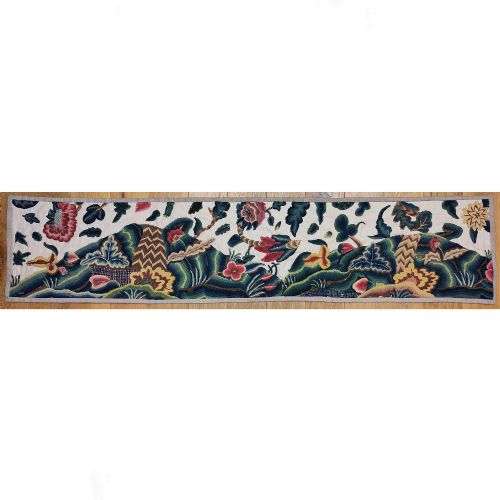
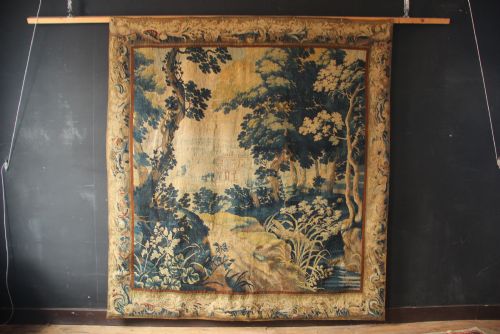
The visual strength of a historic textile panel depends upon the fineness of the needlework and the complexity of the design. Early crewelwork and Flemish verdure tapestries show distinction through dense, varied stitching and rich colour blending in wool and silk. Surviving signatures, legible dates, and named makers on samplers elevate the historical interest of the piece.
Condition and originality dictate much of the standing of these textiles. Panels retaining their original dimensions and uncompromised fibre surfaces hold greater integrity than heavily restored fragments. The quality of the mounting, whether framed in period gilded wood or carefully applied to linen, affects how successfully the textile survives for display.
Listings feature textile panels spanning four centuries, from the 16th to the 19th century, utilising wool, silk, linen, and metal thread.
The Historic Textile Panel Glossary
- Crewelwork
- Embroidery executed with fine wool yarn on a linen or cotton-linen ground. This technique creates textured surface designs characteristic of seventeenth-century English wall panels and hangings.
- Verdure tapestry
- A woven wall hanging depicting landscape, foliage, trees, and animals, often dominated by green and earthy tones. Flemish and French workshops produced these verdure panels during the seventeenth and eighteenth centuries.
- Sampler
- A piece of needlework produced to demonstrate proficiency in various stitches and alphabets. These educational pieces frequently record the name of the maker, date, and age.
- Lampas
- A figured textile woven with a background weft and a pattern weft, creating a rich surface. Bizarre silk lampas represents an eighteenth-century style seen in these furnishing lengths.
- Ciselé velvet
- A velvet where the pattern is created by cutting some pile loops while leaving others uncut. This technique produces contrast in texture and sheen on historic silk panels.
Historic Textile Panel: Frequently Asked Questions
How do I hang a textile panel?
Many textile panels arrive mounted on linen or secured within wooden and gilded frames, allowing direct wall hanging much like a painting. Unframed fabric panels and tapestries often require professional mounting onto a padded support or batten system to distribute weight evenly.
Heavier wool and metal thread tapestries need secure wall fixings that match their dimensions. Care should be taken to avoid direct sunlight, which fades historic silk and wool threads over time.
What is the difference between a sampler and a tapestry?
A sampler is an embroidered exercise in stitches, alphabets, and motifs, usually worked by a young maker on a linen foundation. These often include signatures and dates, recording domestic needlework history.
A tapestry is a pictorial textile woven on a loom, integrating warp and weft threads to build complex scenes of figures, landscapes, or foliage. Tapestries generally function as large wall hangings or architectural furnishings rather than practice pieces.
How do I date an antique needlework sampler?
Many samplers include embroidered inscriptions, naming the maker, the date, and frequently the age of the maker at completion. Examining the script, stitch types, and framing style provides further chronological context.
Earlier seventeenth-century examples display band samplers with symmetrical rows of geometric patterns, while eighteenth and nineteenth-century samplers incorporate figures, houses, and alphabets. Comparing these elements with documented makers helps narrow the period.