





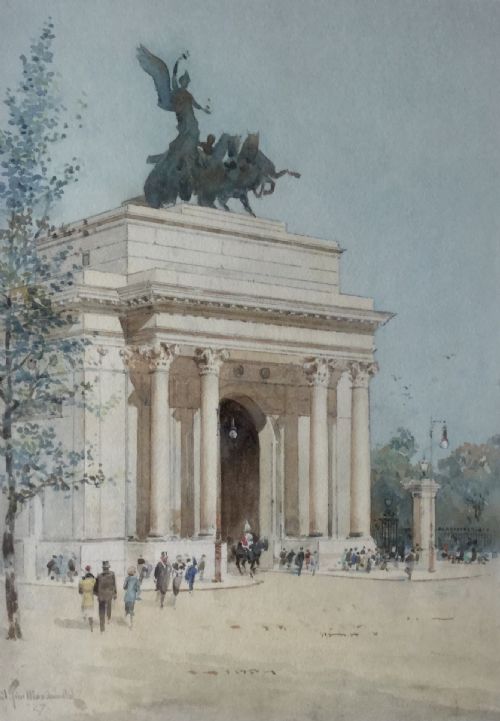


Historic Paper Artwork
Historic paper artwork brings together centuries of delicate watercolours, ink sketches, maps, and engravings framed under glass.
Historic Paper Artwork
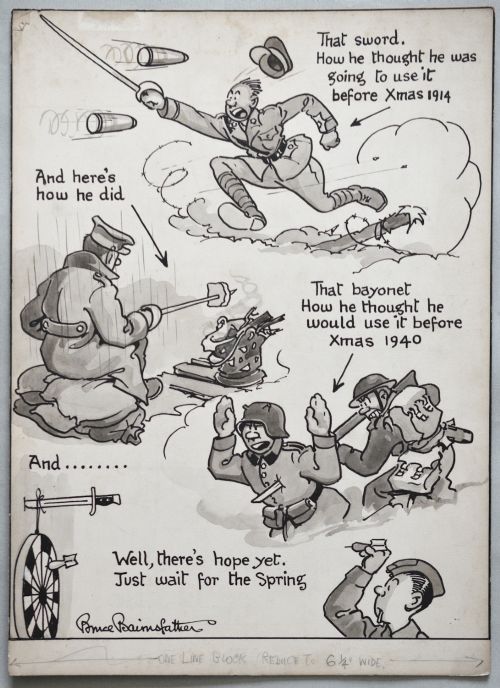
Historic paper artwork encompasses original paintings, watercolours, fine art prints, and framed maps created across the eighteenth, nineteenth, and twentieth centuries. Buyers seeking these works encounter detailed topographical watercolours, architectural engravings, and original satirical illustrations.
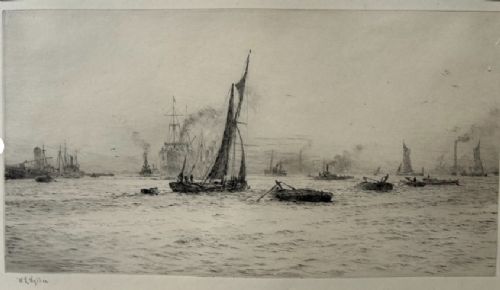
The selection ranges from Georgian cartography and Regency portraiture to Victorian cityscapes and early twentieth-century maritime scenes. British landscapes, interior room studies, and detailed ink sketches dominate the available forms.
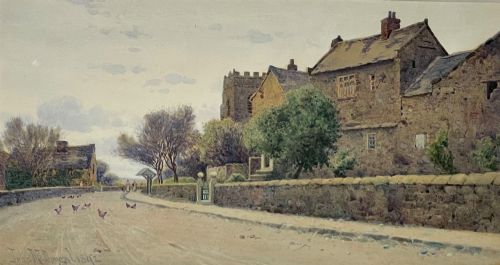
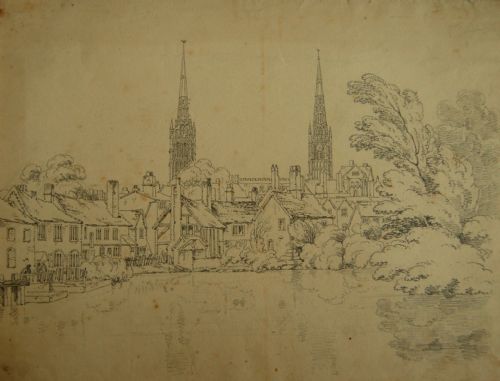
Watercolour paintings and pen and ink drawings on paper form the bulk of the works met here. These pieces frequently preserve specific historical views, street scenes, and portraits rendered by named artists and anonymous regional hands alike.
Materials and technique
Works rely upon paper supports treated with watercolour paint, ink, pencil, wash, and gouache. Artists applied these pigments by hand, often building up delicate washes of colour or precise pen lines.
Framing typically incorporates glass and wooden surrounds, sometimes including gilt wood mouldings to protect the fragile paper surface underneath. Etchings and engravings utilise inked plates pressed into paper to create sharp linear impressions.
Mounting and preservation techniques historically involved framing under glass to shield the paper from environmental degradation and moisture. Many items retain their period frames, contributing to their original context.
Historic Paper Artwork Retail Price Guide 2026
Typical asking prices for historic paper artwork among the pieces listed under this phrase on Sellingantiques today, from the lower quarter to the upper quarter. They describe what is for sale here now, not the wider market.
A silhouette of an anonymous gentleman keeps quiet company alongside bustling Victorian market squares and silent architectural ruins.
Assessing quality and condition
Quality rests upon the strength of the draughtsmanship, the vibrancy of the remaining pigment, and the clarity of the composition. Skilled handling of watercolour wash and ink line defines the superior pieces.
The degree of preservation significantly affects desirability, particularly regarding paper discolouration, foxing, and fading from sunlight. Strong provenance, legible signatures, and identifiable subject matter elevate individual works above standard decorative examples.
Bruce Bairnsfather·John McDougal·William Lionel Wyllie·John Augustus Atkinson·Rowland Henry Hill·Henry Barlow Carter·Thomas Rowlandson·Noel Harry Leaver·Robert Anderson·Beatrice Parsons·Henry Edridge
The Historic Paper Artwork Glossary
- Watercolour
- A painting method where fine pigment is suspended in a water-based solution and applied to paper. This medium allows for transparent washes of colour.
- Etching
- A printmaking technique where acid cuts into unprotected parts of a metal plate to hold ink. The inked plate is then transferred onto paper under pressure.
- Wash
- A thin, semi-transparent layer of diluted watercolour paint or ink spread evenly across paper. It provides background tones and subtle shadow effects.
- Cartography
- The science or practice of drawing maps. Antique examples often hand-colour engraved plates to show regional boundaries.
- Silhouette
- A portrait represented as a solid shape of a single colour, usually black, cut from paper or painted. These profiles gained popularity for capturing likenesses before photography.
Historic Paper Artwork: Frequently Asked Questions
How should I hang historic paper artwork?
Position works away from direct sunlight and damp environments to protect the fragile paper and watercolours from fading or foxing. Ensure the room maintains a stable temperature.
Use professional framing services with UV-protective glass if the original framing is absent or unsuitable. Secure items firmly to wall studs using appropriate fixings.
What periods do these paper artworks cover?
The selection spans from the eighteenth century through the Victorian era and into the early decades of the twentieth century. Each period brings distinct artistic conventions and subject matters.
Eighteenth-century pieces often feature architectural engravings and maps, while nineteenth-century works focus heavily on topographical watercolours and portraiture.
Are these works original or prints?
The category includes both unique hand-painted works and original printed editions. Listings clearly differentiate between one-off watercolours, ink drawings, and published etchings or engravings.
Original paintings show brushstrokes and pigment texture under close inspection. Prints exhibit the fine plate lines characteristic of intaglio printing methods.
How do I identify a Victorian watercolour?
Victorian watercolours frequently depict detailed British landscapes, maritime views, or domestic interior scenes. The paper weight and pigment styles align with mid-to-late nineteenth-century practices.
Signatures, artist inscriptions, and framing styles often provide additional contextual clues to date the piece accurately.