

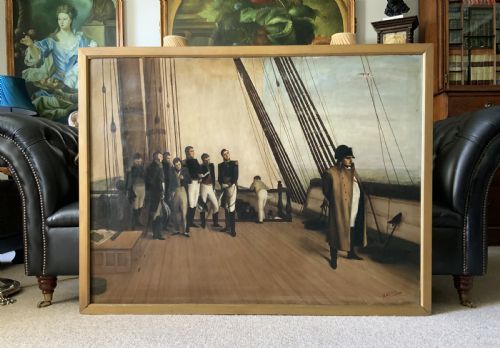


Historic Nautical Art
Historic nautical art captures the drama of maritime history through oils, watercolours, and etchings spanning from Georgian times to the mid-twentieth century.
Historic Nautical Art
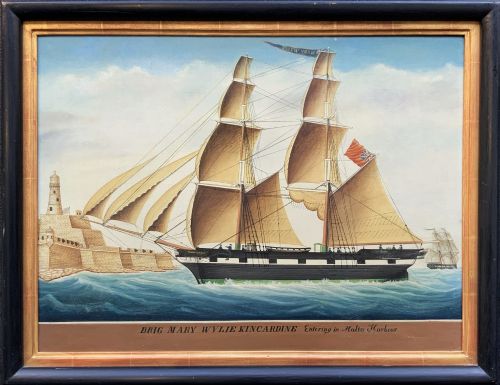
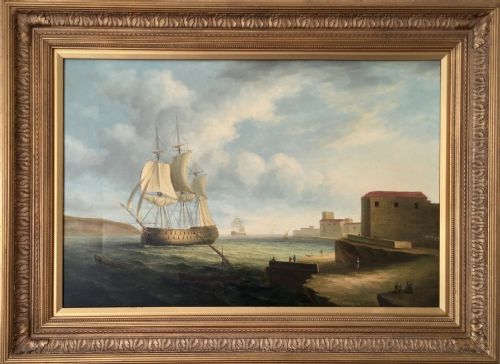
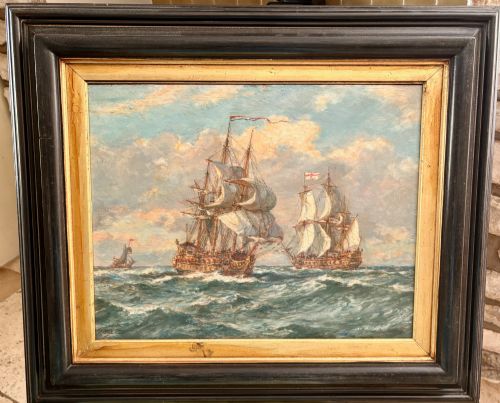
Historic nautical art comprises oil paintings, watercolours, and fine art prints depicting maritime subjects, naval vessels, and coastal scenes. Buyers seeking historic nautical art often encounter nineteenth-century ship portraits, coastal landscapes featuring lighthouses, and dramatic sea battles rendered in oil paint or pencil. These works document specific vessels like the HMS Lusitania and HMS Victory, as well as named locations such as Malta, the River Thames, and the Isle of Man.
The objects range from large canvas paintings to panel works and original signed etchings across Edwardian, Victorian, and Georgian periods. Creators represented include Bernard Gribble, William Lionel Wyllie, Dion Pears, Joseph Heard, and WF Mitchell. Pieces frequently focus on named ships, naval engagements, and merchant sailing vessels operating in British and international waters.
How historic nautical art was made
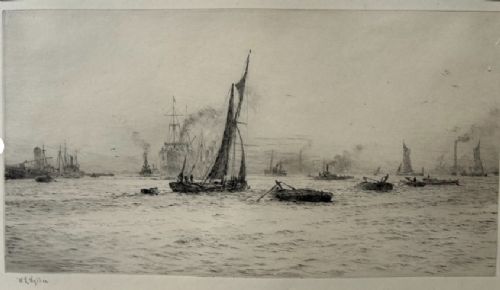
Artists painted primarily with oil paint on canvas or wood panel, applying pigment to capture the movement of water, the texture of billowing sails, and the details of rigging. Watercolour on paper served as a medium for lighter compositions, while artists such as William Lionel Wyllie utilised etching techniques to produce detailed prints on paper.
Frames incorporated wood and gold leaf to house and protect the canvases and watercolours. The combination of durable oil paints and framed glass or bare canvas allowed these marine scenes to survive across centuries of display.
Historic Nautical Art Retail Price Guide 2026
Typical asking prices for historic nautical art among the pieces listed under this phrase on Sellingantiques today, from the lower quarter to the upper quarter. They describe what is for sale here now, not the wider market.
Listings span from the eighteenth century to the mid-twentieth century, featuring oil paints, watercolours, and etchings on wood, canvas, and paper.
What varies in quality
Quality in historic nautical art depends upon the precision of the vessel's rigging, the natural rendering of the sea, and the documentary accuracy of the ship portrait. Works by recorded marine painters demonstrate superior handling of light on water and technical fidelity regarding naval architecture compared to anonymous studio pieces.
The preservation of the paint surface and paper integrity influences the standing of a piece. Original framing with gold leaf and well-maintained oil on canvas or stable watercolour pigments elevate the status of historical maritime works.
James Hardy·Bernard Gribble·William Lionel Wyllie·Dion Pears·Joseph Heard·WF Mitchell·Edward Fletcher·R I Barrow
The Historic Nautical Art Glossary
- Ship portrait
- A painting or drawing dedicated primarily to depicting a specific vessel with technical accuracy. These works were often commissioned by ship captains or owners.
- Etching
- A printmaking process where lines are incised into a metal plate with acid before ink is applied and transferred to paper. William Lionel Wyllie utilised this technique for detailed maritime scenes.
- Panel painting
- An artwork executed on a flat piece of wood rather than stretched canvas. This rigid support was common for earlier marine works.
- West Indiaman
- A large merchant sailing ship trading between Britain and the West Indies. These vessels frequently appeared in nineteenth-century marine art.
Historic Nautical Art: Frequently Asked Questions
What is historic nautical art?
Historic nautical art consists of paintings, watercolours, and prints portraying ships, naval battles, and coastal views from past centuries. These works record specific vessels, ports, and maritime events using traditional media such as oil and watercolour.
Created by named marine artists and anonymous hands alike, these pieces serve as both fine art and historical documentation of maritime heritage.
How were marine paintings used?
Maritime artworks were typically displayed in domestic and institutional settings to celebrate naval victories, commemorate specific ships, or record commercial shipping. Ship owners and captains frequently commissioned accurate portraits of their own vessels.
Over time, these paintings transitioned from working records of maritime commerce and naval might into collectable historical artefacts.
How do I identify the period of a piece?
The period is often indicated by the vessel type, clothing of figures, and costume styles depicted in the scene, alongside any artist signatures or dates inscribed on the work. Stylistic markers range from Georgian formality to Edwardian impressionism.
Supporting documentation, framing materials, and recorded exhibition histories also assist in dating maritime artworks accurately.
How should I care for historic maritime art?
Historic paintings and works on paper require stable environmental conditions away from direct sunlight and excessive humidity. Protecting oil canvases and watercolours from temperature fluctuations preserves the pigments and prevents canvas or paper degradation.
Displaying pieces behind appropriate glass where required and avoiding harsh chemical cleaners on frames ensures the longevity of these fragile historical objects.