



Hinged Silver Box
When you search for a hinged silver box, you enter a diverse field of small, lidded containers shaped for snuff, trinkets, and dressing tables.
Hinged Silver Box
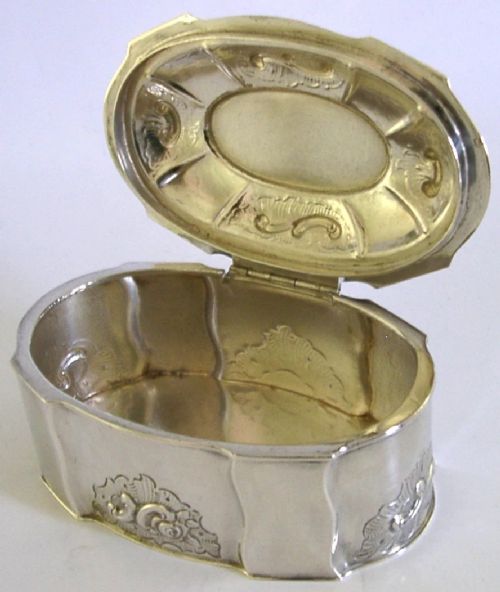
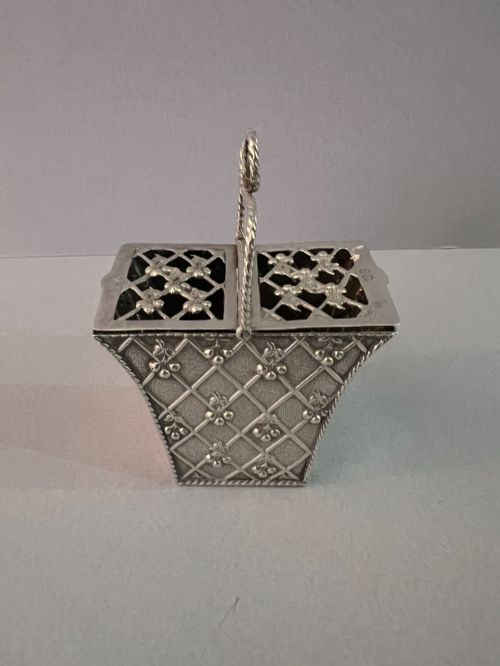
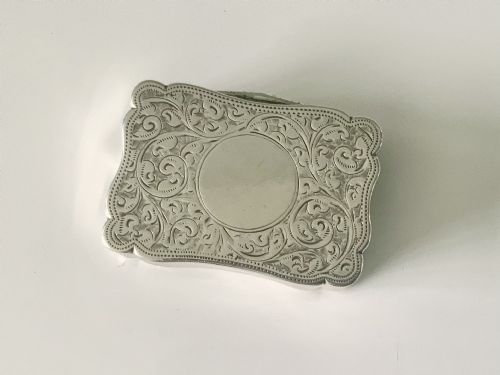
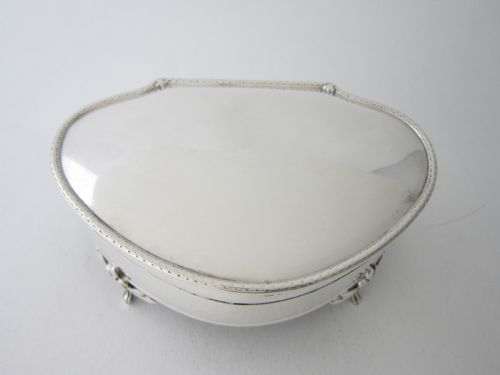
A hinged silver box encompasses everything from pocket snuff boxes and patch boxes to large dressing table caskets and biscuit barrels.
The material spans sterling silver, solid silver, and silver-plate, often combined with agate, cut glass, horn, tortoise shell, or enamel.
Victorian and Edwardian examples dominate the selection, alongside earlier Georgian pieces and mid-century Scandinavian designs.
Materials and Technique
Silversmiths employed techniques such as engine turning, repoussé work, filigree, and niello to decorate surfaces, pairing metal with glass bodies or cedar linings.
Hinges required precise engineering to align lids smoothly with bodies on items ranging from tiny pill boxes to heavy tea caddies.
Several nineteenth-century specimens take the form of fish with articulated bodies and hinged heads.
Grading Quality
Quality rests on the crispness of chased or embossed decoration and the snugness of the lid closure.
Maker marks, clear hallmarks, and internal gilding separate standard production pieces from finer workshop outputs.
Hilliard & Thomason·Posen of Frankfurt·Henry Williamson Ltd·Elkington & Co·Thomas Bradbury·Mappin & Webb·Samuel Pemberton
The Hinged Silver Box Glossary
- Hallmark
- Official stamps indicating the metal purity, assay office, and year of manufacture. These markings provide the primary historical evidence for dating British silver.
- Engine turning
- A geometric pattern mechanically engraved into the metal surface. This technique creates precise lines that catch the light.
- Repoussé
- Metalwork shaped by hammering from the reverse side to form raised designs. Artisans complete the finer details from the front.
- Vermeil
- Sterling silver plated with a thin layer of gold. This finish protects the silver from tarnish and provides a warm interior glow.
- Niello
- A black metallic alloy used as an inlay on engraved metal. The dark contrast highlights the surrounding silver design.
Hinged Silver Box: Frequently Asked Questions
What were small hinged silver boxes used for?
These small containers held snuff, patches, pills, or stamps for personal daily use.
Larger versions served on dressing tables to store rings, trinkets, and small jewellery items.
How do I date an antique silver box?
Look for hallmarks stamped on the interior rim, base, or underside of the lid.
Assay office letters and date ciphers provide the exact year of testing and manufacture.
What is the difference between silver and silver plate?
Solid silver or sterling silver consists of precious metal throughout the entire object.
Silver plate applies a thin layer of silver over a base metal foundation.
How should I clean a silver box?
Use a soft cloth and a gentle silver polish designed to preserve antique surfaces.
Avoid abrasive materials that might wear away fine engraving or thin plating.