



Hills Landscape Artwork
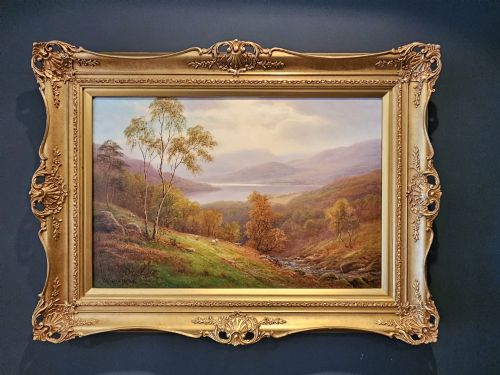
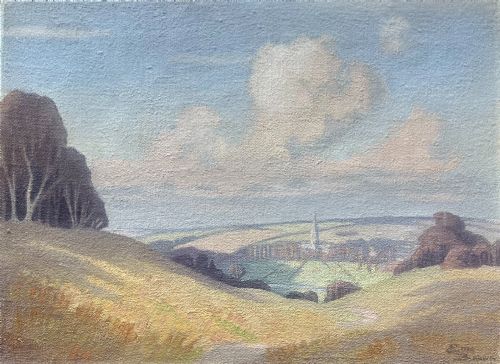
Hills landscape artwork captures the elevated topography and sweeping vistas that have drawn painters from the Victorian era to the mid-century modern period.
Hills Landscape Artwork
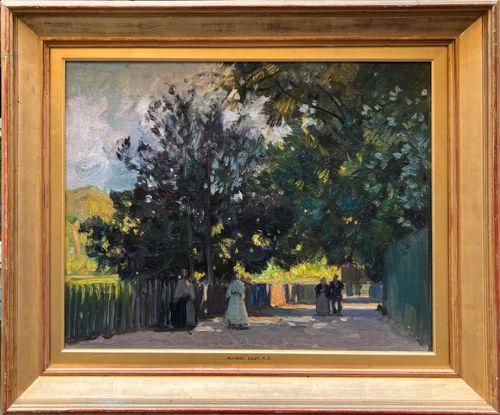
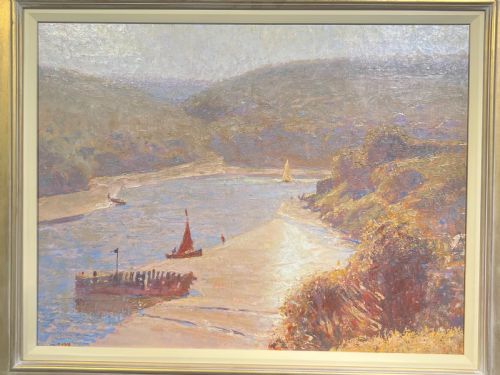
Hills landscape artwork encompasses paintings and drawings featuring elevated terrain, from the rolling chalk downs of the English countryside to dramatic coastal heights. Buyers searching for hills landscape artwork encounter works executed in oil on canvas, watercolour pigment on paper, and ink dating from the nineteenth century through the twentieth century. The selections available on this page lean heavily toward twentieth-century British and French modernism, alongside Victorian and Edwardian watercolours.
The subjects range from specific named locations such as the Purbeck Hills, Bredon Hill, and Connemara to atmospheric rural scenes framed by distant high ground. Painters capture these elevations using diverse stylistic approaches, including British Impressionism, Post-Impressionism, and English School traditions. Each piece records topography through the distinct lens of its period, whether through the fine detail of Victorian watercolours or the bolder brushwork of mid-century oils.
Materials and Techniques
Artists utilise traditional supports such as canvas, paper, and wood panels to construct these topographical scenes. Watercolours rely on fluid pigments applied to paper, capturing light atmospheric effects across open valleys, while oil paints offer richer textures and impasto application for rugged terrain. Pen and ink drawings on paper provide precise linear studies of hillsides and surrounding architecture.
The application of paint ranges from thin, translucent washes in nineteenth-century watercolours to thick, textured oil impasto seen in mid-century French and British works. Pigments are brushed, layered, or worked directly onto the ground to convey the shifting light and shadow upon elevated landscapes.
Hills Landscape Artwork Retail Price Guide 2026
Typical asking prices for hills landscape artwork among the pieces listed under this phrase on Sellingantiques today, from the lower quarter to the upper quarter. They describe what is for sale here now, not the wider market.
Several artists clearly paused their hill walks to paint stubborn farm gates and grazing sheep rather than grand summits.
Distinctions in Quality
The strength of a composition rests on the artist's handling of spatial depth and natural light across elevated terrain. Superior examples demonstrate a confident command of perspective, guiding the eye from foreground details across rolling middle distances to distant hills. Weaker pieces often rely on formulaic arrangements where hills appear flat or detached from the landscape below.
Material preservation and pigment stability also define the upper tier of works. Well-preserved watercolours retain their original tone without excessive fading from light exposure, while oil paintings display stable paint layers free from severe cracking. The sensitivity of the brushwork and the clarity of the atmospheric rendering ultimately separate routine topographical records from accomplished artistic interpretations.
Eric Brown·Sir Alfred East·Joseph Edward Hennah·James Fry·Rowland Henry Hill·Bernard Walter Evans·Edmund John Niemann
The Hills Landscape Artwork Glossary
- Watercolour
- A painting method where natural pigments are suspended in a water-based solution and applied to paper. This medium allows for transparent washes that capture shifting atmospheric light over distant hills.
- Impasto
- Paint applied thickly to a canvas or board so that the strokes stand out visibly from the surface. Artists utilise this technique to give tactile weight and texture to rocky outcrops and rugged hillsides.
- Post-Impressionism
- An art movement developing roughly from the late nineteenth century that extended Impressionism while rejecting its limitations. Practitioners focused on symbolic content and expressive use of colour when depicting natural landscapes.
Hills Landscape Artwork: Frequently Asked Questions
What periods do these hill paintings cover?
The works span from the nineteenth century through to the mid-twentieth century, capturing shifting artistic tastes across successive decades.
Buyers will find Victorian and Edwardian watercolours alongside 1930s and 1950s modernist oils.
How should I frame an antique watercolour?
Watercolours require careful framing behind glass with acid-free mounts to protect the paper from humidity and light damage. Keeping the painting away from direct sunlight preserves the original pigments.
Original frames often retain period character, but conservation framing ensures the longevity of fragile paper works.
What is the difference between oil and watercolour landscapes?
Oils offer rich textures, deeper colour saturation, and greater durability on canvas or wood boards. Watercolours provide delicate transparency and luminous light effects unique to pigment applied on paper.
Both mediums were utilised extensively to capture the varying atmospheric moods of rural uplands.
Are these landscapes based on real locations?
Many pieces document specific named hills, bays, and valleys across Britain, Ireland, and continental Europe. Artists frequently inscribed exact geographic titles onto the reverse or mount.
Other works offer generalised pastoral studies rooted in the distinct character of English and French regional scenery.