


High Kitchen Stools
High kitchen stools offer practical elevation, combining sturdy wooden seats and metal frames for daily domestic use.
High Kitchen Stools
When searching for high kitchen stools, buyers encounter practical seating designed for elevated counters, bars and work surfaces. These pieces serve functional purposes in domestic and industrial spaces alike.
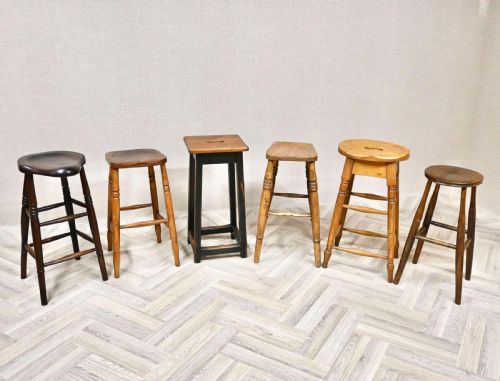
The selections available here span the nineteenth century through the twentieth century, encompassing periods such as nineteen twenty and nineteen thirty. Forms range from simple utilitarian workshop seats to matched sets intended for regular use.
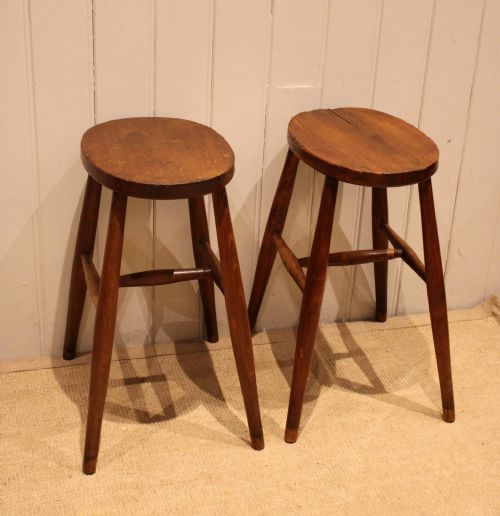
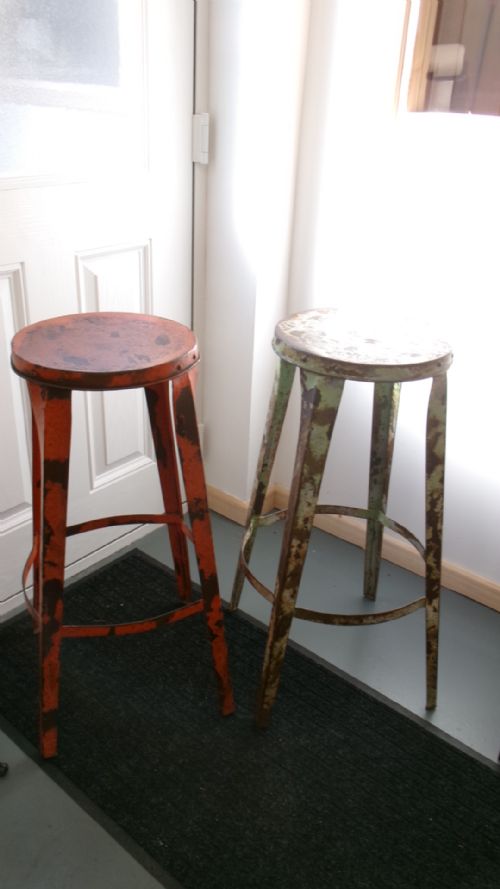
Common regional styles include rustic farmhouse, Victorian vernacular, and industrial designs. Elm topped examples and turned beech clerk pieces appear frequently alongside metal riveted variants.
Materials and construction
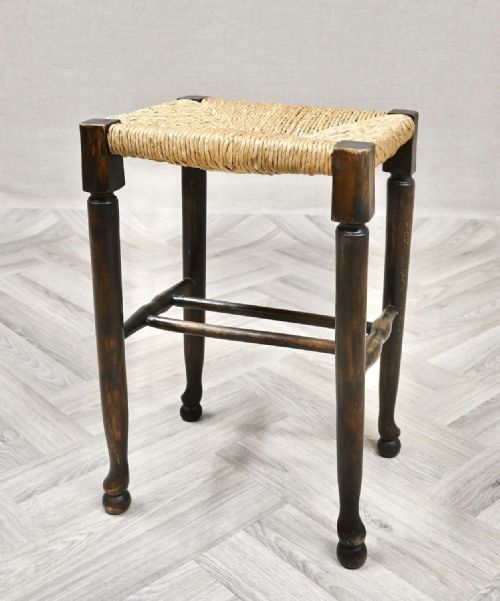
Makers utilised solid timbers including beech, elm, oak, pine, walnut, and hardwood, often pairing wooden seats with robust iron or metal frames. Rush seating also provides traditional texture on specific nineteenth century examples.
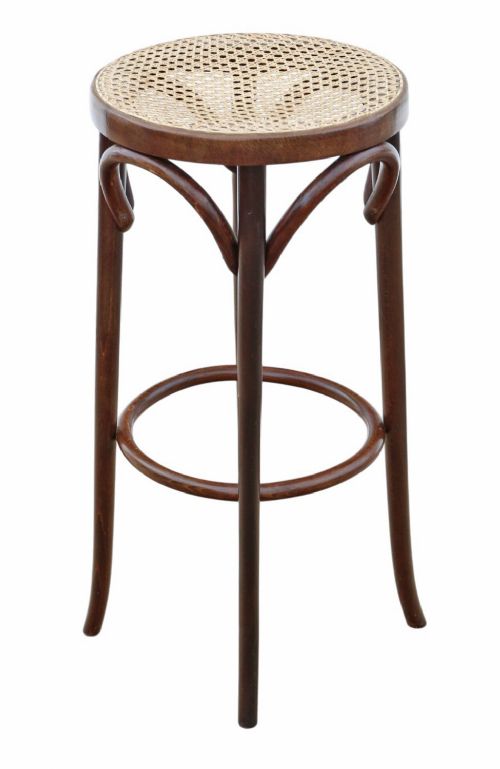
Construction techniques rely on turned wooden legs, riveted metal joints, and bentwood methods to ensure stability at height. Stained finishes and natural wood grains highlight the simple functional carpentry.
Materials across these listings include beech, elm, oak, pine, walnut, hardwood, and iron.
Assessing quality
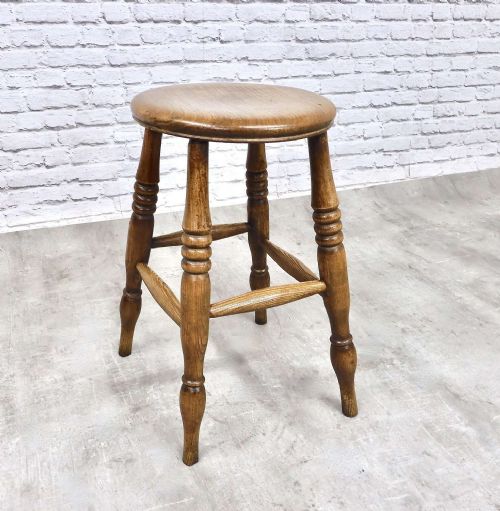
Quality reveals itself in the choice of timber, such as wild elm or walnut, paired with sound joinery and stable frames. Fine examples show thoughtful turning on beech legs and robust riveted construction on industrial metal components.
Consistency across pairs or sets elevates the standing of specific pieces, whereas mismatched replacements or unstable joints diminish the overall integrity of the seating.
The High Kitchen Stools Glossary
- Bentwood
- Wood softened by steam and bent into curved shapes. This technique creates graceful frames on twentieth century seating.
- Rush seat
- Seating surface woven from marsh plants. This traditional method appears on tall rustic examples.
- Clerk's stool
- Tall seating designed for high desks. These nineteenth century pieces typically feature turned wooden legs and foot rails.
- Vernacular
- Everyday objects made by local craftspeople without high style pretensions. Victorian vernacular pieces prioritise utility over ornament.
- Riveted
- Metal components joined by permanent mechanical fasteners. Industrial bar stools utilise this method for structural strength.
High Kitchen Stools: Frequently Asked Questions
What periods do these high kitchen stools come from?
The inventory spans the nineteenth century up through the nineteen forties, covering periods like nineteen twenty and nineteen thirty.
Buyers find nineteenth century country stools alongside industrial metal designs from the interwar decades.
How were high kitchen stools originally used?
These tall seats served workers in mills, laboratories, offices, and domestic kitchens where elevated surfaces were necessary.
Clerk stools and lab stools provided stable perches for tasks requiring height and mobility.
Can I find matching sets of high stools?
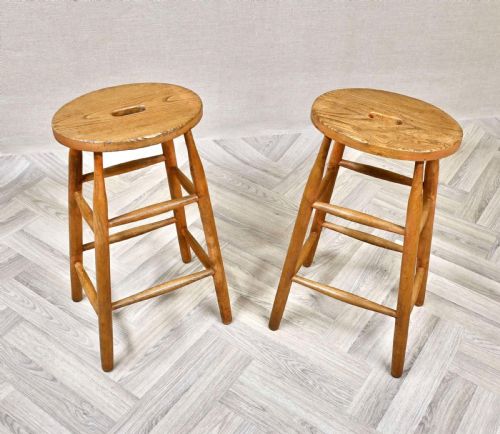
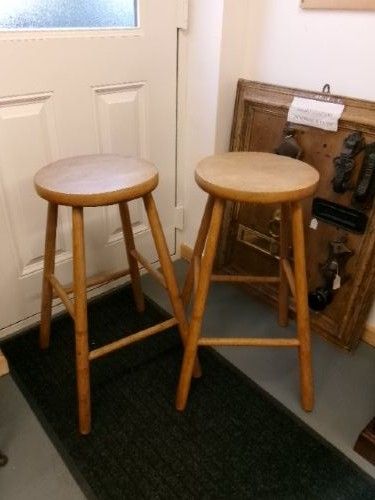
Certain listings offer pairs, sets of four, or groups of six tall bar stools.
Single pieces also appear alongside matched pairs for smaller kitchen counters.
What woods are common in these stools?
Beech and elm appear frequently, often combined in a single stool with elm seats and beech legs.
Other materials include oak, pine, walnut, and hardwood alongside iron and metal.