


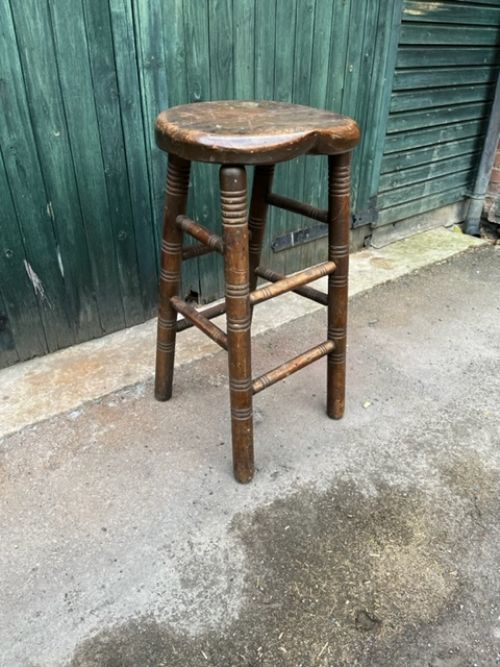
Country Kitchen Bar Stools
Country kitchen bar stools bring genuine utility and rustic warmth to domestic spaces through honest timber construction.
Country Kitchen Bar Stools
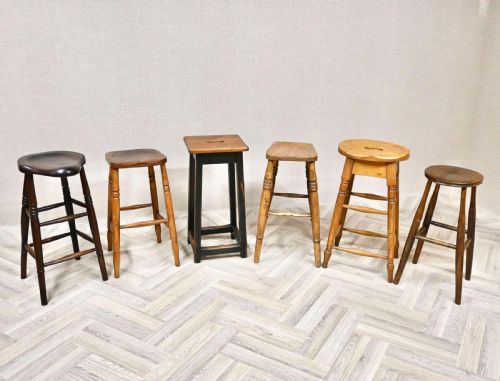
Country kitchen bar stools are tall seating forms intended for elevated counters, breakfast bars, and high tables within domestic spaces. When you search for country kitchen bar stools, you encounter sturdy tall seating designed for functional everyday use rather than formal display. The pieces met on this page span the nineteenth century through the early decades of the twentieth century.
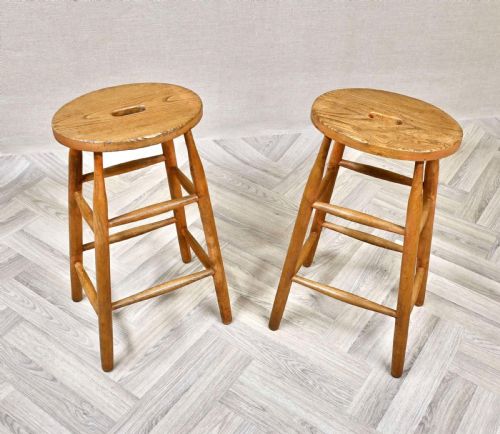
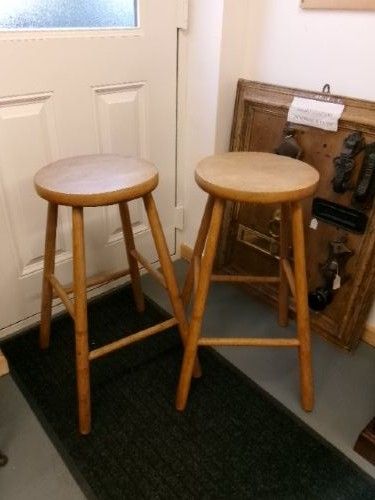
Forms include single tall stools, pairs, and larger sets up to six pieces. You find specialised clerk's stools alongside general purpose kitchen stools and rush seat variants. Their origins trace to vernacular farmhouse traditions and Victorian country workshops.
How they were made
Construction relies heavily on traditional timber selection, featuring solid elm tops, turned beech supports, and sturdy pine structures. Workshops utilised native hardwoods alongside softer woods to build resilient seating capable of handling daily domestic wear.
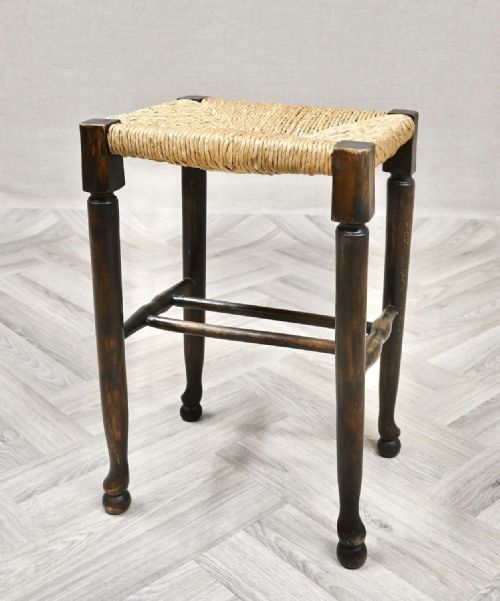
Joinery methods incorporate turned components and rush seating techniques to ensure structural integrity across tall frames. Stained finishes appear on beech examples, while wild elm tops display natural grain patterns developed over decades of use.
Listings feature periods spanning the nineteenth century, 1880, 1900, 1920, 1930, and 1940, utilising elm, beech, oak, pine, and rush.
What varies in quality
Quality rests upon the integrity of the timber and the strength of the turned joints supporting the elevated frame. Elm topped examples with substantial thickness demonstrate superior material selection compared to standard utility variants.
The sophistication of the turning work on beech legs and the preservation of original rush seats distinguish standard domestic seating from finer vernacular workshop production.
The Country Kitchen Bar Stools Glossary
- Vernacular
- Everyday objects made by local tradespeople rather than high-style designers. These pieces reflect regional traditions and practical domestic needs.
- Rush seat
- Seating surface woven from marsh plants twisted into cord. This traditional method provides a resilient and slightly flexible seat.
- Turned
- Wood shaped on a lathe to create cylindrical, tapered, or decorative structural components. Legs and stretchers are frequently formed this way.
- Elm
- A dense, tough hardwood chosen for furniture seats due to its interlocking grain and resistance to splitting. It forms the primary top material on several tall stools.
Country Kitchen Bar Stools: Frequently Asked Questions
What periods do these stools date from?
The listings span the nineteenth century through the 1920s, 1930s, and 1940s. These dates encompass Victorian vernacular production and later rustic farmhouse styles.
Most pieces originate from the 19th century, featuring solid elm tops and turned beech supports built for practical utility.
How were these tall stools used originally?
They served as practical elevated seating in domestic kitchens, farmhouses, and workspaces. Clerk's stools and general purpose variants accommodated standing desk tasks or high counters.
Their robust construction allowed them to withstand heavy daily use in busy domestic and working environments.
Are these stools sold as pairs or sets?
Listings include individual stools, pairs, sets of four, and larger groups up to six or ten pieces. This variety accommodates different kitchen layouts and seating requirements.
Single examples appear alongside matching pairs and larger collections intended for farmhouse tables.
What materials predominate in these items?
Solid elm, beech, oak, and pine form the primary structural components of these rustic pieces. Selected items incorporate natural rush for woven seating surfaces.
Hardwoods provide the necessary strength and durability required for tall frames subjected to regular domestic pressure.