


High Hoop Back Chair
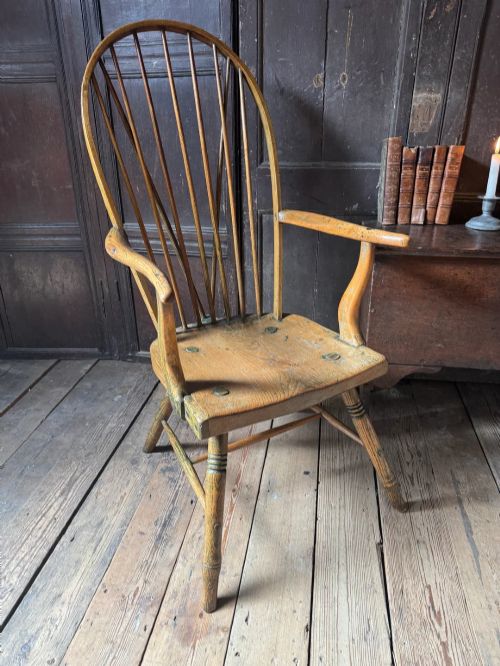
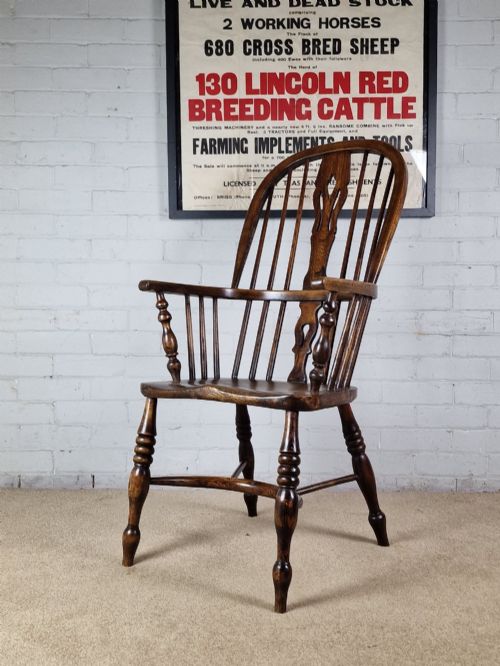
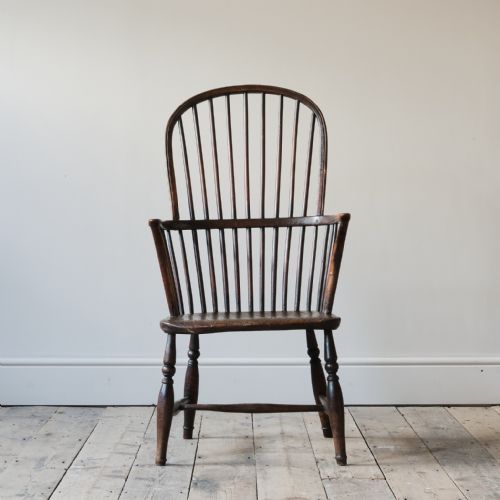
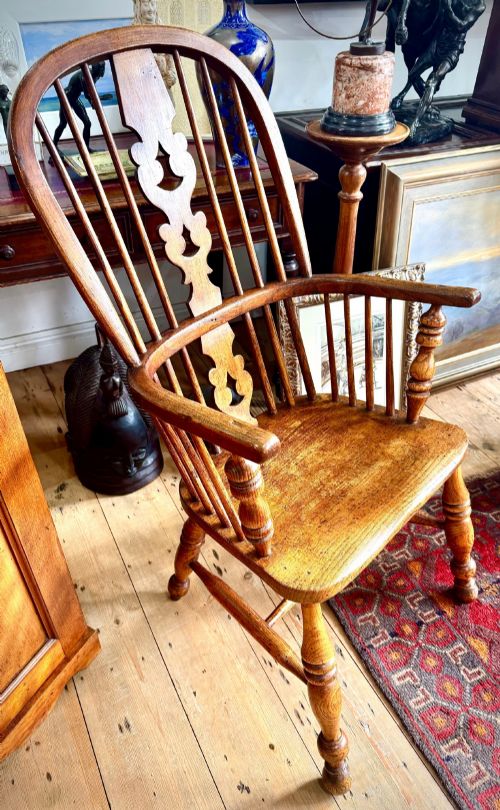
When you search for a high hoop back chair, you meet traditional country seating defined by a tall, steam-bent arched crest.
High Hoop Back Chair
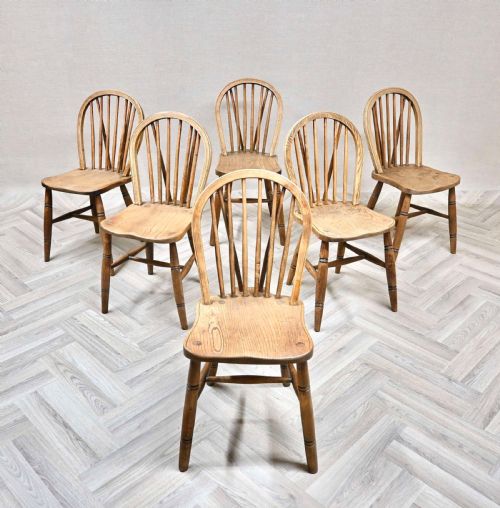
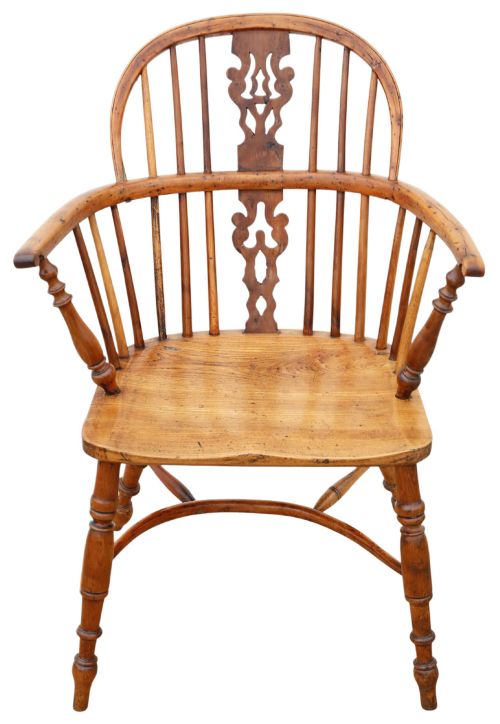
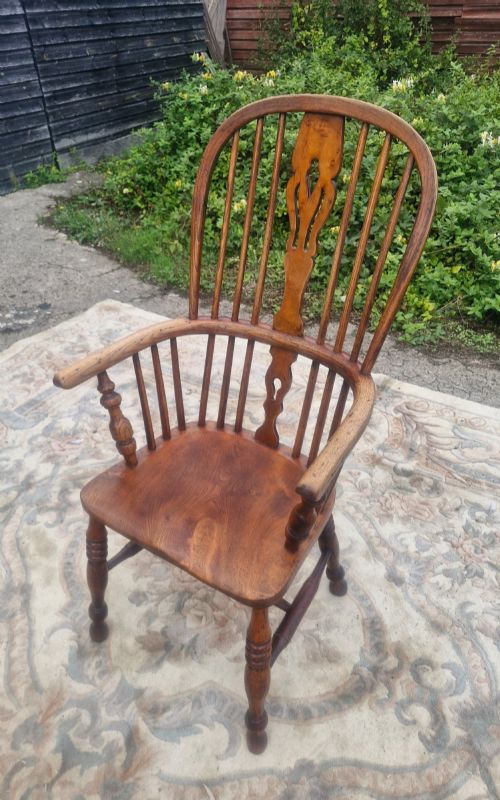
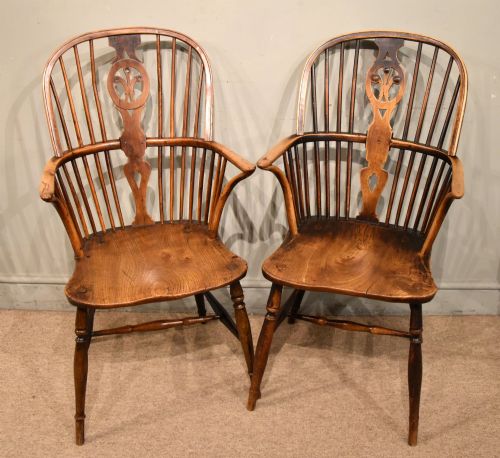
A high hoop back chair is a form of Windsor seating characterised by a continuous arched wooden bow that frames the back and connects directly to the seat. The pieces seen here span the Georgian and Victorian eras, alongside rural vernacular interpretations from regional English workshops.
Most examples function as reading or fireside armchairs, though dining sets and rocking variants also appear. Buyers encounter single pieces as well as matched sets originating from traditional chair-making regions such as Thames Valley and Yorkshire.
The construction relies on a solid saddle-shaped wooden seat into which the legs, back spindles and arm supports are wedged and pegged. This stick-built method produces sturdy domestic furniture intended for everyday utility.
What varies in quality
Quality depends upon the choice of timber and the complexity of the turned underframe components. Denser figuring in yew wood and well-defined comb or wheel centre splats distinguish finer workshop production from simpler provincial utility seating.
Proportion and the graceful sweep of the bent hoop dictate visual balance. Slender, well-tapered spindles and deep saddle seats indicate careful shaping by skilled makers rather than hurried mass production.
Listings feature regional variations spanning the eighteenth through the early twentieth centuries, constructed in elm, ash, yew and beech.
Rockley·Allsop Worksop
The High Hoop Back Chair Glossary
- Hoop back
- A continuous piece of steam-bent wood that forms the top rail and arms of a Windsor chair. This curved member provides structural strength while supporting the vertical back spindles.
- Broad arm
- An expanded, flat wooden armrest integrated into the chair design. These wider rests often accommodate writing or sustained sitting.
- Crinoline stretcher
- An arched underframe brace connecting the legs of a chair. It adds stability and prevents the legs from splaying outward under weight.
- Vernacular
- Regional furniture made by local craftsmen following traditional local patterns rather than metropolitan high styles. These pieces reflect the specific timber supplies and construction methods of their district.
High Hoop Back Chair: Frequently Asked Questions
What is a high hoop back chair?
A high hoop back chair is a traditional Windsor seating form featuring a tall, steam-bent wooden arch that creates the backrest. The design integrates turned spindles and a solid carved wooden seat.
These chairs developed in rural English workshops during the eighteenth and nineteenth centuries. They served primarily as sturdy domestic seating for parlours, kitchens and country houses.
How do I identify the wood types?
Examining the grain and colour helps distinguish the timbers used in these chairs. Elm is typically found in the thick, heavily grained seat boards.
Ash and beech appear in the turned legs and stretchers for their straight-grained strength. Yew provides a reddish-brown hue with complex figuring in the upper spindles and arms.
Where were these chairs made?
Production centred in rural English counties with abundant hardwood forests. Buckinghamshire, Yorkshire and the West Country emerged as primary hubs for Windsor chair manufacturing.
Workshops in towns like High Wycombe produced large volumes of these chairs for domestic distribution. Regional variations in turning patterns often point to the specific area of origin.
How should I care for an antique chair?
Maintaining these wooden pieces involves keeping them away from direct heat sources and dramatic humidity fluctuations. Sudden temperature changes cause timber to dry out and joints to loosen.
Applying microcrystalline wax occasionally protects the surface finish and nourishes the aged wood. Regular dusting with a soft cloth prevents grime buildup on the carved details.